Asplenium petrarchae Care

Asplenium petrarchae

About Asplenium petrarchae

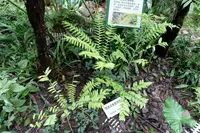
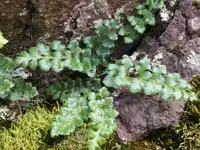
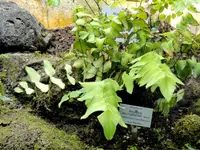
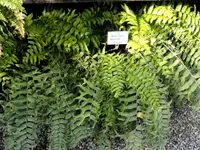
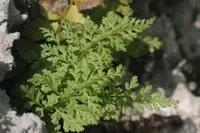
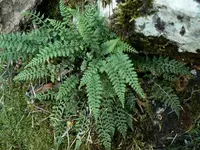
Asplenium petrarchae is a small, clumping fern that forms tight rosettes of finely divided, leathery fronds. It stays compact, which makes it suitable for pots, rock gardens, or terrariums.

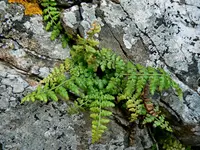
This species occurs naturally on rocky slopes and limestone walls in Mediterranean regions, often rooting in narrow crevices with minimal soil. It prefers sheltered positions, steady moisture around the roots, and good air movement.

Due to its slow growth and need for consistent, gentle moisture, it is moderately challenging for beginners. Before deciding how to care for Asplenium petrarchae, it helps to understand its origin as a crevice-dwelling fern with limited tolerance for neglect or drying out.

Main Plant Requirements

Care Difficulty

Moderate Care

Light Preference

Partial Shade

Water Requirements

Moderate Water

Temperature Preference

Cool Climate

Hardiness Zone

7–9

Soil Texture

Rocky, Loamy, Organic-rich

Soil pH

Acidic (5.5–6.5)

Soil Drainage

Well-drained

Fertilization

Minimal (feed rarely)

Get Personalized Care Plan

Scan your plant to receive care tips personalized for your specific plant

Available on iOS and Android

How to Care for the Asplenium petrarchae

This small rock-dwelling fern prefers soft, indirect light that mimics shaded cliffs and crevices.

  • Provide bright, indirect light or light dappled shade, with at most 1–2 hours of gentle morning sun; avoid harsh midday and afternoon sun that can scorch fronds.
  • In the garden, place Asplenium petrarchae on a north- or east-facing slope, rock wall, or crevice where surrounding stones filter direct rays.
  • Watch frond color and texture: pale, crisping tips indicate too much sun, while very slow growth and elongated, weak fronds suggest light is too low.

This fern prefers consistently lightly moist but not saturated conditions around its roots and rhizomes.

  • Allow the top 1–2 cm of the growing medium between rocks or in crevices to dry slightly before watering again, then moisten thoroughly so water drains away freely.
  • In cool seasons, reduce watering frequency as evaporation slows; in hot, dry weather, check moisture every 2–3 days, especially in shallow or rocky pockets.
  • Leaves that wilt, curl, and feel dry indicate underwatering, while blackened bases, a sour smell, or persistently wet substrate point to overwatering issues.

This species thrives in mild, frost-free conditions with protection from temperature extremes.

  • Aim for an active growth range of about 60–75°F (16–24°C), where fronds develop steadily without heat or cold stress.
  • Protect from frost, since tissue damage can occur near 32°F (0°C); extended exposure below 28°F (-2°C) may kill fronds or the entire crown.
  • In hot periods above 86°F (30°C), increase shade and airflow and avoid heat-reflecting rock surfaces that can overheat the roots and rhizomes.

This small fern prefers consistently moist, moderately humid air for stable frond growth.

  • Aim for 50–70% humidity; growth slows and fronds crisp at prolonged levels below 40%.
  • Dry indoor air causes browning tips and margins, especially on the smallest fronds near rock or pot edges.
  • Increase humidity with a nearby pebble tray or grouped plants rather than misting, which can encourage fungal spotting on tight fronds.

This fern prefers a loose, rocky, organic-rich medium that mimics shallow crevices.

  • Use a mix of 40% fine compost, 30% perlite or pumice, and 30% grit or coarse sand for a crumbly, well-aerated texture.
  • Ensure very sharp drainage; water should pass through in seconds and not leave the mix saturated or shiny on top.
  • Keep pH slightly acidic to neutral, around 6.0–7.0, avoiding strongly alkaline substrates that can limit nutrient uptake.
  • Avoid dense garden soil, peat-only mixes, or compacted containers, which restrict roots and stay wet long enough to rot Asplenium petrarchae rhizomes.

This species is suitable for container growing, especially in shallow, stable pots or rock garden troughs.

  • Select a wide, shallow container that allows horizontal rhizome spread while keeping the root zone close to the cooler surface layer.
  • Choose a heavier material such as clay or stone to stabilize the plant against wind and reduce rapid temperature swings in the root zone.
  • Raise the pot slightly on feet or tiles so drainage holes stay clear and water cannot pool under the container after rain or watering.

This small, rock-dwelling fern usually needs minimal feeding, especially in nutrient-poor natural habitats.

  • For container-grown Asplenium petrarchae, use a balanced liquid NPK fertilizer at 1/4 strength.
  • Apply every 4–6 weeks during spring and summer only, onto moist soil, never dry roots.
  • Avoid fertilizing in fall and winter when growth slows.
  • Compost or slow-release products are unnecessary and can cause salt buildup in this low-demand species.

Pruning needs are light and focus on hygiene rather than shaping for this compact fern.

  • In late winter or early spring, remove dead, yellowing, or diseased fronds at the base with clean scissors.
  • Snip storm-damaged or torn fronds anytime to reduce stress and disease entry points.
  • Avoid cutting healthy green fronds, as this reduces photosynthesis and weakens the plant.
  • Light tidying helps maintain a neat clump without altering the natural shape of Asplenium petrarchae.

Container or rockery plants benefit from careful, infrequent transplanting due to the fern’s delicate root system.

  • Repot or transplant only when roots circle the pot, emerge from drainage holes, or growth slows despite good care.
  • Choose early spring, just before active growth, to let Asplenium petrarchae re-establish quickly.
  • Move up only 1 pot size, using a shallow container with gritty, well-drained mix, and keep the root ball as intact as possible.
  • Water gently after moving, keep out of direct sun for 7–10 days, and maintain steady moisture to limit transplant shock.

Propagation is possible but slow, and division is preferred over spore work for most home growers.

  • Divide mature clumps in early spring, choosing pieces with several healthy fronds and attached rhizomes.
  • Lift carefully, then tease apart small sections by hand or with a clean knife, minimizing root breakage.
  • Replant divisions into gritty, well-drained mix, keeping crowns at the same depth and watering gently.
  • Maintain high humidity, even moisture, and shade while new roots establish; spore propagation is specialist-level.

This fern has some cold tolerance but benefits from modest winter protection in colder regions.

  • In-ground plants in mild climates usually overwinter without major intervention.
  • In colder zones, add a thin mulch of leaf litter or fine bark around, not over, the crown to insulate roots.
  • Move containers to a sheltered, frost-free spot with bright shade, such as an unheated porch or cool room.
  • Keep soil just barely moist; avoid waterlogging, which is more damaging than chill for Asplenium petrarchae.

Care Tips

Rocky pocket planting

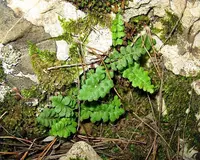
Nest the root ball into a shallow crevice or between rocks with a thin layer of gritty mix so roots anchor firmly, mimicking its natural cliff habitat and improving long-term stability.

Gentle division timing

If division is needed, split established clumps only in early spring, keeping several crowns and a solid root mass together, then reduce frond number slightly to limit transplant stress.

Calcium-aware irrigation

In hard-water areas, alternate tap water with rainwater or distilled water to avoid excess calcium buildup that can gradually raise pH and reduce this fern’s nutrient uptake.

Targeted frond grooming

Remove only fully brown or collapsed fronds by cutting them at the base, leaving any partially green fronds in place to continue photosynthesis and support rhizome health.

Winter protection strategy

In climates with wet, cold winters, tilt outdoor containers or crevice plantings slightly and use a very thin mineral mulch so excess water drains away from the crown and reduces rot risk when caring for Asplenium petrarchae.

Common Pests and Diseases

Scale insects

These insects feed on frond tissue and rachis sap, causing yellowing, weak growth, and sticky honeydew that can lead to sooty mold. Infestations are more common on sheltered, low-airflow plants and in collections of multiple ferns.

Solution

Remove visible scales manually with a cotton swab dipped in alcohol, then rinse fronds gently with lukewarm water. Improve air circulation, isolate heavily infested plants, and use a light horticultural oil or insecticidal soap labeled for ferns, repeating treatments every 7–10 days until no new scales appear.

Fern aphids

These insects congregate on tender rachises and young fronds, sucking sap and causing distortion, curling, and pale growth. Honeydew excreted by aphids can attract ants and promote sooty mold on the delicate foliage.

Solution

Shower the plant gently to dislodge colonies, then apply insecticidal soap, ensuring complete coverage of both sides of the fronds. Monitor new growth closely and repeat treatments as needed; in outdoor plantings, encouraging natural predators like lady beetles also helps with Asplenium petrarchae care.

Rhizoctonia blight

This disease causes brown, irregular lesions on frond bases and crowns, often leading to collapse of individual fronds and thinning clumps. Symptoms include a dry, sunken appearance of affected tissues rather than soft rot.

Solution

Cut out and discard affected fronds and any obviously infected crown tissue, sterilizing tools between cuts. Reduce watering frequency, avoid wetting the foliage, increase airflow around the plant, and, in persistent cases, apply a fungicide labeled for Rhizoctonia on ornamental ferns according to label directions.

Botrytis leaf spot

This disease appears as small, water-soaked spots on fronds that expand into brown or gray patches, often with a fuzzy gray mold in humid, stagnant air. Symptoms include premature browning and shedding of the more delicate pinnae.

Solution

Remove and discard all affected fronds and any fallen debris around the plant, then improve ventilation and reduce overhead watering. Keep foliage as dry as practical and, if conditions remain cool and damp, consider a preventative fungicide labeled for Botrytis on ferns, applied at the first sign of spotting.

Snails and slugs

These pests feed on tender fern tissue, leaving irregular holes and notches along frond edges, often with a shiny slime trail on nearby rock or soil surfaces. Damage is usually most evident on young or newly emerging fronds, especially in moist, shaded sites where this species is often grown in rock crevices or walls.

Solution

Hand-pick snails and slugs during evening or early morning and remove nearby hiding places such as dense debris or pots pressed tightly together. Use barriers like copper tape around containers or targeted iron phosphate baits placed away from the crown to reduce populations while maintaining a safe environment for other wildlife.

Interesting Facts

Limestone rock specialist

This fern naturally grows in narrow crevices of sun-exposed limestone and other calcareous rocks in Mediterranean regions, anchoring its short rhizome in tiny pockets of mineral-rich debris.

Two subspecies recognized

Botanists distinguish at least two subspecies, such as Asplenium petrarchae subsp. petrarchae and subsp. bivalens, which differ in chromosome number and some subtle leaf traits, reflecting local evolutionary divergence.

Drought survival strategy

In its native habitats the fronds often dry and curl in summer drought, then rehydrate and resume photosynthesis when autumn rains return, a strategy known as poikilohydry that allows survival in very exposed rocky sites.

Botan icon

Did you know?

The species was named in connection with the Italian poet and scholar Francesco Petrarca (Petrarch), reflecting its long-recognized presence in classic Mediterranean landscapes and the early botanical interest in the flora of regions associated with him.

FAQs about Asplenium petrarchae

This species stays very small and compact, usually under 10–15 cm tall with a similar spread. Growth is slow, forming tight clumps rather than tall fronds, which makes it suitable for rock gardens, crevices, and small containers.

Grow Healthy Plants with Botan Care

Keep your plants happy and healthy with plant identification, disease detection, and easy care guidance.

Botan plant care app — identify plants on mobile

Explore More Plants