

Rock-crevice planting
Tuck the roots into narrow rock crevices or between stacked stones to mimic its natural alpine habitat, which helps keep the crown cool, roots moist, and fronds protected from wind and splashing soil.

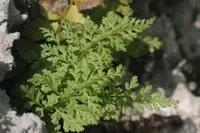
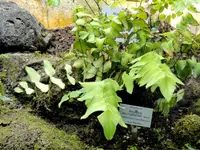
Alpine bladder-fern, Cystopteris alpina, is a small, deciduous fern found in cool mountain regions of Europe and parts of Asia. It typically grows in loose clumps among rocks and in crevices.
The fronds are delicate, finely divided, and light to medium green, giving the plant a soft, airy appearance that stays low to the ground. It naturally occupies shaded, moist, well-drained habitats, often near streams or on damp cliff faces.
Its preference for cool temperatures, consistent moisture, and protection from strong sun makes it moderately challenging outside its native climate. Gardeners who care for alpine bladder-fern usually succeed by mimicking its cool, shaded, and evenly moist mountain conditions.

Care Difficulty
Moderate Care

Light Preference
Partial Shade

Water Requirements
Keep Soil Moist

Temperature Preference
Cool Climate

Hardiness Zone
4–7

Soil Texture
Loamy, Silty, Organic-rich

Soil pH
Acidic (5.5–6.5), Slightly acidic (6.5–7.0)

Soil Drainage
Moist but well-drained

Fertilization
Minimal (feed rarely)
Scan your plant to receive care tips personalized for your specific plant
Available on iOS and Android
This fern prefers cool, softly lit conditions that mimic shaded mountain slopes.
This fern needs consistently moist but not waterlogged soil to stay healthy.
This cold-tolerant fern prefers cool to mild conditions with protection from heat extremes.
This fern prefers consistently moist air and reacts quickly to dry conditions.
This species prefers cool, moist, humus-rich soil that still drains freely.
This fern can be grown in containers if moisture and root space are carefully managed.
This alpine bladder-fern is adapted to low-nutrient conditions and needs only light, careful feeding in cultivation.
Cystopteris alpina benefits from light, hygienic pruning to maintain tidy fronds and reduce disease risk.
This fern is usually grown in rock gardens or shaded borders, so focus on gentle transplanting rather than frequent repotting.
Cystopteris alpina is usually propagated by division, with spore growing reserved for experienced fern growers.
This fern is generally cold hardy in suitable climates and needs only modest winter attention in the ground.

Plant Health Check
Not sure what's wrong with your plant? Check your plant's health inside the app.
This alpine bladder-fern naturally occurs on moist limestone and other calcium-rich rocks in high mountain regions of central and southern Europe, often rooting in narrow crevices where organic matter accumulates.
In its native range, the species spends much of the year under snow, which insulates the rhizome and protects the delicate fronds from extreme winter temperature swings.
Although its fronds look thin and fragile, the plant survives in harsh alpine climates with short growing seasons, taking advantage of cool, moist summers for rapid growth and spore production.
Yellowing fronds usually result from excess moisture around the roots, poor drainage, or natural aging of older fronds. Check for soggy soil, improve drainage, and remove only fully spent fronds to reduce stress and disease risk.
Keep your plants happy and healthy with plant identification, disease detection, and easy care guidance.

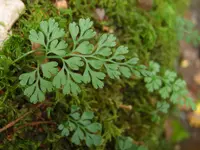
Spleenwort
Asplenium dareoides
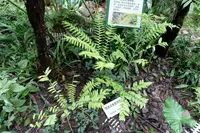
Angiopteris fokiensis
Angiopteris fokiensis
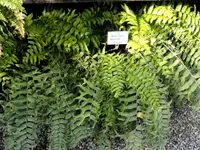
giant swordfern
Nephrolepis biserrata
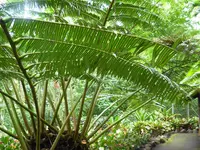
Oriental vessel fern
Angiopteris evecta
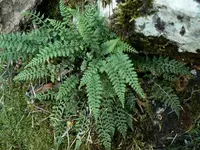
Smooth rock spleenwort
Asplenium fontanum
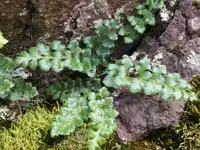
Asplenium pleurosorum
Asplenium pleurosorum
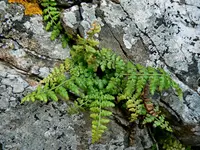
Asplenium obovatum
Asplenium obovatum
largeleaf maidenhair
Adiantum macrophyllum