Asplenium pleurosorum Care

Asplenium pleurosorum

About Asplenium pleurosorum

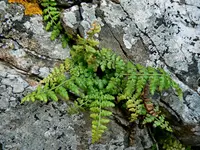
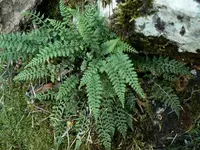
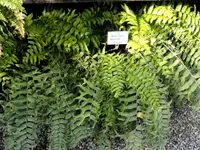
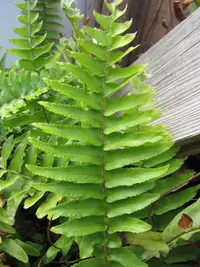
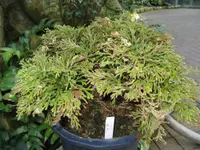
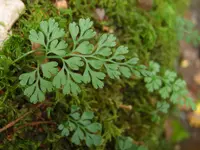
Asplenium pleurosorum is a small to medium evergreen fern with fine, divided fronds that form a soft, arching clump. It has a delicate, lacy look but a fairly robust constitution.

This species is native to moist, shaded habitats in parts of Australasia, often growing on rocky ground or among leaf litter in forests. Its preference for stable moisture, shelter from harsh sun, and good airflow influences how to care for Asplenium pleurosorum.

It suits growers who can provide consistent humidity and avoid extremes in temperature. In cultivation it adapts well to containers indoors or shaded outdoor spots with loose, humus-rich soil.

Main Plant Requirements

Care Difficulty

Moderate Care

Light Preference

Partial Shade

Water Requirements

Keep Soil Moist

Temperature Preference

Warm Climate

Hardiness Zone

9–11

Soil Texture

Loamy, Peaty, Organic-rich

Soil pH

Acidic (5.5–6.5)

Soil Drainage

Moist but well-drained

Fertilization

Minimal (feed rarely)

Get Personalized Care Plan

Scan your plant to receive care tips personalized for your specific plant

Available on iOS and Android

How to Care for the Asplenium pleurosorum

This fern prefers soft, filtered light that mimics a forest floor under tree canopy.

  • Provide bright shade or dappled light, with at most 1–2 hours of early morning sun and no harsh midday or afternoon sun.
  • Site Asplenium pleurosorum where it receives indirect light throughout the day; too much direct sun scorches fronds, while deep shade leads to sparse, stretched growth.
  • In summer, protect from intense sun with overhead cover; in winter, allow slightly brighter indirect light to compensate for shorter days.

Moist, but not waterlogged, soil supports healthy fern growth.

  • Water when the top 2–3 cm of soil feel slightly dry, aiming to keep the root zone evenly moist rather than letting it fully dry out.
  • Use free-draining, humus-rich soil so excess water can exit quickly; persistent soggy conditions lead to root rot and blackened, collapsing fronds.
  • In cooler months, reduce watering frequency as growth slows, watching for pale, crisp fronds as a sign of underwatering and yellow, mushy bases as overwatering.

Stable, mild temperatures suit this fern best and prevent stress to the fronds.

  • Aim for 60–75°F (16–24°C) during active growth, which supports steady foliage production without heat or cold stress.
  • Protect the plant from temperatures below 40°F (4°C), as it is sensitive to frost and can suffer tissue damage if exposed to freezing conditions.
  • In hot weather above 80°F (27°C), increase shade and humidity while ensuring airflow, and avoid placing the plant near drying heat sources or cold drafts.

This fern prefers consistently moist air and reacts quickly to dry indoor conditions.

  • Aim for 60–80% humidity to keep fronds lush and prevent browning tips.
  • It tolerates brief dips to 40–50%, but prolonged dry air causes crisp edges and slowed growth.
  • Increase humidity with a nearby humidifier, grouped plants, or a pebble tray, but avoid misting directly onto fronds.

This species needs a loose, moisture-retentive but fast-draining mix that mimics forest leaf litter.

  • Use a mix of 40% peat or coco coir, 40% fine bark, and 20% perlite to combine moisture retention with air spaces.
  • Aim for slightly acidic to neutral pH around 5.5–7.0, avoiding strongly alkaline mixes that can limit nutrient uptake.
  • Ensure the mix feels springy and never compact; add extra bark or perlite if it starts to feel heavy or stays wet for 2–3 days.
  • Avoid dense garden soil, clay-heavy mixes, or pots without drainage, which promote root rot in Asplenium pleurosorum.

This fern is well suited to container growing for patios, shaded balconies, and sheltered outdoor spots.

  • Choose a wide, shallow pot to accommodate its fibrous, surface-skimming roots without leaving unused deep soil that stays soggy.
  • Use a stable, heavier container material if placed outdoors, since the leafy mound can catch wind and tip lighter pots.
  • Select a pot depth that allows 3–5 cm of mix beneath the root mass so water drains away from the crown while roots still spread laterally.

This fern prefers modest feeding, as Asplenium pleurosorum is adapted to relatively low‑nutrient forest habitats.

  • Use a balanced liquid fertilizer (around 10-10-10) diluted to 25–50% strength during active growth in spring–summer.
  • Apply every 4–6 weeks only when the plant is producing new fronds.
  • Avoid slow-release pellets pressed against the crown to reduce rot risk.
  • Do not fertilize in winter or when growth is stalled; resume light feeding once new fronds appear.

Pruning needs are minimal and mainly focus on hygiene and maintaining a neat clump for Asplenium pleurosorum.

  • Best time for pruning is late winter to early spring, or whenever individual fronds decline.
  • Remove dead, yellowing, or damaged fronds at the base using clean, sharp scissors or snips.
  • Thin a few crowded inner fronds if air movement is poor, but avoid hard cutting back of the whole plant.
  • Light, targeted pruning supports healthier new frond growth and reduces fungal problems.

This fern prefers stable conditions, so repotting or transplanting Asplenium pleurosorum should be infrequent and gentle.

  • Repot when roots circle the pot, water drains very quickly, or growth slows despite good care, typically every 2–3 years.
  • Choose early spring for repotting, moving only 1 pot size up with a loose, moisture-retentive, well-drained mix.
  • Handle the root ball carefully; avoid breaking the crown and keep roots as intact as possible.
  • Water thoroughly after repotting, then keep evenly moist and shaded for 1–2 weeks to limit transplant shock.

Propagation of Asplenium pleurosorum is possible but slower and more technical than for many common houseplants.

  • Division of established clumps in early spring is the most practical method for home growers.
  • Lift the plant, then gently separate small sections with both roots and healthy fronds attached.
  • Replant divisions into a fine, moisture-retentive mix, keeping crowns at the same depth as before.
  • Maintain high humidity, stable warmth (65–75°F), and consistent moisture until new growth confirms establishment.

Winter care for Asplenium pleurosorum depends on climate, as the fern dislikes prolonged freezing and harsh wind.

  • In mild climates, maintain an evenly moist but not waterlogged root zone and avoid drying winter winds.
  • Apply a 3–5 cm mulch layer around outdoor plants to buffer root temperature, keeping mulch off the crown.
  • In colder regions or for potted plants, move containers indoors or into a frost-free, bright, cool space.
  • Do not allow soil to fully dry; water sparingly but consistently, as cold plus drought weakens fronds.

Care Tips

Rhizome positioning

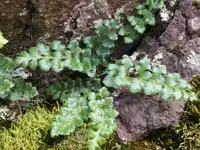
Plant the fern with its rhizome just at or slightly above the soil surface, since burying it too deep often leads to rot and weak, sparse frond production.

Frond sanitation

Remove old, yellowing, or damaged fronds by cutting them cleanly at the base with sterilized scissors to improve airflow and reduce fungal spore buildup in dense plantings.

Shallow, wide pots

Use a shallow, wide container rather than a deep one to suit its surface-rooting habit and to prevent water from sitting in a deep, poorly aerated root zone.

Moisture-check method

Judge watering needs by feeling the top 1–2 cm of mix and also lifting the pot to learn its wet vs dry weight, which is more reliable than following a fixed schedule when growing Asplenium pleurosorum.

Quarantine new plants

Keep any new ferns or foliage plants in a separate area for 2–3 weeks before placing them nearby to reduce the risk of introducing scale, mealybugs, or fungal problems to established specimens.

Common Pests and Diseases

Scale insects

These insects attach to frond midribs and undersides, sucking sap and causing yellowing, stunting, and sticky honeydew on the foliage.

Solution

Remove heavily infested frond sections and gently scrape or wipe remaining scale with a cotton pad dipped in 70% isopropyl alcohol, then rinse the fronds with lukewarm water; repeat weekly until no new scale appears and reduce plant stress by providing stable humidity and correct light as part of Asplenium pleurosorum care instructions.

Mealybugs

This pest appears as white, cottony clusters in frond bases and on the undersides, where it feeds on sap and can cause distortion and yellowing.

Solution

Isolate the plant, dab visible mealybugs with a cotton swab dipped in 70% isopropyl alcohol, then shower the fern with lukewarm water to wash off residues and repeat inspections weekly, using a light horticultural soap spray on sheltered frond bases if needed.

Rhizoctonia leaf spot

This disease causes irregular brown or black lesions along the pinnae and frond margins, often with a dry, papery texture and possible frond dieback under humid, stagnant conditions.

Solution

Remove and discard affected fronds, improve air circulation and avoid overhead watering, then keep foliage dry while the soil is evenly moist; in persistent cases, apply a labeled fungicide for ornamental ferns according to package directions and reduce crowding around the plant.

Bacterial blight

Symptoms include water-soaked, translucent spots on young fronds that quickly turn dark, sometimes with a yellow halo and rapid collapse of tender tissue in very humid environments.

Solution

Immediately cut off and discard affected fronds, avoid splashing water on foliage, and water only at the soil level; increase spacing and airflow around the plant, and sterilize tools with alcohol or a 10% bleach solution before and after pruning to limit spread.

Interesting Facts

Australasian range specialist

This fern is naturally restricted to cool, moist forests of southeastern Australia, Tasmania, and New Zealand, where it often grows on shaded banks and rocky slopes rather than as a typical tree epiphyte.

Distinctive frond architecture

Its fronds are once-pinnate with narrow, slightly curved pinnae that give the plant a fine-textured, arching look, quite different from the broader, wavier fronds of the commonly grown bird’s‑nest Asplenium species.

Preference for cool habitats

In the wild it is most abundant in higher-rainfall, cooler areas, which makes it better adapted to mild, temperate conditions than to consistently warm, tropical sites, an important point for Asplenium pleurosorum indoor care in cooler climates.

FAQs about Asplenium pleurosorum

This species is naturally an outdoor fern from cool, shaded habitats, but can adapt to indoor culture if humidity is high and temperatures are moderate. Asplenium pleurosorum indoor care works best in bright shade and stable conditions.

Grow Healthy Plants with Botan Care

Keep your plants happy and healthy with plant identification, disease detection, and easy care guidance.

Botan plant care app — identify plants on mobile

Explore More Plants