

Epiphytic Mounting
Mount plants on cork bark or hardwood with a thin layer of long-fiber sphagnum around the roots to mimic their natural epiphytic habit and improve air flow around the root zone.

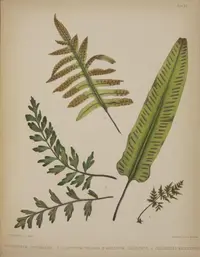
Mexican spleenwort, Asplenium praemorsum, is a small evergreen fern known for its finely divided, often irregularly notched fronds that create a delicate, textured look. It typically forms low clumps and is usually grown for its foliage rather than flowers.
This fern is native to parts of Mexico and Central America, where it grows in humid, shaded habitats, often on rocks or tree trunks. In cultivation it prefers consistent moisture, high humidity, and soft, indirect light.
Its moderate sensitivity to dry air and irregular watering means it is not the easiest fern for beginners, but it is manageable with stable conditions. Learning how to care for Mexican spleenwort helps maintain dense, healthy fronds and avoid browning or leaf drop.

Care Difficulty
Moderate Care

Light Preference
Partial Shade

Water Requirements
Keep Soil Moist

Temperature Preference
Tropical / Frost Sensitive

Hardiness Zone
10–11

Soil Texture
Loamy, Peaty, Organic-rich

Soil pH
Acidic (5.5–6.5)

Soil Drainage
Moist but well-drained

Fertilization
Light (every 4–6 weeks)
Scan your plant to receive care tips personalized for your specific plant
Available on iOS and Android
This fern prefers soft, filtered light that mimics bright forest shade.
This fern needs consistently moist but not waterlogged soil around its shallow roots.
This species prefers mild, stable temperatures without sharp fluctuations.
This fern prefers consistently moist air and reacts quickly to dry indoor conditions.
This species prefers a loose, humus-rich, fast-draining yet evenly moist substrate.
This fern adapts well to container culture when moisture and stability are managed carefully.
This fern benefits from light feeding but excess nutrients can damage its fine roots.
Asplenium praemorsum needs only light, hygienic pruning to maintain a tidy, healthy clump.
This fern prefers stable conditions, so repotting or transplanting should be infrequent and gentle.
Propagation of Asplenium praemorsum is possible but slower and more technical than many houseplants.
This fern is only mildly frost tolerant and benefits from thoughtful winter management in cooler climates.

Plant Health Check
Not sure what's wrong with your plant? Check your plant's health inside the app.
The frond segments often end in irregular, jagged tips that look as if they were bitten off, which is reflected in the species name praemorsum, meaning bitten at the end in Latin.
This fern commonly grows as an epiphyte on trees or as a lithophyte on rocky outcrops, anchoring itself in moss and leaf litter rather than in deep soil in its native Mexican and Central American habitats.
Its fronds are thick, somewhat leathery, and glossy, an adaptation that helps reduce water loss and allows it to tolerate brighter, slightly drier conditions than many other spleenworts, which is useful to understand for Asplenium praemorsum care.
Growth is moderate rather than rapid. Young plants usually take 2–3 years to form a dense clump. Rate depends on stable moisture, humus-rich substrate, and cool, shaded conditions; dry air or irregular watering slows new frond production.
Keep your plants happy and healthy with plant identification, disease detection, and easy care guidance.

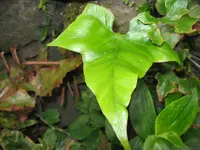
Asplenium hemionitis
Asplenium hemionitis
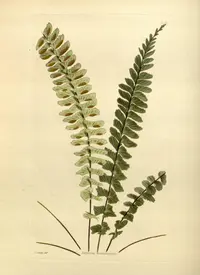
singlesorus spleenwort
Asplenium monanthes
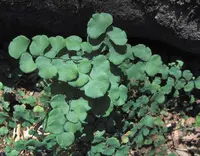
California maidenhair
Adiantum jordanii
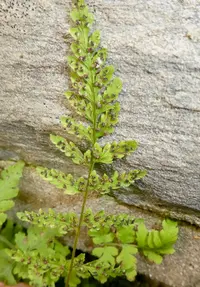
Tennessee bladderfern
Cystopteris tennesseensis
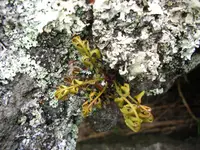
Egyptian spleenwort
Asplenium aethiopicum
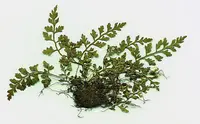
mountain spleenwort
Asplenium montanum
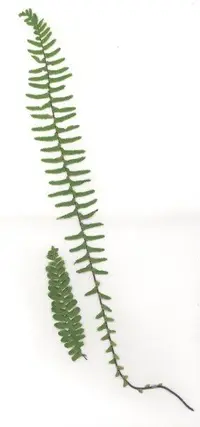
ebony spleenwort
Asplenium platyneuron
Fan-leaved Maidenhair
Adiantum flabellulatum