

Rock Crevice Mounting
Tuck the root ball into a narrow crevice between rocks or broken concrete pieces so the wiry roots can anchor securely, mimicking its natural habitat and improving drainage and airflow around the crown.

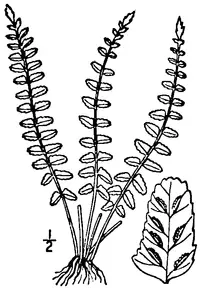
Blackstem spleenwort, Asplenium resiliens, is a small evergreen fern known for its dark, wiry stems and compact, upright fronds. It forms neat clumps that suit rock gardens, crevices, and small containers.
In nature it grows on rocky limestone outcrops and shaded cliffs, mainly in the southern United States and parts of Mexico. Its slow, steady growth and preference for stable conditions mean it can be moderately demanding under typical home settings.
This fern prefers shaded spots with consistent moisture and sharply drained, mineral-rich substrates. Understanding how to care for blackstem spleenwort starts with mimicking its rocky, lightly sheltered habitat and avoiding waterlogged soil.

Care Difficulty
Moderate Care

Light Preference
Partial Shade

Water Requirements
Keep Soil Moist

Temperature Preference
Warm Climate

Hardiness Zone
7–9

Soil Texture
Loamy, Rocky, Organic-rich

Soil pH
Acidic (5.5–6.5), Slightly acidic (6.5–7.0)

Soil Drainage
Moist but well-drained

Fertilization
Minimal (feed rarely)
Scan your plant to receive care tips personalized for your specific plant
Available on iOS and Android
This fern thrives in bright, dappled light that mimics woodland shade.
This species prefers consistently moist but not saturated soil.
This fern grows best in mild, stable temperatures with protection from frost and extreme heat.
This fern prefers consistently moist air and reacts quickly to very dry conditions.
This species needs a loose, rocky, organic-rich substrate that drains fast but never bakes hard.
This fern adapts well to container culture when the pot supports its shallow, fibrous root system.
This small native fern needs only light feeding when grown in containers or very lean soils.
Asplenium resiliens needs only light, hygienic pruning to keep fronds healthy and tidy.
This fern grows slowly and prefers minimal disturbance, so repot or transplant only when clearly necessary.
This fern is usually propagated by careful division rather than from spores for home growers.
This species is relatively cold hardy in much of its native range and usually needs only light winter care outdoors.

Plant Health Check
Not sure what's wrong with your plant? Check your plant's health inside the app.
This species has unusually dark, almost black stipes (leaf stalks) that contrast sharply with its bright green leaf blades, which is the main feature that inspired the common name blackstem spleenwort.
It typically grows in crevices of limestone and other calcareous rocks, especially on shaded cliffs and walls where thin, alkaline soils accumulate.
The fern is native to the south-central and southeastern United States and extends south into northern Mexico, where it occupies warm, rocky habitats rather than the deep forest understory preferred by many other ferns.

In some sheltered rock crevices this fern can form persistent clonal tufts, with new fronds arising from the same small rootstock year after year, allowing a single genetic individual to endure for a long time in a very limited patch of habitat.
This species is evergreen in mild climates, holding its fronds year-round. In colder areas, some fronds may scorch or die back in winter, but the rootstock usually survives and sends up fresh growth in spring.
Keep your plants happy and healthy with plant identification, disease detection, and easy care guidance.

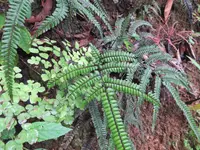
pyramid maidenhair
Adiantum pyramidale
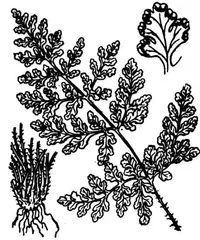
Hemionitis acrostica
Hemionitis acrostica
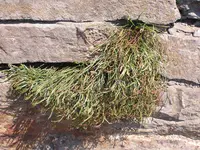
forked spleenwort
Asplenium septentrionale
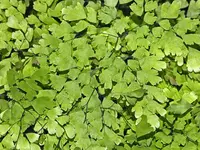
fan maidenhair
Adiantum tenerum
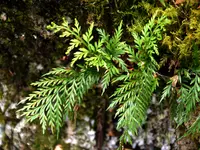
Matua Kaponga
Asplenium richardii
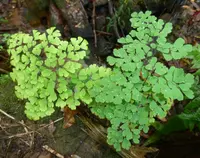
Mexican maidenhair fern
Adiantum poiretii
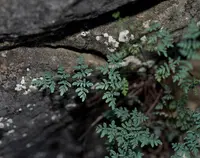
powdery false cloak fern
Hemionitis artax
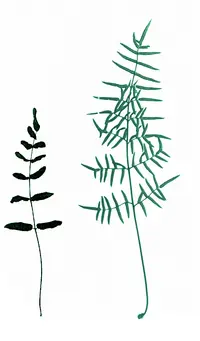
purple-stem cliffbrake
Hemionitis atropurpurea