

Use low trays
Place the pot in a shallow tray filled with rinsed gravel and keep a thin layer of water below the pot base to stabilize humidity around the fronds without waterlogging the roots.

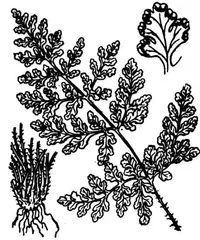
Hemionitis acrostica is a small terrestrial fern valued for its delicate, finely divided fronds and compact growth. It forms low clumps that suit pots, terrariums, or shaded garden spots in mild climates.
This species occurs naturally in tropical to subtropical forest habitats, often in moist, sheltered locations with high humidity and filtered light. Its thin fronds and relatively fine roots make it more sensitive to drying out and temperature swings than many common houseplants.
Because of this, it is best suited to growers who can provide stable moisture, soft light, and well-drained but consistently damp soil. Understanding how to care for Hemionitis acrostica helps maintain healthy fronds and steady, moderate growth.

Care Difficulty
Moderate Care

Light Preference
Partial Shade

Water Requirements
Keep Soil Moist

Temperature Preference
Tropical / Frost Sensitive

Hardiness Zone
10–11

Soil Texture
Loamy, Peaty, Organic-rich

Soil pH
Acidic (5.5–6.5)

Soil Drainage
Moist but well-drained

Fertilization
Light (every 4–6 weeks)
Scan your plant to receive care tips personalized for your specific plant
Available on iOS and Android
This fern prefers soft, filtered light that mimics a shaded forest floor.
Consistently moist but not waterlogged soil suits this fern best.
Stable, mild temperatures support healthy, steady growth for this species.
This fern needs consistently moist air to maintain healthy fronds and fine roots.
This species prefers a loose, humus-rich, evenly moist substrate that never becomes waterlogged.
This fern is well suited to container culture due to its compact root system and humidity needs.
Light, steady feeding supports healthy fronds without overwhelming Hemionitis acrostica’s fine roots.
Pruning focuses on hygiene and maintaining tidy growth rather than reshaping this fern.
Careful timing and gentle handling during repotting help this fern maintain a stable root system.
Propagation is possible but slower than many common houseplants, so patience is important.
This fern is sensitive to frost and benefits from thoughtful winter management, especially in containers.

Plant Health Check
Not sure what's wrong with your plant? Check your plant's health inside the app.
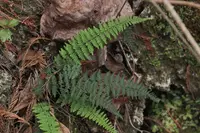
This species shows marked dimorphism between its sterile and fertile fronds, with the fertile fronds often narrower and more deeply lobed, carrying the sporangia on their undersides in distinct patterns.
In nature it often grows in shaded rock crevices and on limestone or other calcareous substrates, anchoring in very thin soil layers where competition from larger plants is limited.
Its natural distribution is strongly tied to consistently high air humidity and sheltered, low-light habitats, so wild populations are typically found in moist ravines, forest understories, and near seepage zones.
This fern adapts to both indoors and shaded outdoor spaces, provided humidity stays moderate to high and soil never fully dries. In many climates, Hemionitis acrostica indoor care is more stable, especially during cold or very dry weather.
Keep your plants happy and healthy with plant identification, disease detection, and easy care guidance.

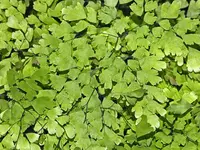
fan maidenhair
Adiantum tenerum
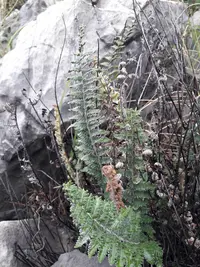
Hemionitis aschenborniana
Hemionitis aschenborniana
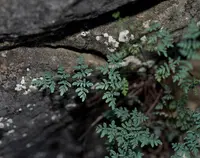
powdery false cloak fern
Hemionitis artax
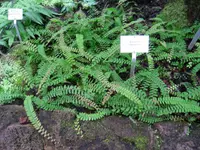
Adiantum edgeworthii
Adiantum edgeworthii
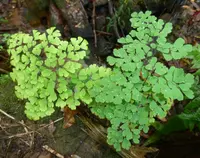
Mexican maidenhair fern
Adiantum poiretii
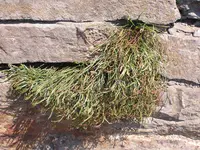
forked spleenwort
Asplenium septentrionale
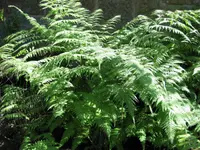
swordfern
Macrothelypteris torresiana
Alabama lip fern
Hemionitis alabamensis