Hemionitis aschenborniana Care

Hemionitis aschenborniana

About Hemionitis aschenborniana

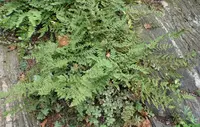
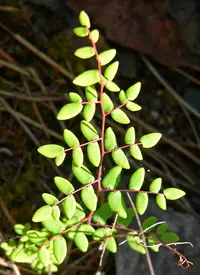
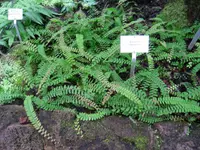
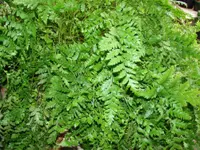
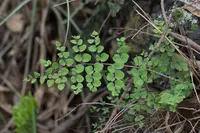
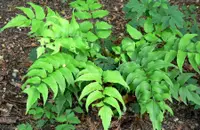
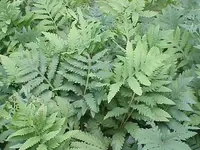
Hemionitis aschenborniana is a small, tropical fern valued for its delicate, heart-shaped fronds and compact, clumping growth. It often forms low, soft mounds that suit containers and terrariums.

This species is native to humid forests of Central America, where it grows on the forest floor or among rocks in shaded, sheltered spots. Its preference for steady moisture, high humidity, and protection from direct sun makes it moderately demanding indoors.

Those who learn how to care for Hemionitis aschenborniana usually succeed by providing stable warmth, gentle filtered light, and an airy but consistently moist substrate.

Main Plant Requirements

Care Difficulty

Moderate Care

Light Preference

Partial Shade

Water Requirements

Keep Soil Moist

Temperature Preference

Tropical / Frost Sensitive

Hardiness Zone

11–12

Soil Texture

Loamy, Peaty, Organic-rich

Soil pH

Acidic (5.5–6.5)

Soil Drainage

Moist but well-drained

Fertilization

Light (every 4–6 weeks)

Get Personalized Care Plan

Scan your plant to receive care tips personalized for your specific plant

Available on iOS and Android

How to Care for the Hemionitis aschenborniana

This fern prefers soft, filtered light that mimics a forest floor environment.

  • Provide 4–6 hours of bright, indirect light daily, such as dappled shade under taller plants or sheer-curtained windows indoors.
  • Allow gentle morning sun but protect from strong midday and afternoon sun, which can scorch fronds and cause pale, crispy edges on Hemionitis aschenborniana.
  • In low-light seasons, move slightly closer to a bright window or brighter shade outdoors, but avoid abrupt shifts from deep shade to high light.

This species needs consistently moist but not waterlogged conditions around its roots.

  • Water when the top 1–2 cm of soil feels slightly dry, aiming for evenly damp soil that never fully dries out between waterings.
  • Use a loose, well-draining mix; excess water should drain within a few minutes to prevent root rot and sour, musty smells from the soil.
  • Reduce watering slightly in cooler months, watching for limp, curling fronds as a sign of underwatering and blackened, mushy rhizomes as overwatering damage.

This fern performs best in stable, mild temperatures without sudden swings.

  • Aim for 65–80°F (18–27°C) for active growth, which suits typical woodland or sheltered garden conditions.
  • Protect from temperatures below 50°F (10°C); prolonged exposure near 40°F (4°C) or any frost can damage fronds and rhizomes.
  • In hot periods above 85°F (29°C), give extra shade and higher humidity, avoiding hot, drying winds or heat radiating from walls and paving.

This fern prefers consistently moist air similar to a humid forest understory.

  • Aim for 60–80% humidity; growth slows and fronds crisp at prolonged levels below 40%.
  • Crisping tips, dull fronds, and stalled new fiddleheads indicate humidity stress in Hemionitis aschenborniana.
  • Increase humidity with a nearby humidifier, grouped plants, and a pebble tray, but avoid misting that keeps fronds wet for long periods.

This species prefers a loose, airy, organic-rich mix that stays evenly moist but never waterlogged.

  • Use a mix of 50–60% peat or coco coir with 20–30% fine bark and 10–20% perlite for both moisture retention and aeration.
  • Target slightly acidic soil, around pH 5.5–6.5, which supports nutrient uptake and healthy root development in Hemionitis aschenborniana.
  • Ensure rapid drainage by avoiding dense garden soil, clay-heavy mixes, or large amounts of fine sand that compact in containers.
  • Improve aeration by using small-particle orchid bark and perlite, and gently loosening the upper layer if it starts to crust.

This fern is well suited to container growing due to its compact, shallow-rooted habit.

  • Choose a wide, relatively shallow pot to match its spreading rhizomes and prevent deep, poorly aerated wet zones.
  • Select plastic or glazed ceramic if slower drying is needed, or unglazed terracotta where conditions are already humid to avoid constant wetness.
  • Elevate the pot slightly on feet or a stand so drainage holes stay clear and excess water can exit quickly after watering.

This fern responds well to light, consistent feeding during active growth.

  • Use a balanced liquid fertilizer (around 10-10-10) diluted to 1/4–1/2 strength for Hemionitis aschenborniana.
  • Feed every 4–6 weeks in spring and summer while growth is steady.
  • Skip or greatly reduce feeding in fall and winter when growth slows.
  • Flush the pot with plain water every few months to prevent salt buildup.

Pruning needs are light and mainly focused on hygiene and maintaining a compact shape for Hemionitis aschenborniana.

  • Best time for pruning is late winter to early spring or after new fronds start appearing.
  • Remove dead, yellowing, damaged, or diseased fronds at the base with clean, sharp scissors.
  • Thin very crowded fronds to improve airflow and reduce fungal issues.
  • Avoid cutting healthy rhizomes; this fern does not respond well to heavy structural pruning.

This species prefers stable conditions and benefits from careful, infrequent repotting.

  • Repot every 2–3 years in spring when roots circle the pot, growth slows, or water drains too quickly.
  • Choose a shallow, slightly larger container with a loose, humus-rich, well-drained mix.
  • Slide the plant out gently, keep the root ball as intact as possible, and avoid teasing roots aggressively.
  • Water thoroughly after repotting, then keep in shaded, humid conditions for 1–2 weeks to limit transplant shock.

Propagation of this fern is usually done on a small scale and requires stable humidity and warmth.

  • Use rhizome division in spring when repotting mature clumps of Hemionitis aschenborniana.
  • Select sections with healthy roots and at least 2–3 growing points per division.
  • Plant divisions in a fine, moist, well-drained mix and cover with a clear dome or plastic to maintain high humidity.
  • Keep at 68–75°F in bright, indirect light and avoid waterlogging while new fronds establish.

This fern is frost sensitive and needs protection in regions with cold winters.

  • Keep plants above 50°F; prolonged exposure near freezing can damage fronds and rhizomes.
  • Move container plants indoors or into a greenhouse before night temperatures drop below 55°F.
  • Provide bright, indirect light, slightly drier soil, and good air circulation indoors over winter.
  • Avoid cold drafts, unheated windowsills, and sudden temperature swings that stress foliage.

Care Tips

Use shallow pots

Choose a wide, shallow pot with good drainage so the rhizomes can spread horizontally and form an even mat rather than becoming crowded in deep soil.

Top-dress the rhizomes

Once a year, gently brush away loose surface mix and add a thin layer (0.5–1 cm) of fresh, fine-textured substrate around exposed rhizomes to keep them covered without burying the frond bases.

Protect frond undersides

When checking for pests or cleaning, handle fronds by the stalks and avoid rubbing the felted undersides, which can be damaged by oils or rough cloths and become more vulnerable to mites.

Rotate for even spread

Rotate the pot 1–2 times per month so new fronds develop evenly around the plant, creating a balanced rosette that fills the container rather than leaning toward one side.

Quarantine new plants

Isolate any new ferns or houseplants for 2–3 weeks and inspect them regularly before placing them nearby, since early pest detection greatly reduces long-term issues when caring for Hemionitis aschenborniana.

Common Pests and Diseases

Scale insects

This pest attaches to fronds and stems as small brown or tan bumps, sucking sap and causing yellowing and weak growth. Symptoms include sticky honeydew on the foliage and nearby surfaces.

Solution

Isolate the plant, then gently scrape or wipe off scales with a cotton swab dipped in 70% isopropyl alcohol, taking care not to damage the delicate fronds. Follow with 2–3 treatments of a light horticultural oil or insecticidal soap at 7–10 day intervals and improve air movement so new growth hardens quickly.

Mealybugs

These insects appear as white, cottony clusters along the midribs and at frond bases, drawing sap and causing stunted, distorted foliage. This pest often hides in tight crown areas where fronds emerge.

Solution

Remove visible clusters with a cotton swab dipped in 70% isopropyl alcohol and rinse the plant gently with lukewarm water to dislodge remaining insects. Repeat alcohol spot-treatments weekly and, in heavier infestations, apply insecticidal soap to all frond surfaces, avoiding full sun until leaves are dry.

Fern scale (soft scale)

This pest forms flat, soft, tan patches on the undersides of fronds, particularly on thin, heart-shaped leaves. Symptoms include gradual frond yellowing, premature frond drop, and a general decline in vigor.

Solution

Inspect the undersides of fronds and manually remove scales using a soft cloth or brush with diluted alcohol, then thoroughly rinse with water. For persistent problems, use a low-rate horticultural oil labeled safe for ferns, applied in the evening, and repeat after 7–14 days while maintaining stable humidity and avoiding plant stress.

Rhizoctonia leaf spot

This disease causes irregular brown spots with darker margins on fronds, often starting where water sits on the leaf surface. Symptoms include coalescing lesions that cause frond blighting in warm, humid, stagnant conditions.

Solution

Remove and discard affected fronds promptly and avoid overhead watering so foliage dries quickly. Increase air circulation around the plant, water at the soil level early in the day, and in recurring cases use a fern-safe fungicide containing chlorothalonil or a similar active ingredient according to label directions.

Botrytis blight

This disease produces soft, water-soaked spots on older fronds that may develop gray, fuzzy mold under cool, humid, low-light conditions. Symptoms include collapsing fronds starting from the tips or wounded areas.

Solution

Cut off and discard all affected fronds, including any with gray mold, and reduce humidity spikes by improving airflow and avoiding crowded placement. Allow the top of the substrate to dry slightly before the next watering, clean up fallen leaf debris, and in severe cases apply a registered ornamental fungicide suitable for ferns to protect new growth.

Interesting Facts

Distinct heart-shaped fronds

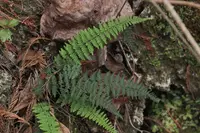
This fern produces firm, heart-shaped sterile fronds and narrower fertile fronds on the same plant, a clear visual separation between photosynthetic and spore-bearing leaves.

Epipetric rock specialist

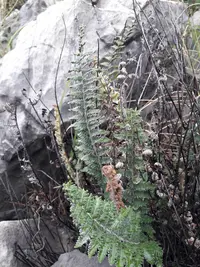
In its native range from Mexico to Central America, this species often grows directly on shaded limestone or other calcareous rocks, anchoring in thin organic layers in rock crevices.

Velvety, hairy foliage

The fronds and stipes are covered with fine hairs that give the plant a soft, velvety appearance and help reduce water loss in its often exposed, rocky habitats.

FAQs about Hemionitis aschenborniana

This fern adapts to both, but performs best in a stable, humid, frost‑free environment. In many homes, Hemionitis aschenborniana indoor care provides more consistent temperature and moisture than exposed outdoor settings, especially in dry or cold climates.

Grow Healthy Plants with Botan Care

Keep your plants happy and healthy with plant identification, disease detection, and easy care guidance.

Botan plant care app — identify plants on mobile

Explore More Plants