Shallow potting
Use a wide, shallow pot and position the rhizomes just below the surface so new fronds can emerge easily and the root system does not stay waterlogged in deep, compacted soil.

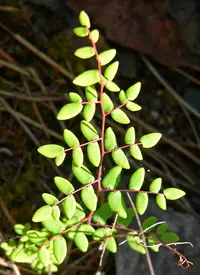
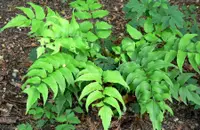
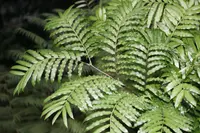
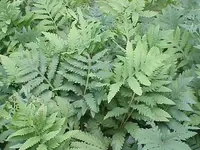
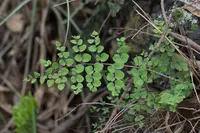
Pellaea andromedifolia, also known as Hemionitis andromedifolia, is a small drought-tolerant fern native to rocky slopes and chaparral in California and northern Baja California. It often grows in crevices or on thin, well-drained soils. Its fronds are finely divided, giving a soft, airy look, and they often arch or cascade slightly, making it suitable for rock gardens and specialized collections. This species is more tolerant of dryness and sun than many ferns but dislikes constantly wet or heavy soil. Gardeners who care for Pellaea andromedifolia should note that it can be more demanding in humid or low-light indoor settings, where good airflow and sharp drainage become especially important.

Care Difficulty
Moderate Care

Light Preference
Partial Shade

Water Requirements
Keep Soil Moist

Temperature Preference
Tropical / Frost Sensitive

Hardiness Zone
10–11

Soil Texture
Loamy, Peaty, Organic-rich

Soil pH
Acidic (5.5–6.5), Slightly acidic (6.5–7.0)

Soil Drainage
Moist but well-drained

Fertilization
Light (every 4–6 weeks)
Scan your plant to receive care tips personalized for your specific plant
Available on iOS and Android
This fern prefers bright, indirect light that mimics dappled woodland shade.
This fern prefers evenly moist but not saturated soil.
This species prefers mild, stable temperatures without drafts or extremes.
This fern prefers moderately high, stable humidity to keep fronds fine-textured and healthy.
Hemionitis andromedifolia needs a loose, humus-rich medium that stays lightly moist yet drains freely.
This species grows well in containers when root space, drainage, and moisture balance are managed carefully.
This fern benefits from light, steady nutrition rather than heavy feeding.
Hemionitis andromedifolia responds well to light, periodic tidying rather than heavy cutting.
This fern prefers stable conditions and shallow containers, so repot only when truly necessary.
Propagation of Hemionitis andromedifolia is possible but best treated as a slow, patient process.
This fern has limited frost tolerance and benefits from thoughtful winter management, especially in containers.

Plant Health Check
Not sure what's wrong with your plant? Check your plant's health inside the app.
This fern is native to dry, rocky slopes and chaparral habitats of California and Baja California, where it often grows in thin soil pockets on granite or other hard rock rather than in deep forest humus.
Unlike many ferns, it has relatively thick, leathery leaf segments that reduce water loss and allow it to survive seasonal summer drought in its natural range.
Its roots and rhizomes are adapted to anchor into narrow rock crevices, where they access small, protected moisture reserves and avoid competition from larger, shallow-rooted plants.
This fern grows slowly to moderately, usually taking 2–3 years to form a full clump. Expect fronds to extend gradually each season rather than dramatic flushes of growth, especially in containers or drier garden positions.
Keep your plants happy and healthy with plant identification, disease detection, and easy care guidance.