Asplenium sagittatum Care

Asplenium sagittatum

About Asplenium sagittatum

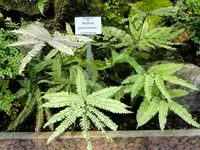
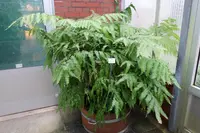
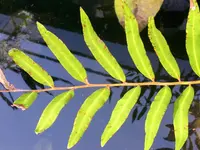
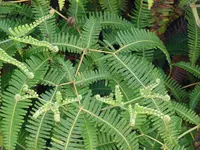
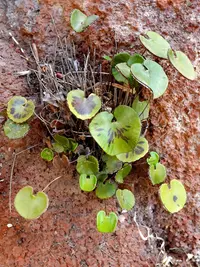
Asplenium sagittatum is a small to medium terrestrial fern known for its narrow, often slightly arching fronds with a characteristic segmented appearance. It typically forms loose clumps, giving a fine-textured, airy look.

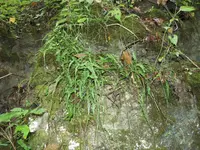
This species occurs in rocky, humid habitats, often in shaded or partially shaded sites, where moisture is steady and the soil is rich in organic matter. It is moderately demanding, as it dislikes drying out and reacts poorly to very bright, direct sun or stagnant, compacted soil.

Understanding how to care for Asplenium sagittatum starts with providing consistent moisture, good air circulation, and a sheltered, shaded position that mimics its natural habitat.

Main Plant Requirements

Care Difficulty

Moderate Care

Light Preference

Partial Shade

Water Requirements

Keep Soil Moist

Temperature Preference

Warm Climate

Hardiness Zone

Unknown

Soil Texture

Loamy, Peaty, Organic-rich

Soil pH

Acidic (5.5–6.5)

Soil Drainage

Moist but well-drained

Fertilization

Light (every 4–6 weeks)

Get Personalized Care Plan

Scan your plant to receive care tips personalized for your specific plant

Available on iOS and Android

How to Care for the Asplenium sagittatum

This fern prefers soft, filtered light that mimics a forest understory.

  • Provide 3–5 hours of bright, indirect light each day, such as dappled shade under taller plants or sheer-curtained light near an east or north window.
  • Tolerates partial to full shade but fronds may lengthen and lose density if light is very low for many weeks.
  • Protect Asplenium sagittatum from direct midday or afternoon sun, which can scorch fronds and cause pale, dry patches, especially in summer.

This species needs steadily moist but not waterlogged soil.

  • Water when the top 2–3 cm of soil feel slightly dry, aiming for evenly moist soil that never stays soggy or bone dry for long.
  • In spring and summer, expect to water more often as growth and evaporation increase; reduce frequency in autumn and winter while keeping slight surface moisture.
  • Watch for yellowing, limp fronds and a sour smell as signs of overwatering, and crisp browning tips or curling fronds as underwatering indicators; always ensure good drainage.

This fern favors mild, stable temperatures without extremes.

  • Aim for 65–80°F (18–27°C) for best growth, avoiding sudden swings of more than about 10°F (6°C) in a short time.
  • Protect from cold; growth slows below 55°F (13°C), and prolonged exposure near 40°F (4°C) or any frost can damage or kill fronds.
  • In hot spells above 85°F (29°C), provide extra shade, higher humidity, and good air movement, while keeping soil from drying out completely.

This fern prefers consistently moist air and reacts quickly to dry indoor conditions.

  • Aim for 50–70% humidity; use a room humidifier or pebble tray near heating or air-conditioning vents.
  • Dry, crispy pinnae tips and slowed frond growth indicate humidity stress in Asplenium sagittatum.
  • Cluster plants together and avoid direct airflow from fans or vents to reduce evaporation from fronds.

Asplenium sagittatum grows best in a loose, moisture-retentive yet fast-draining substrate.

  • Use an organic-rich mix such as 2 parts peat or coco coir, 1 part fine bark, and 1 part perlite for structure and drainage.
  • Ensure the mix stays evenly moist but never waterlogged; water should drain through within seconds, not pool on the surface.
  • Keep pH slightly acidic to neutral, around 5.5–6.8, avoiding lime-heavy or strongly alkaline components like large amounts of garden lime.
  • Improve aeration by incorporating medium-grade perlite or pumice and avoid dense clay soils or unamended garden soil in pots.

This species is well suited to container culture when moisture and stability are controlled carefully.

  • Choose a pot only 2–4 cm wider than the root mass to maintain even moisture and prevent the mix from staying wet for too long.
  • Select heavier ceramic or clay containers when grown in exposed spots to prevent tipping from arching fronds.
  • Elevate the pot slightly on feet or a stand so drainage holes stay clear and excess water leaves the container rapidly.

This fern responds to light, steady feeding rather than heavy applications of fertilizer.

  • Use a balanced liquid fertilizer (around 10-10-10) diluted to 1/4–1/2 strength for Asplenium sagittatum during active growth.
  • Apply every 4–6 weeks in spring and summer when new fronds are forming.
  • Skip or greatly reduce feeding in fall and winter, especially in low light.
  • Avoid slow-release pellets in small pots, as salt buildup can burn fine roots; flush the pot occasionally with plain water.

Pruning focuses on hygiene and frond quality rather than shaping this fern.

  • Best timing is late winter to early spring, or whenever fronds are clearly dead or diseased.
  • Remove brown, yellow, or torn fronds at the base using clean, sharp scissors or pruners.
  • Thin out crowded, inward-growing fronds to improve air movement and reduce fungal problems.
  • Light, selective pruning maintains an open rosette form without stressing Asplenium sagittatum.

Repotting is infrequent and should be done gently to protect the fine rhizomes and roots.

  • Check for roots circling the pot, pushing through drainage holes, or slowed growth as signals to move Asplenium sagittatum to a larger container.
  • Plan repotting in spring, every 2–3 years, using a loose, humus-rich, well-drained mix.
  • Shift only 1 pot size up and keep the crown at the same depth to avoid rot.
  • Handle the root ball carefully, tease roots only lightly, water well, then keep in shaded, stable conditions for 1–2 weeks.

Propagation is possible but more technical than for many houseplants.

  • Division of mature clumps in early spring is the most practical approach for home growers of Asplenium sagittatum.
  • Lift the plant, gently separate small sections with several healthy fronds and roots, and pot each in moist, sterile mix.
  • Maintain high humidity (60–70%), stable warmth around 68–75°F, and bright, indirect light while divisions establish.
  • Spore sowing is used in collections but demands sterile technique, consistently moist substrate, and patience over many months.

Winter care depends on climate and whether plants grow in the ground or containers.

  • This fern dislikes hard frost; in cold regions, container plants should move indoors before temperatures drop below 40°F.
  • For outdoor plantings in mild climates, apply a 5–8 cm layer of leaf mold or compost over the root zone.
  • Keep indoor plants away from drafts and heating vents, maintaining moderate humidity and cool to mild temperatures.
  • Reduce watering slightly in winter so the substrate stays lightly moist, never waterlogged.

Care Tips

Rhizome positioning

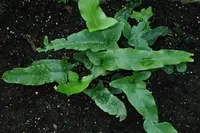
When repotting, set the creeping rhizomes just at or slightly above the substrate surface so new fronds can emerge freely and the crown does not stay waterlogged.

Mounted culture option

For advanced growers, attach the fern to a slab of bark or a fern board with sphagnum moss and secure gently with biodegradable ties, then mist frequently to mimic its natural epiphytic habit.

Prevent frond breakage

Place the plant where people, doors, or pets will not brush past it, and rotate the pot instead of moving fronds by hand to avoid snapping the relatively brittle leaf stalks.

Targeted cleaning

Remove dust from fronds with a soft brush or a gentle air blower rather than wiping, which can tear the thin tissue and damage the waxy surface.

Root health checks

At least once a year, slide the root ball partly out of the pot to inspect for crowded, brown, or sour-smelling roots and refresh the mix if needed, which supports long-term success when growing Asplenium sagittatum.

Common Pests and Diseases

Scale insects

These insects attach to frond midribs and undersides, appearing as small brown or tan bumps and causing yellowing and weak growth.

Solution

Remove heavily infested fronds, then gently scrub remaining scales off the rachis and stipe with a cotton swab dipped in diluted alcohol, taking care not to wet the frond blades excessively; follow with several applications of a light horticultural oil spray labeled safe for ferns, applied to both sides of fronds and repeated every 7–10 days as needed.

Fern aphids

This pest clusters on young croziers (unfurling fronds) and tender tissue, leading to distorted growth and sticky honeydew that can promote sooty mold.

Solution

Rinse the plant thoroughly with a gentle stream of lukewarm water to dislodge aphids, then use insecticidal soap suitable for ferns on all growing tips and frond undersides, repeating weekly until new growth emerges clean and monitoring closely during the main growth flush when growing Asplenium sagittatum indoors or under cover.

Rhizoctonia blight

This disease causes dark, sunken lesions at the base of fronds and along the rhizome, leading to collapse of affected fronds in persistently wet, poorly aerated media.

Solution

Cut out all affected fronds and rhizome sections with a sterile blade, improve drainage and air movement around the plant, avoid overhead watering, and, where allowed, drench the remaining healthy root zone with a fungicide specifically labeled for Rhizoctonia on ornamental ferns.

Bacterial leaf spot

Symptoms include small water-soaked spots on fronds that enlarge into irregular, dark brown lesions, often starting along the midrib or margins in warm, humid conditions with poor air circulation.

Solution

Remove and discard all spotted fronds, increase spacing and airflow, keep water off the foliage, and sterilize tools between cuts; for persistent problems, grow the plant in conditions with quicker frond drying, such as using a fan on a low setting rather than increasing humidity around the foliage.

Cyclaneusma-like needle blight

This disease manifests on narrow fronds as banded, pale to brown areas that progress to blighting of frond tips, especially in cool, damp conditions and crowded plantings.

Solution

Prune and discard all blighted fronds, avoid overhead irrigation, provide good spacing and air movement, and refresh or replace the potting mix if contamination is suspected, taking care to keep the crown above the soil line to promote faster drying of the frond bases.

Interesting Facts

Mediterranean limestone specialist

This species is naturally restricted to rocky, calcareous slopes and cliff faces around the central and eastern Mediterranean, especially on limestone where thin, alkaline soils limit other ferns.

Distinctive arrow-shaped pinnae

The fronds carry narrow segments with a characteristic arrow- or spear-like outline, a trait reflected in the epithet sagittatum, from the Latin for arrow-shaped.

Rock crevice root strategy

Its roots and short creeping rhizome anchor deeply into rock fissures, allowing the plant to exploit tiny pockets of moisture and humus that accumulate in limestone crevices.

FAQs about Asplenium sagittatum

Yellowing fronds usually result from chronic overwatering, waterlogged substrate, or prolonged direct sun. Check that the root zone drains well, remove soggy soil, trim damaged fronds, and adjust watering to keep the medium evenly moist, never saturated.

Grow Healthy Plants with Botan Care

Keep your plants happy and healthy with plant identification, disease detection, and easy care guidance.

Botan plant care app — identify plants on mobile

Explore More Plants