creeping spleenwort Care (Asplenium serra)

creeping spleenwort

About creeping spleenwort

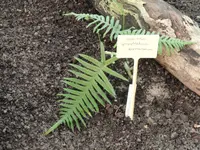
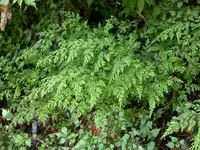
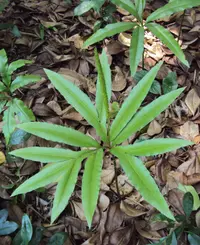
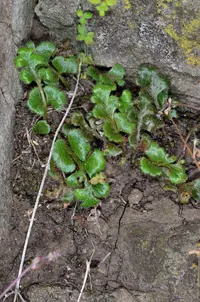
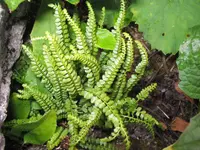
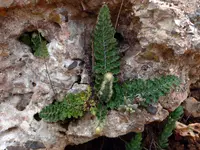
Creeping spleenwort, Asplenium serra, is a small evergreen fern known for its slender, arching fronds that form low, spreading mats. It has a delicate, fine-textured look but is tougher than it appears.

This fern naturally grows on rocks, cliffs, and moist forest habitats in parts of Central and South America. It often anchors itself in crevices with limited soil.

Asplenium serra prefers consistently moist conditions, good air circulation, and a stable, mild climate, which can make it slightly challenging outside its comfort zone. Understanding how to care for creeping spleenwort starts with providing humidity, soft light, and a loose, well-drained substrate.

Main Plant Requirements

Care Difficulty

Moderate Care

Light Preference

Partial Shade

Water Requirements

Keep Soil Moist

Temperature Preference

Tropical / Frost Sensitive

Hardiness Zone

Unknown

Soil Texture

Loamy, Peaty, Organic-rich

Soil pH

Acidic (5.5–6.5)

Soil Drainage

Moist but well-drained

Fertilization

Minimal (feed rarely)

Get Personalized Care Plan

Scan your plant to receive care tips personalized for your specific plant

Available on iOS and Android

How to Care for the creeping spleenwort

Asplenium serra prefers soft, filtered light similar to a shaded woodland edge.

  • Provide bright, indirect light or dappled shade, ideally 2–4 hours of gentle morning sun with protection from strong midday and afternoon sun.
  • Allow partial to full shade in hotter regions; creeping spleenwort typically thrives under trees, rock overhangs, or north/east-facing exposures outdoors.
  • Watch fronds for feedback: pale, stretched fronds indicate insufficient light, while crisp, bleached patches signal excessive direct sun exposure.

Asplenium serra needs steadily moist but not waterlogged soil for healthy frond growth.

  • Water when the top 2–3 cm of soil feels barely dry, aiming for consistently damp soil that never becomes soggy or completely parched.
  • Use humus-rich, well-drained soil so excess water can escape; avoid standing water around roots to reduce risk of rot and fungal problems.
  • In cooler seasons, allow the surface to dry a little deeper and watch for drooping, crisp tips (too dry) or yellowing, mushy bases (too wet).

This fern prefers mild, stable temperatures that resemble a cool, sheltered forest floor.

  • Aim for 60–75°F (16–24°C) for active growth, avoiding sudden swings; steady conditions support firm, green fronds.
  • Tolerates brief drops to about 40°F (4°C), but repeated exposure near this level slows growth and can damage tender new fronds.
  • Protect from frost below 32°F (0°C) and from hot, exposed sites above 85°F (29°C), where foliage may scorch or wilt without extra shade and moisture support.

This fern prefers consistently moist air and reacts quickly to dry indoor conditions.

  • Aim for 60–80% humidity; it tolerates brief dips but suffers if kept long-term below 40%.
  • Crisping frond tips, stalled growth, and pinhead-sized brown spots along edges indicate humidity stress in creeping spleenwort.
  • Increase humidity with a pebble tray under the pot, grouped plants, or a humidifier rather than misting, which dries too fast.

This fern grows best in loose, humus-rich media that stay evenly moist yet drain freely.

  • Use a mix of 50–60% peat or coco coir, 20–30% fine bark, and 20–30% perlite or pumice for structure and airflow.
  • Target slightly acidic conditions around pH 5.5–6.5, avoiding strongly alkaline substrates that limit nutrient uptake.
  • Keep texture soft and crumbly, never compacted; mix in extra bark or perlite if water lingers on the surface for more than a few minutes.
  • Avoid heavy garden soil, unamended clay, or pure compost, which hold excess water and reduce root oxygen, stressing Asplenium serra.

This species adapts well to container culture when moisture and root space are managed carefully.

  • Choose a pot slightly wider than the root spread with moderate depth so shallow roots can occupy the upper, airier layer of mix.
  • Select a stable, heavier container if the fern forms arching fronds that could tip a light plastic pot when saturated.
  • Ensure rapid runoff by using a pot with multiple drainage holes and elevating it slightly so the base never sits in collected water.

Asplenium serra is a light feeder that benefits from modest nutrition in active growth.

  • Use a balanced liquid fertilizer (for example 10-10-10 NPK) at 1/4–1/2 strength on moist soil.
  • Feed every 4–6 weeks during spring and summer for healthy frond production when caring for creeping spleenwort.
  • Skip fertilizer in late fall and winter when growth slows, to avoid weak, soft fronds.
  • Organic compost or a slow-release fern fertilizer can be used sparingly in outdoor plantings.

Pruning Asplenium serra focuses on hygiene rather than shaping the plant.

  • Best time for cleanup is late winter or early spring, before strong new growth starts.
  • Use clean, sharp scissors or pruning snips to cut dead, yellowing, or diseased fronds at the base.
  • Remove crowded, crossing fronds only if they trap moisture or limit airflow around the crown.
  • Light, periodic pruning maintains an open clump and reduces fungal problems without stressing the fern.

Transplanting or repotting Asplenium serra is done infrequently and only when rootbound or declining.

  • Check for roots circling the pot drainage holes, soil drying very fast, or stunted new fronds as signs it needs a larger space.
  • Plan repotting or garden transplanting in early spring, aiming for every 2–3 years at most.
  • Shift to a slightly larger container or nearby shaded bed with moist, well-drained, humus-rich soil.
  • Handle the root ball gently, keep it intact, water thoroughly, and shade from direct sun for 1–2 weeks to limit stress.

Asplenium serra is usually propagated by careful division rather than from spores by home growers.

  • Plan division in early spring when new growth starts and conditions are mild.
  • Lift the clump, then separate small sections with several healthy fronds and intact rhizomes and roots.
  • Plant divisions into moist, humus-rich, well-drained medium, keeping crowns at the same depth as before.
  • Maintain high humidity, dappled shade, and consistently damp (not waterlogged) soil until divisions re-establish.

Winter care for Asplenium serra depends on climate, as fronds are sensitive to hard frost.

  • In regions below about 25°F, mulch the root zone with 5–8 cm of leaf mold or bark to buffer freezing.
  • Allow damaged winter fronds to remain until late winter, then remove them once severe cold has passed.
  • Container plants in colder zones should be moved to a cool, frost-free, bright but indirect light location.

Care Tips

Rhizome positioning

Plant rhizomes shallowly with the crown just above the substrate surface so new fronds can emerge freely and excess moisture does not stagnate around the growing point.

Rock crevice planting

For a natural habit, tuck small divisions into narrow rock crevices or between bricks with a thin layer of gritty, organic substrate, which stabilizes the plant and mimics its lithophytic growth in nature.

Targeted frond grooming

Remove only fully yellowed or dead fronds by cutting at the base with clean scissors, leaving slightly tired but still green fronds to continue photosynthesis and support overall vigor.

Structured division schedule

Divide mature clumps only every 3–4 years in late winter or very early spring, keeping each division with several healthy fronds and a firm rhizome section to avoid setback and maintain dense, even growth.

Gradual microclimate shifts

When moving the plant between indoor and outdoor positions, adjust light, airflow, and humidity over 7–10 days to prevent stress frond drop, which is especially helpful when growing creeping spleenwort in containers.

Common Pests and Diseases

Scale insects

This pest attaches to frond midribs and undersides, appearing as small brown or tan bumps that cause yellowing and general decline. Symptoms include sticky honeydew and sooty mold on nearby surfaces.

Solution

Wipe fronds gently with a soft cloth dipped in lukewarm water and a small amount of insecticidal soap, repeating every 7–10 days until no new scales appear. For heavier infestations on outdoor plants, use a horticultural oil spray directed mainly at the frond bases and undersides, and avoid harsh systemic insecticides that are often poorly tolerated by ferns.

Fern aphids

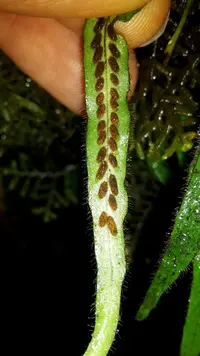
These insects cluster on young frond tips and sori (spore patches), causing distortion, stunting, and sticky honeydew. This pest favors the soft, emerging fronds of Asplenium serra grown in humid, sheltered sites.

Solution

Rinse fronds thoroughly with a gentle but firm stream of water to dislodge aphids, focusing on new growth. If needed, follow with insecticidal soap or a dilute neem oil spray applied in the early morning, ensuring good coverage but avoiding application during heat or strong sun to prevent frond burn.

Rhizoctonia leaf blight

This disease produces irregular tan or dark lesions starting at frond bases or where fronds touch wet soil or hard surfaces. Symptoms include blighted, collapsing fronds that spread in dense, overly moist clumps.

Solution

Remove and discard affected fronds, then thin crowded growth to increase airflow and reduce prolonged leaf wetness. Avoid overhead watering, keep fronds off constantly wet surfaces, and, in persistent cases, apply a fungicide labeled for Rhizoctonia on ornamental ferns according to the product directions.

Botrytis gray mold

This disease affects shaded, stagnant, and very humid conditions, creating soft brown spots on fronds that may develop a fuzzy gray mold, especially on old or damaged tissue. Symptoms include rapid collapse of tender fronds after cold, damp spells or poor indoor ventilation.

Solution

Cut off and discard all affected fronds and any dead debris around the plant, then improve air circulation and avoid water sitting on the foliage. In severe or recurring cases, apply a mild preventive fungicide labeled for gray mold on ornamentals and reduce crowding and condensation around the plant as part of broader Asplenium serra care instructions.

Interesting Facts

Neotropical cloud forest fern

This species occurs naturally from southern Mexico through Central America to parts of South America, where it occupies humid, shaded habitats in montane and cloud forests rather than lowland tropical rainforests.

Distinctive serrated pinnae

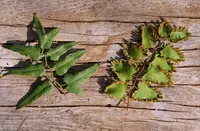
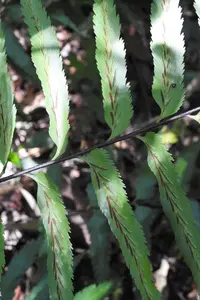
Its fronds have narrow leaf segments with sharply serrated or toothed margins, a feature that inspired the species name serra, meaning saw or serrated in Latin, and helps distinguish it from many related ferns with smoother edges.

Epiphytic and terrestrial habit

It can grow both as an epiphyte on mossy tree trunks and branches and as a terrestrial plant on rocks or forest soil, showing notable flexibility in anchoring its short creeping rhizomes to different substrates in moist forests.

FAQs about creeping spleenwort

Brown fronds usually result from low humidity, accumulated salts from fertilizer, or old age of individual fronds. Increase ambient humidity, flush the potting mix occasionally with water, and trim completely brown fronds to encourage fresh growth.

Grow Healthy Plants with Botan Care

Keep your plants happy and healthy with plant identification, disease detection, and easy care guidance.

Botan plant care app — identify plants on mobile

Explore More Plants