

Substrate top-dressing
Apply a thin 0.5–1 cm layer of fine pine bark or leaf mold on the soil surface once or twice a year to mimic forest litter, buffer moisture, and encourage healthy new root and rhizome growth.

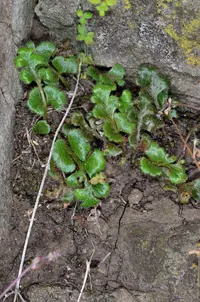
Blanket fern, Asplenium subglandulosum, is a small evergreen fern that forms soft, low clumps of finely divided fronds. It is often used as a ground-hugging accent in shaded, humid spaces.
This species is native to New Zealand, where it grows in damp forest habitats, mossy rocks, and banks with constant moisture. Its compact size and preference for stable, cool conditions influence how to care for Blanket Fern indoors or in sheltered outdoor spots.
The fern prefers consistent moisture, high humidity, and loose, organic-rich substrate, but it dislikes waterlogged conditions and drying out, which makes it moderately challenging for beginners.

Care Difficulty
Moderate Care

Light Preference
Partial Shade

Water Requirements
Keep Soil Moist

Temperature Preference
Warm Climate

Hardiness Zone
Unknown

Soil Texture
Loamy, Peaty, Organic-rich

Soil pH
Acidic (5.5–6.5), Slightly acidic (6.5–7.0)

Soil Drainage
Moist but well-drained

Fertilization
Minimal (feed rarely)
Scan your plant to receive care tips personalized for your specific plant
Available on iOS and Android
This fern prefers soft, filtered light that mimics a shaded forest floor.
This species needs steadily moist but not waterlogged soil around its shallow roots.
Stable, mild temperatures support healthy frond growth and root function in this fern.
This fern prefers consistently moist air and reacts quickly to dry indoor conditions.
This species grows best in loose, moisture-retentive but airy substrate that mimics forest floor humus.
This fern is suitable for container culture when moisture and stability are carefully managed.
This forest fern has light nutrient needs, so use modest feeding to support steady growth without forcing it.
Asplenium subglandulosum requires minimal pruning, focused on hygiene rather than shaping.
This small fern prefers stable conditions, so repotting or transplanting should be infrequent and gentle.
Division is the most practical method for increasing this fern, while spore propagation is slow and specialized.
This fern prefers mild, frost-free conditions and benefits from some winter protection in colder regions.

Plant Health Check
Not sure what's wrong with your plant? Check your plant's health inside the app.
This species is naturally restricted to New Zealand, where it grows on wet rock faces and banks very close to streams and waterfalls, often in spray zones that stay cool and damp year-round.
Unlike many larger bird’s-nest and spleenwort relatives, this fern forms low, creeping mats with small, delicate fronds that help it anchor into thin mossy soil or rock crevices along shaded watercourses.
In nature it typically occupies heavily shaded ravines and gorges, tolerating very low light levels under forest canopies where many other terrestrial ferns would struggle to photosynthesize efficiently.
Brown tips or fronds usually result from low humidity, inconsistent watering, or excess fertilizer salts. Improve ambient humidity, keep the root zone evenly moist but not saturated, flush the pot occasionally, and trim only completely dead tissue.
Keep your plants happy and healthy with plant identification, disease detection, and easy care guidance.

Scaly Lip Fern
Cosentinia vellea
resurrection fern
Pleopeltis michauxiana
Grammitis pseudociliata
Grammitis pseudociliata
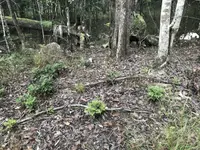
Hemionitis concolor
Hemionitis concolor
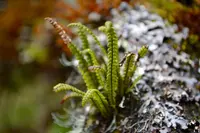
Grammitis moniliformis
Grammitis moniliformis
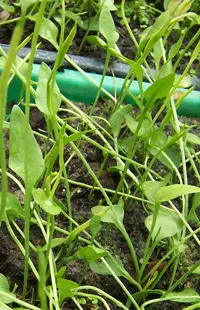
Least Adder's-tongue
Ophioglossum lusitanicum
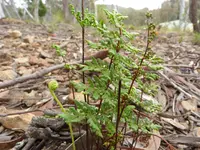
Hemionitis austrotenuifolia
Hemionitis austrotenuifolia
kamraj
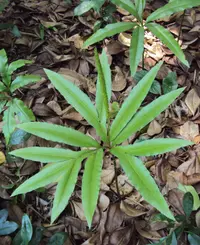
Helminthostachys zeylanica