

Shallow pot choice
Use a wide, shallow pot with many drainage holes to accommodate the fern’s creeping rhizomes and to reduce the risk of water sitting deep around the roots.

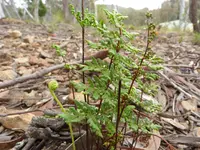
Hemionitis austrotenuifolia is a small, tropical fern known for its finely divided, delicate fronds and compact, clumping growth habit. It often forms soft, arching tufts that suit close viewing.
This species is native to humid forest environments in parts of South America, where it typically grows on moist, shaded ground or among rocks and leaf litter. Its thin fronds and fine roots make it sensitive to drying out, so consistent moisture and humidity are important.
Because of this sensitivity, it is considered moderately challenging and suits growers who already care for other ferns. Understanding how to care for Hemionitis austrotenuifolia starts with stable humidity, gentle indirect light, and an airy, moisture-retentive substrate.

Care Difficulty
Moderate Care

Light Preference
Partial Shade

Water Requirements
Keep Soil Moist

Temperature Preference
Tropical / Frost Sensitive

Hardiness Zone
Unknown

Soil Texture
Loamy, Peaty, Organic-rich

Soil pH
Acidic (5.5–6.5)

Soil Drainage
Moist but well-drained

Fertilization
Light (every 4–6 weeks)
Scan your plant to receive care tips personalized for your specific plant
Available on iOS and Android
This fern prefers soft, forest-like light rather than direct, open sun.
This fern prefers consistently moist but not waterlogged soil around its roots.
Stable, mild temperatures support healthy, steady fern growth.
This fern prefers consistently high humidity to keep fronds healthy and reduce stress.
This species needs a moisture-retentive yet airy mix that mimics loose forest floor litter.
This fern is well suited to container growing when moisture and stability are managed carefully.
This fern responds to light feeding but grows acceptably in rich, fresh potting mix alone.
This fern needs only light, cleanliness-focused pruning rather than structural shaping.
This species prefers stable conditions and benefits from careful, infrequent repotting.
This fern is usually propagated by careful division rather than from spores by home growers.
This fern dislikes frost and needs mild, protected conditions in winter, especially in containers.

Plant Health Check
Not sure what's wrong with your plant? Check your plant's health inside the app.
The species epithet austrotenuifolia refers to its origin in southern regions and its narrow fronds, distinguishing it from related Hemionitis species with broader leaf blades and more northern ranges.
This fern produces distinct fertile fronds with narrower segments and dense clusters of sporangia on the underside, while separate sterile fronds are broader and more leaf-like, a pattern known as frond dimorphism.
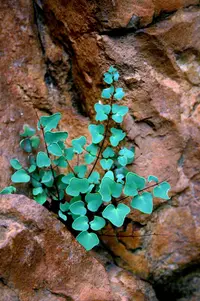
In nature it often grows in humus-filled crevices on shaded rocks or cliffs, taking advantage of constant moisture and high humidity while avoiding deep soil competition with larger plants.
This fern has a moderate growth rate. New fronds appear steadily through the growing season but it rarely doubles in size within a year. Consistent moisture, stable warmth, and regular light fertilization support stronger growth without forcing it.
Keep your plants happy and healthy with plant identification, disease detection, and easy care guidance.

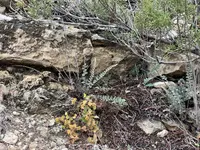
Hemionitis integerrima
Hemionitis integerrima
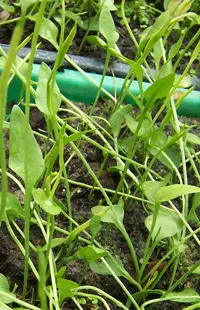
Least Adder's-tongue
Ophioglossum lusitanicum
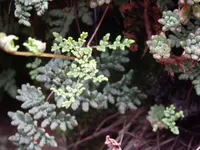
Hemionitis hispanica
Hemionitis hispanica
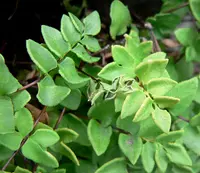
Brewer's cliffbrake
Hemionitis breweri
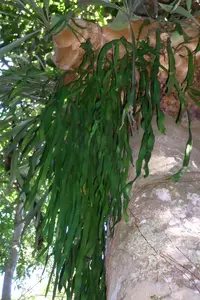
Old World adderstongue
Ophioglossum pendulum
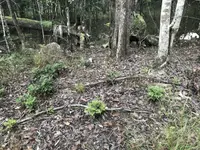
Hemionitis concolor
Hemionitis concolor
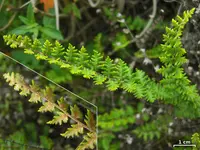
Myriopteris aurea
Hemionitis bonariensis
Hemionitis calomelanos
Hemionitis calomelanos