Hemionitis hispanica Care

Hemionitis hispanica

About Hemionitis hispanica

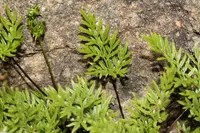
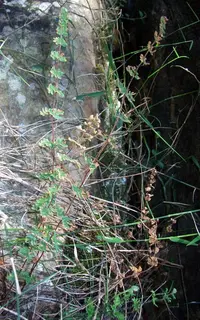
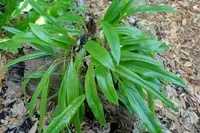
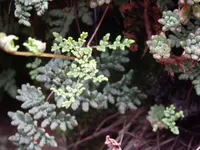
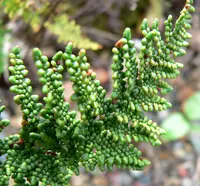
Hemionitis hispanica is a small, terrestrial fern known for its delicate, finely divided fronds and compact, clumping growth. It offers a soft, textured look that suits shaded indoor displays and sheltered outdoor spots in mild climates.

This species occurs naturally in parts of southwestern Europe, often in humid, rocky habitats with consistent moisture and good drainage. It prefers filtered light, evenly moist but not waterlogged soil, and stable, mild temperatures.

Its need for steady humidity and dislike of drying out completely can make it moderately demanding for beginners. Learning how to care for Hemionitis hispanica mainly involves providing reliable moisture and protection from harsh sun and drafts.

Main Plant Requirements

Care Difficulty

Moderate Care

Light Preference

Partial Shade

Water Requirements

Keep Soil Moist

Temperature Preference

Tropical / Frost Sensitive

Hardiness Zone

10–11

Soil Texture

Loamy, Peaty, Organic-rich

Soil pH

Acidic (5.5–6.5)

Soil Drainage

Moist but well-drained

Fertilization

Light (every 4–6 weeks)

Get Personalized Care Plan

Scan your plant to receive care tips personalized for your specific plant

Available on iOS and Android

How to Care for the Hemionitis hispanica

This fern prefers soft, filtered light that mimics woodland shade conditions.

  • Provide 2–4 hours of gentle morning sun with bright, dappled or filtered light for the rest of the day, especially under taller plants or light shade cloth.
  • Avoid strong midday or afternoon sun, which can scorch fronds and bleach color; leaf edges turning crisp or brown usually indicate excessive direct exposure.
  • In darker seasons, move Hemionitis hispanica to a brighter, east- or north-facing position so fronds stay dense rather than sparse and stretched.

Moist but not waterlogged soil is essential for healthy root and frond development.

  • Water when the top 1–2 cm of soil feels slightly dry, aiming to keep the root zone evenly damp without standing water.
  • Use a loose, humus-rich, free-draining mix; yellowing, limp fronds and sour-smelling soil suggest overwatering, while crisping tips and drooping fronds signal underwatering.
  • In cool seasons reduce frequency but never allow the root ball to dry out completely, especially for Hemionitis hispanica growing in smaller pots or shallow beds.

Stable, mild temperatures support steady growth and reduce stress on this fern.

  • Aim for 60–75°F (16–24°C) during active growth, as this range supports good frond expansion and root activity.
  • Protect the plant from temperatures below 45°F (7°C); light frost can damage fronds, and repeated freezing may kill the crown.
  • In hot periods above 80°F (27°C), increase shade and airflow and avoid placing the plant near heat-reflecting walls or surfaces that amplify heat.

This fern prefers consistently moist air and reacts quickly to dry indoor conditions.

  • Aim for 60–80% humidity to keep fronds lush and minimize browning tips on Hemionitis hispanica.
  • In dry homes, frond edges crisp, curl, and new growth stalls while soil still feels slightly moist.
  • Increase humidity with a nearby room humidifier, pebble tray under the pot, or grouping several plants together.

This fern needs a loose, moisture-retentive but fast-draining mix that stays evenly damp without becoming waterlogged.

  • Use a peat- or coco-based mix with fine bark and perlite to create a fibrous, airy structure.
  • Aim for slightly acidic to neutral pH, roughly 5.5–7.0, which supports balanced nutrient uptake.
  • Ensure excess water drains quickly; avoid heavy, compacted garden soil that holds standing water around the roots.
  • Improve aeration by adding extra perlite or fine orchid bark if the mix feels dense or stays wet for more than 3–4 days.

This species is well suited to container growing, especially where humidity and moisture can be controlled.

  • Choose a relatively shallow but wide pot to accommodate its fibrous root system and spreading habit without deep, soggy soil layers.
  • Select a slightly porous material like terracotta only if you can water more often, as it speeds moisture loss from the mix.
  • Stabilize lightweight pots in high-traffic areas so the delicate fronds are not damaged by tipping or sudden movement.

This fern prefers light feeding, as Hemionitis hispanica is adapted to relatively low-nutrient forest substrates.

  • Use a balanced, dilute liquid fertilizer (e.g., 10-10-10 or 20-20-20 at 1/4–1/2 strength) during active growth.
  • Apply every 4–6 weeks in spring and summer on well-watered soil to avoid root burn.
  • Reduce or stop feeding in fall and winter when growth slows.
  • Organic options like weak compost tea can be used instead of synthetic fertilizer for gentle nutrition.

Pruning needs are modest and mainly focused on hygiene and maintaining a tidy clump.

  • Best time for light pruning is late winter to early spring, before strong new growth starts.
  • Remove dead, yellowing, or damaged fronds at the base to limit disease and pests.
  • Thin crowded or crossing fronds to improve air movement and maintain an even, compact shape in Hemionitis hispanica.
  • Use clean, sharp scissors or snips and disinfect blades between plants to prevent pathogen spread.

This fern prefers stable conditions, so repotting is done only when clear stress or crowding appears.

  • Check for roots circling the pot, pushing through drainage holes, or noticeably slowed growth as signs to repot Hemionitis hispanica.
  • Aim to repot every 2–3 years in early spring, moving to a container just 2–3 cm wider with fresh, airy mix.
  • Water thoroughly the day before, then gently loosen the root ball and trim only broken or rotten roots.
  • After repotting, water well, keep humidity high, and provide shaded, draft-free conditions for 1–2 weeks to limit transplant shock.

Propagation is most reliable by division, as spore raising is slow and better suited to advanced growers.

  • Divide well-established clumps in early spring when new fronds start to emerge for best recovery.
  • Lift the plant gently and separate the rhizome into sections, each with several healthy fronds and roots.
  • Plant divisions into small pots with moist, fine-textured mix and keep humidity high with bright, indirect light.
  • Avoid letting divisions dry out; consistent, lightly moist substrate supports rooting and stable reestablishment.

Cold sensitivity means winter conditions must stay mild and stable, especially for container-grown plants.

  • Hemionitis hispanica is not frost hardy and should be kept above 50°F, ideally 55–65°F in winter.
  • Move pots indoors or into a frost-free greenhouse before night temperatures drop near 50°F.
  • Use a light mulch layer on outdoor specimens in mild climates to insulate the root zone without smothering the crown.
  • Water less in winter but never allow the root ball to dry completely, as dry cold increases stress.

Care Tips

Use wider pots

Select a shallow, wider pot rather than a deep one to accommodate the fern’s creeping rhizomes and allow new fronds to spread evenly across the surface.

Top-dress instead of repotting

Every spring, gently scrape off 1–2 cm of the old potting mix from the surface and replace it with fresh, fine-textured mix to refresh nutrients without disturbing delicate roots.

Protect frond bases

When removing dead fronds, cut them close to the soil surface with clean scissors and avoid tugging, which can tear the thin rhizomes and damage emerging growth.

Use soft water sources

If tap water is hard or leaves white deposits on the soil or pot, switch to rainwater, distilled, or filtered water to reduce mineral buildup that can stress this fern over time.

Monitor by frond texture

Use frond feel rather than just color as an indicator of health; crisp or papery fronds often signal chronic dryness or low humidity, which helps fine-tune caring for Hemionitis hispanica.

Common Pests and Diseases

Scale insects

These insects feed on frond sap, causing yellowing, stunted growth, and sticky honeydew on the leaf surface. Symptoms include small, dome-shaped brown or tan bumps tightly attached to the fronds and stems.

Solution

Remove heavily infested fronds and gently scrape or wipe remaining scales with a cotton swab dipped in 70% isopropyl alcohol. For persistent infestations, wash foliage with a mild insecticidal soap solution every 7–10 days and keep the fern in stable humidity to reduce stress that favors scale outbreaks.

Spider mites

This pest thrives in warm, dry air and causes fine speckling, dull frond color, and eventual browning of the delicate leaf tissue. Symptoms include fine webbing on the undersides of fronds and between stems.

Solution

Increase ambient humidity to 50–60%, and rinse fronds thoroughly under lukewarm water to remove mites and webbing. Follow up with insecticidal soap or a horticultural oil spray targeted to the frond undersides, repeating every 5–7 days until new growth appears clean, which is essential for reliable Hemionitis hispanica indoor care.

Rhizoctonia leaf spot

This disease produces irregular, water-soaked spots on fronds that turn brown with a darker margin, often starting where water sits on the leaf. In advanced cases, affected fronds collapse and die back from the tips inward.

Solution

Remove and discard all affected fronds, and avoid overhead watering so foliage dries quickly. Improve air circulation around the plant, keep the potting mix evenly moist but not saturated, and if spread continues, use a registered fungicide labeled for fern leaf spot, applied according to product directions.

Botrytis blight

This disease appears as soft, gray-brown patches on fronds, sometimes covered with fuzzy gray mold in cool, stagnant, and humid conditions. Symptoms include rapid frond collapse, especially in crowded or poorly ventilated positions.

Solution

Cut off and discard all infected tissue and any fallen fronds or debris around the plant. Reduce leaf wetness by watering at the soil level, increase airflow, and lower humidity slightly; in severe cases, apply a fungicide labeled for Botrytis on ornamentals, following label rates and intervals.

Interesting Facts

Native to Iberian gorges

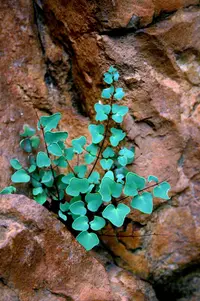
This fern is naturally restricted to the Iberian Peninsula and nearby regions, where it typically grows on shaded, moist rock faces and limestone cliffs in sheltered valleys and gorges.

Fronds shaped like ivy

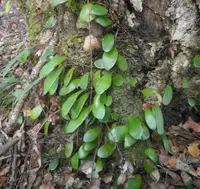
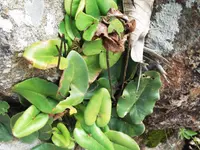
Its fronds are simple, triangular to heart-shaped, and resemble small ivy leaves, which is unusual among many ferns that more often have divided, feather-like fronds.

Rock crevice specialist

In the wild it often anchors its short rhizomes into narrow rock crevices, using accumulated humus and constant seepage water to survive in sites that look very harsh and dry at first glance.

FAQs about Hemionitis hispanica

This fern suits indoor decoration if given stable moisture, high humidity, and gentle indirect light. Its small, heart-shaped fronds work well in terrariums, on shelves, or as an accent in shaded plant groupings.

Grow Healthy Plants with Botan Care

Keep your plants happy and healthy with plant identification, disease detection, and easy care guidance.

Botan plant care app — identify plants on mobile

Explore More Plants