Use vertical mounts
Attach plants to rough bark slabs, cork, or unglazed clay with soft ties or biodegradable string so roots can anchor naturally and fronds can form layered mats rather than staying cramped in a pot.

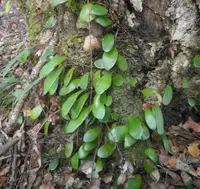
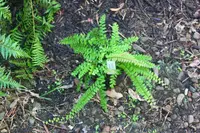
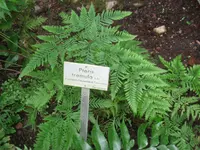
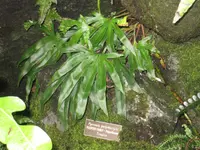
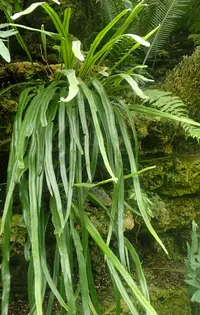
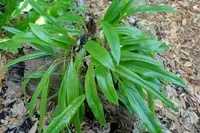
Leather-leaf fern, Pyrrosia eleagnifolia, is an evergreen epiphytic fern native to New Zealand, often found clinging to rocks, cliffs, and tree trunks. It forms dense mats of small, leathery fronds that resist drying winds and brief drought.
The foliage ranges from rounded to strap-shaped, with a felted underside that helps the plant cope with exposed, low-nutrient sites. This tough structure makes it more forgiving than many delicate indoor ferns.
In cultivation it prefers bright, filtered light, moderate moisture, and very free-draining, bark-rich media. Once its basic needs are understood, it is relatively straightforward to care for leather-leaf fern.

Care Difficulty
Moderate Care

Light Preference
Partial Shade

Water Requirements
Moderate Water

Temperature Preference
Warm Climate

Hardiness Zone
9–11

Soil Texture
Loamy, Rocky, Organic-rich

Soil pH
Slightly acidic (6.5–7.0), Neutral (7.0)

Soil Drainage
Well-drained

Fertilization
Minimal (feed rarely)
Scan your plant to receive care tips personalized for your specific plant
Available on iOS and Android
This fern prefers bright, indirect light similar to dappled forest shade.
Watering should balance consistent moisture with good air around the roots.
This species prefers mild, stable temperatures without extremes.
This epiphytic fern prefers moderate, steady humidity but adapts to typical indoor air if not extremely dry.
Pyrrosia eleagnifolia prefers a very free-draining, airy mix that mimics its natural epiphytic habitat.
This species grows well in containers and hanging baskets when the pot and medium prevent prolonged saturation.
This epiphytic fern has low nutritional needs, so fertilizing should stay light and infrequent.
Pruning needs for Pyrrosia eleagnifolia are minimal and focus on cleanliness rather than shaping.
This species is usually grown mounted or in shallow containers and prefers infrequent disturbance.
Pyrrosia eleagnifolia is most reliably propagated by division of established clumps.
In mild climates this fern is fairly cold tolerant but still benefits from some winter protection, especially in containers.

Plant Health Check
Not sure what's wrong with your plant? Check your plant's health inside the app.
This New Zealand fern commonly forms dense mats on exposed rock faces and cliffs, using its creeping rhizomes and tough roots to anchor into very shallow pockets of organic debris.
The upper side of the leathery fronds often has a fine, felt-like covering of hairs, which helps reduce water loss and may protect the leaf surface from intense light and salt-laden coastal winds.
In the wild it grows both as an epiphyte on tree trunks and branches and as a lithophyte on rocks, showing strong adaptation to nutrient-poor, fast-draining microhabitats and informing practical Pyrrosia eleagnifolia care in cultivation.

This species is one of the few New Zealand ferns that naturally colonize coastal cliffs so close to the sea that they are regularly exposed to salt spray, yet remain evergreen and functional due to their thick, leathery fronds and drought-tolerant rhizomes.
This species does not climb like a vine. It spreads slowly through short creeping rhizomes, forming clumps or small mats over time. In containers, its spread is limited and stays relatively compact without becoming unruly.
Keep your plants happy and healthy with plant identification, disease detection, and easy care guidance.