Mossy companion layer
Plant it among living sheet moss or cushion moss to keep the root zone evenly cool and damp, and periodically lift and reset any sections that start to sit in soggy, decomposing moss.

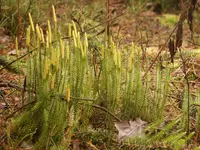
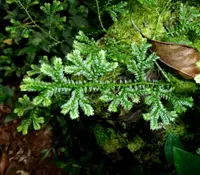
Stiff clubmoss (Lycopodium annotinum) is a primitive, evergreen, spore-producing plant related to ferns rather than flowering plants. It forms low, trailing stems with many stiff, needle-like leaves that create a dense, mossy mat.
In nature it grows in cool, moist forests, rocky slopes, and moorlands across northern and montane regions of Europe, Asia, and North America. Its slow growth and need for consistent moisture and stable, cool conditions can make it challenging to maintain in cultivation.
Gardeners who want to care for stiff clubmoss should aim to mimic a shaded woodland floor with humus-rich, well-drained, yet evenly moist soil.

Care Difficulty
Hard Care

Light Preference
Partial Shade

Water Requirements
Keep Soil Moist

Temperature Preference
Cold Hardy

Hardiness Zone
2–7

Soil Texture
Loamy, Peaty, Organic-rich

Soil pH
Strongly acidic (4.5–5.5), Acidic (5.5–6.5)

Soil Drainage
Moist but well-drained

Fertilization
Minimal (feed rarely)
Scan your plant to receive care tips personalized for your specific plant
Available on iOS and Android
This forest species prefers cool, shaded conditions that mimic moist woodland edges.
This species needs consistently moist, never stagnant, soil similar to a cool forest floor.
This plant is adapted to cool to mild climates and does best without temperature extremes.
This species needs consistently moist, cool air and struggles in dry indoor conditions.
Lycopodium annotinum prefers moist, aerated, humus-rich soil that mimics cool forest floors.
This species can be grown in containers if moisture, aeration, and horizontal space are carefully managed.
This woodland species needs only light feeding when grown in containers or nursery beds.
Lycopodium annotinum requires minimal pruning, mainly for tidiness and plant health.
This species is usually grown in the ground, so focus on gentle transplanting rather than frequent repotting.
Propagation of Lycopodium annotinum is possible but slow and best treated as an advanced task.
This species is generally cold hardy in its native range and usually needs little targeted winter care outdoors.

Plant Health Check
Not sure what's wrong with your plant? Check your plant's health inside the app.
This species is a living representative of an old plant lineage, with clubmoss relatives dominating forests in the Carboniferous period over 300 million years ago, long before flowering plants evolved.
Its stiff, trailing stems creep along the ground and root at intervals, slowly forming dense, mat-like colonies that stabilize soil in cool, moist coniferous forests.
Instead of flowers and seeds, it produces upright, club-like cones on specialized shoots that release microscopic spores for reproduction, a characteristic feature of lycophytes.

In parts of northern Europe, its very dry, powdery spores were historically collected and used as a fine dust for early flash photography and stage effects because they ignite rapidly in air when exposed to a flame.
This species spreads slowly by creeping stems and can gradually form low, dense mats, but it is not considered aggressively spreading in garden settings. Its expansion is usually predictable and manageable with basic edging or spacing.
Keep your plants happy and healthy with plant identification, disease detection, and easy care guidance.