Cleveland's lip fern Care (Hemionitis clevelandii)

Cleveland's lip fern

About Cleveland's lip fern

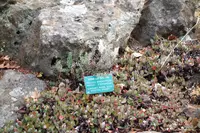
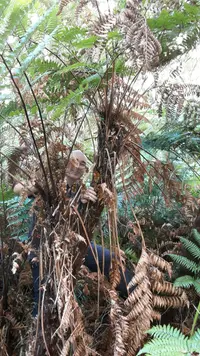
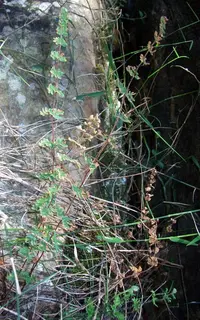
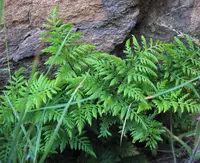
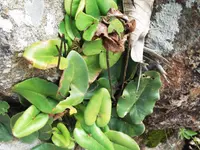
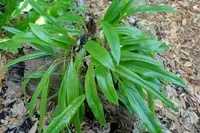
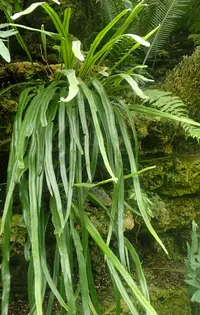
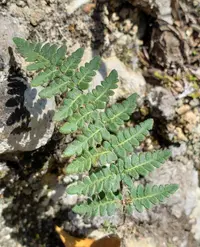
Cleveland's lip fern, Hemionitis clevelandii, is a small, drought-adapted fern native to rocky slopes and dry habitats in the southwestern United States and northern Mexico. It usually grows in clumps from crevices, forming neat tufts rather than large, spreading fronds.

Its fronds are often leathery, with a slightly fuzzy texture and a gray‑green to bluish tone that helps reduce water loss. This species prefers bright, indirect light or open shade, fast-draining, gritty soil, and careful, infrequent watering.

These traits make it more challenging than typical house ferns, since it dislikes heavy, wet potting mixes and constant moisture. Gardeners who learn how to care for Cleveland's lip fern often succeed by mimicking its rocky, well-aerated native conditions indoors or in containers.

Main Plant Requirements

Care Difficulty

Moderate Care

Light Preference

Partial Shade

Water Requirements

Keep Soil Moist

Temperature Preference

Warm Climate

Hardiness Zone

9–11

Soil Texture

Loamy, Silty, Organic-rich

Soil pH

Acidic (5.5–6.5), Slightly acidic (6.5–7.0)

Soil Drainage

Moist but well-drained

Fertilization

Minimal (feed rarely)

Get Personalized Care Plan

Scan your plant to receive care tips personalized for your specific plant

Available on iOS and Android

How to Care for the Cleveland's lip fern

This fern prefers bright but softened light that mimics a lightly shaded canyon or rocky slope.

  • Provide 2–4 hours of gentle morning sun with bright, filtered light the rest of the day; avoid harsh midday and afternoon sun, which can scorch fronds.
  • Allow partial shade, especially in hotter regions, but ensure dappled light so Cleveland's lip fern does not become leggy or lose vigor.
  • In summer, increase shade or move to more filtered light; in winter, give slightly more exposure to low-angle sun to compensate for shorter days.

Moist but fast-draining soil suits this fern best, without staying saturated.

  • Water when the top 2–3 cm of soil feel just dry, aiming for consistently lightly moist soil rather than cycles of complete drying or saturation.
  • Use a gritty, well-drained mix so water moves through quickly; standing water or heavy clay increases risk of root rot in Hemionitis clevelandii.
  • In cooler months, extend intervals between waterings and watch the fronds: crisp tips or curling inwards suggest underwatering, while blackened bases or limp fronds suggest overwatering.

This species prefers mild, frost-free conditions with stable, moderate temperatures.

  • Aim for 60–75°F (16–24°C) for steady growth, avoiding sudden swings greater than about 10°F (6°C) in a short period.
  • Tolerates brief drops to around 40°F (4°C) but should be protected from frost; repeated exposure near freezing damages fronds and rhizomes.
  • Handles short heat spells up to about 85–90°F (29–32°C) if shaded and given good moisture, but prolonged heat above this range leads to stress and browning.

This fern prefers consistent moderate to high humidity to keep fronds supple and prevent browning.

  • Aim for 50–70% humidity; it tolerates brief dips but reacts poorly to very dry, heated indoor air.
  • Watch for crisped tips, rolled fronds, and stalled new growth as signs of humidity stress.
  • Increase humidity with a pebble tray, grouping plants, or a small humidifier rather than frequent misting.

Provide light, loose, and moisture-retentive soil that still drains quickly for Hemionitis clevelandii.

  • Use a mix of 40% peat or coco coir, 30% fine bark, and 30% perlite to create airy, humus-rich structure.
  • Ensure excess water runs through in seconds; soil should feel springy, not compacted, when squeezed.
  • Keep pH slightly acidic to neutral, around 6.0–7.0, avoiding strongly alkaline or salty substrates.
  • Avoid heavy clay, pure garden soil, or mixes with a high proportion of fine sand that restrict aeration or cause waterlogging.

This species adapts well to container growing when moisture and drainage are carefully balanced.

  • Choose a relatively shallow but wide pot to match its fibrous, spreading root system and prevent soggy lower layers.
  • Select plastic or glazed ceramic if faster moisture loss is a problem, and unglazed terracotta if the mix tends to stay too wet.
  • Stabilize the container with a heavier base or cachepot so the light, arching fronds do not tip the pot when fully grown.

This species is adapted to low-nutrient habitats, so fertilizer for Cleveland's lip fern should be light and infrequent.

  • Use a balanced liquid fertilizer (around 10-10-10) at 1/4–1/2 strength for container-grown plants only.
  • Feed once every 4–6 weeks during spring and early summer if growth appears weak or fronds pale.
  • Avoid fertilizing during fall and winter dormancy to prevent salt buildup and root damage.
  • Organic options like dilute compost tea can be used sparingly, ensuring the potting mix drains very well.

Pruning for Hemionitis clevelandii is minimal and mainly focused on cleanliness and frond quality.

  • Best time to prune is late winter to early spring before strong new growth begins.
  • Remove dead, yellowing, or damaged fronds at the base with clean, sharp scissors or small pruning shears.
  • Thin out crowded or overlapping fronds to improve air movement and reduce fungal issues.
  • Avoid heavy cutting into healthy crowns, as this can slow recovery and reduce the fern’s natural shape.

Handling Hemionitis clevelandii roots gently helps maintain healthy fronds when repotting or transplanting.

  • Repot every 2–3 years or when roots circle the container, water drains too quickly, or growth slows noticeably.
  • Aim for late winter or early spring, using a shallow, slightly wider pot with a loose, humus-rich, well-drained mix.
  • Loosen the root ball lightly instead of breaking it apart, and trim only dead or rotten roots with sterile tools.
  • Water thoroughly after planting, then keep evenly moist and shaded for 1–2 weeks to reduce transplant stress.

Propagation of Hemionitis clevelandii is possible but requires patience and careful conditions.

  • Division of established clumps in early spring is the most practical method for home growers.
  • Lift the plant, then separate small sections with at least one healthy crown and attached roots.
  • Replant divisions into moist, fine-textured, well-drained medium and keep humidity high with bright, indirect light.
  • Spore propagation is possible but slow and suited mainly to experienced growers with controlled environments.

Winter care for Hemionitis clevelandii depends on local climate and whether it is grown in the ground or containers.

  • This fern is not strongly frost hardy; foliage may be damaged below about 30°F.
  • In mild climates, apply a 5–8 cm mulch layer around the root zone, keeping it slightly away from the crown.
  • Move containers indoors or into a frost-free greenhouse, providing cool temperatures and indirect light.
  • Reduce watering in winter so the mix stays lightly moist but never waterlogged in cold conditions.

Care Tips

Shallow potting strategy

Use a wide, shallow container and avoid burying the rhizomes too deeply, as this allows the creeping growth to spread horizontally and reduces the risk of rot around the crown.

Leaf litter mulch

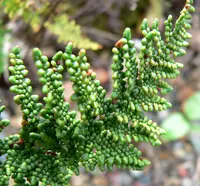
Top-dress the soil with a very thin layer of fine, dry leaf litter or shredded fern fronds to mimic forest duff, which buffers moisture at the surface without smothering the wiry stems.

Gentle division timing

If the clump becomes crowded, divide only in active growth and separate into large sections with several fronds and intact rhizome pieces to reduce stress and speed re-establishment.

Targeted pest checks

Inspect the undersides of fronds and the rhizome line every 1–2 weeks with a hand lens, focusing on early signs of scale or spider mites so treatments can remain minimal and localized.

Acclimation after purchase

After buying the plant, place it for 1–2 weeks in a low-draft, stable-light spot away from vents and frequently opened doors to reduce transplant shock when growing Cleveland's lip fern indoors.

Common Pests and Diseases

Scale insects

This pest appears as small, dome-shaped bumps on fronds and stems, often along the midrib. Symptoms include yellowing pinnae, sticky honeydew, and black sooty mold growth on affected foliage.

Solution

Isolate the plant, then gently wipe fronds and stipes with a cotton swab dipped in 70% isopropyl alcohol, repeating weekly until no new scale appear. Increase air movement, avoid leaf-splashing overhead watering, and use a light horticultural oil labeled safe for ferns if the infestation is widespread, testing on a small section first.

Fern aphids

These insects cluster on young fronds and fertile frond stalks, causing distortion, pale growth, and sticky honeydew that can support sooty mold. This pest is more common in shaded, humid greenhouse or indoor conditions where soft new growth is abundant.

Solution

Rinse the plant thoroughly with a gentle stream of lukewarm water, focusing on the undersides of fronds and tender tips, and repeat every few days until numbers drop. If needed, apply an insecticidal soap labeled for ferns, use good coverage on both sides of fronds, and improve airflow while keeping the soil consistently but not excessively moist, as part of comprehensive Hemionitis clevelandii plant care.

Rhizoctonia blight

This disease causes brown, sunken lesions on frond bases and creeping rhizomes, leading to wilted, collapsing fronds starting near the soil line. Symptoms include thin, patchy clumps and fronds that yellow prematurely despite adequate moisture.

Solution

Remove and discard all affected fronds and rhizome sections, sterilizing cutting tools between cuts, and allow the surface of the potting mix to dry slightly between waterings. Improve drainage, provide more horizontal air movement at the base of the plant, avoid splashing water from soil onto fronds, and consider repotting into fresh, well-aerated medium if the crown is heavily affected.

Botrytis leaf spot

This disease produces small, tan to brown spots on older fronds that can merge into larger blotches, often with a fuzzy gray mold in very humid conditions. Symptoms include premature frond decline and a general tired appearance of the clump in poorly ventilated spaces.

Solution

Promptly remove and discard spotted or moldy fronds to reduce spore load, and avoid misting or prolonged leaf wetness, especially in cool conditions. Increase air circulation, space plants to reduce crowding, water at the soil level in the morning, and if the plant is in a very shaded, stagnant corner, move it to a slightly brighter, better-ventilated position.

Interesting Facts

Native to California canyons

This fern is naturally restricted to shady, moist canyon habitats in southern California and northern Baja California, often growing on steep rocky slopes and ledges where water seeps keep the soil consistently damp.

Specialized rock crevice roots

Its root system is adapted to anchor in thin soil pockets within rock crevices, allowing the plant to persist on unstable slopes that would be difficult for many other ferns to colonize.

Distinctive hairy fronds

The fronds are covered with fine hairs, giving them a soft texture that helps reduce water loss and may offer some protection from intense light and drying winds in its exposed canyon habitats.

FAQs about Cleveland's lip fern

This species is semi-evergreen. In mild, frost-free climates it often keeps most fronds year-round. In colder or very dry conditions, older fronds may die back, with new growth emerging again from the crown when conditions improve.

Grow Healthy Plants with Botan Care

Keep your plants happy and healthy with plant identification, disease detection, and easy care guidance.

Botan plant care app — identify plants on mobile

Explore More Plants