California lacefern Care (Hemionitis californica)

California lacefern

About California lacefern

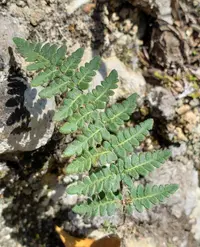
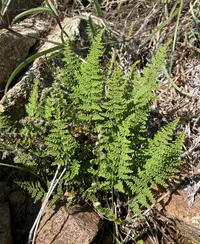
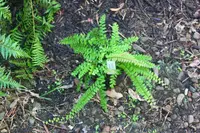
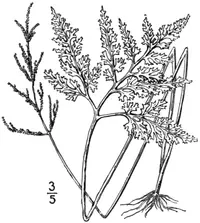
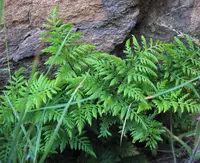
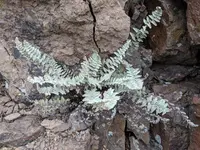
California lacefern (Hemionitis californica) is a small terrestrial fern native to coastal and foothill regions of California and parts of the western United States. It usually grows in clumps, with finely divided, lacy fronds that give it a delicate, airy look.

In nature it occurs on rocky slopes, woodland edges, and canyon walls, often in seasonally dry habitats. The plant tends to stay compact and slow-growing, which can make it suitable for containers or small garden spaces.

It is moderately easy to grow but needs sharp drainage, consistent light moisture, and protection from harsh sun. Understanding these natural conditions helps clarify how to care for California lacefern in home gardens or small collections.

Main Plant Requirements

Care Difficulty

Moderate Care

Light Preference

Partial Shade

Water Requirements

Keep Soil Moist

Temperature Preference

Warm Climate

Hardiness Zone

9–11

Soil Texture

Loamy, Silty, Organic-rich

Soil pH

Acidic (5.5–6.5), Slightly acidic (6.5–7.0)

Soil Drainage

Moist but well-drained

Fertilization

Minimal (feed rarely)

Get Personalized Care Plan

Scan your plant to receive care tips personalized for your specific plant

Available on iOS and Android

How to Care for the California lacefern

This fern prefers bright, gentle light that mimics its native understory habitat.

  • Provide 3–5 hours of soft morning sun with dappled or filtered light the rest of the day; avoid strong afternoon sun, especially in summer.
  • Tolerates bright shade or high, shifting shade under trees; in deep shade, fronds become sparse and elongated, a sign it needs more light.
  • In hotter regions, give California lacefern more shade from late spring to early fall, then allow slightly brighter exposure in cooler months.

Moist, never soggy soil supports healthy growth for this fern.

  • Water when the top 2–3 cm of soil feel slightly dry, then soak thoroughly so moisture reaches the root zone, allowing excess to drain away.
  • Use loose, well-drained, humus-rich soil so water passes through within a few seconds, reducing the risk of root rot and sour, anaerobic (low-oxygen) conditions.
  • In cool seasons, extend the drying interval slightly; crispy frond tips suggest underwatering, while yellowing, limp fronds often indicate overwatering.

Stable, mild temperatures support steady growth and reduce stress.

  • Aim for 60–75°F (16–24°C) as the main growing range, where fronds stay firm and new growth emerges steadily.
  • Hemionitis californica can survive brief dips to about 30–32°F (-1–0°C) once established, but repeated hard frosts damage fronds and may kill young plants.
  • In hot spells above 85°F (29°C), provide extra shade and soil moisture; avoid hot, reflected heat from walls or pavement, which can scorch foliage.

This fern prefers moderately moist air and reacts quickly to very dry conditions.

  • Aim for 50–70% humidity to keep fronds lush and reduce tip browning.
  • It tolerates brief dips to 35–40%, but prolonged dry air causes crisping edges and stalled new fronds.
  • Increase humidity with a pebble tray under the pot or by grouping California lacefern with other moisture-loving plants.

Provide loose, humus-rich soil that drains freely yet retains consistent moisture.

  • Use a mix of 50% peat or coco coir, 30% fine bark, and 20% perlite to mimic a leafy forest floor.
  • Ensure rapid drainage so water does not pool around rhizomes, which increases rot risk.
  • Keep soil slightly acidic to neutral, around pH 5.8–7.0, avoiding strongly alkaline mineral soils.
  • Improve aeration by adding extra bark or perlite if the mix compacts or stays wet for more than 2–3 days.

This species adapts well to container growing when moisture and stability are managed carefully.

  • Choose a wide, shallow pot to accommodate spreading rhizomes and prevent deep, soggy zones in the mix.
  • Select a slightly heavier clay or ceramic container to stabilize the light, finely divided fronds against tipping.
  • Raise the pot slightly on feet or a stand so drainage holes stay clear and excess water can escape quickly.

Hemionitis californica benefits from light, thoughtful feeding but is sensitive to excess salts.

  • Use a balanced liquid fertilizer (around 10-10-10) at 1/4–1/2 strength for container plants in active growth.
  • Apply every 4–6 weeks in spring and summer; skip feeds if growth slows due to heat or low light.
  • Avoid feeding in late fall and winter when growth is minimal, especially for outdoor plants in mild climates.
  • For outdoor California lacefern, a thin top-dressing of compost once a year is usually sufficient.

Hemionitis californica needs only light, hygiene-focused pruning to stay tidy and healthy.

  • Best time to prune is late winter to early spring, before strong new growth starts.
  • Remove dead, yellowing, or damaged fronds at the base using clean, sharp scissors or snips.
  • Thin out crowded, overlapping fronds to improve air flow and reduce foliar disease risk.
  • Avoid heavy cutting that removes most fronds, as this weakens the plant and slows regrowth.

This fern prefers stable conditions, so repot or transplant Hemionitis californica only when clearly necessary.

  • Look for roots circling the pot, pushing through drainage holes, or noticeably slowed growth as signs to move up a size.
  • Repot in early spring every 2–3 years, using a shallow, wide container with moisture-retentive, well-drained mix.
  • Water thoroughly before and after shifting the plant, gently loosening outer roots to reduce transplant shock.
  • Keep the plant shaded, evenly moist, and sheltered from wind for 1–2 weeks after moving to help roots recover.

Hemionitis californica is usually propagated by division, as spore propagation is slow and technical.

  • Divide mature clumps in early spring when new fronds are just emerging.
  • Lift the plant and separate small sections, each with healthy rhizomes and several fronds or buds.
  • Plant divisions into moist, fine-textured, well-drained mix and firm gently around roots.
  • Maintain high humidity, stable warmth, and consistently moist (not waterlogged) soil until new growth appears.

Hemionitis californica prefers mild winters and benefits from simple protection in colder climates.

  • In regions below about 25°F, treat as a tender fern or grow in containers for easier winter management.
  • Mulch the root zone with 5–8 cm of leaf mold or fine bark in late fall to buffer temperature swings.
  • Move container plants indoors or into a cool, bright, frost-free space before hard frosts arrive.
  • Reduce watering in winter, keeping soil lightly moist but never completely dry, to prevent root rot in cool conditions.

Care Tips

Shaded root protection

Place a flat stone or decorative mulch over the root zone to keep the shallow rhizomes shaded and cool, which stabilizes moisture and reduces heat stress during warm spells.

Gentle frond grooming

Inspect fronds monthly and remove only fully brown or collapsed ones by cutting at the base, which improves air movement through the clump and lowers the risk of fungal spotting on the remaining foliage.

Avoid crown burial

When repotting or refreshing soil, keep the fern’s crown at the same level as before and avoid packing mix over it, since burying the crown encourages rot and weak new growth.

Seasonal light shifts

In late spring and late summer, adjust the plant’s position so it receives bright light in the cooler parts of the day and more shade in high summer, which mimics understory woodland conditions and supports steadier frond production when growing California lacefern.

Targeted slug barriers

In outdoor or patio settings, place copper tape around pots or use low, rough gravel bands at soil level to discourage slugs and snails from chewing the delicate fronds without adding chemicals to the planting area.

Common Pests and Diseases

Scale insects

This pest feeds on fronds and stems, causing yellowing, stunting, and sticky honeydew that can lead to sooty black growth on the foliage.

Solution

Remove heavily infested fronds and gently scrape or wipe scale off with a cotton pad dipped in 70% isopropyl alcohol, then rinse the plant with lukewarm water; for persistent infestations, use repeated applications of insecticidal soap or a light horticultural oil, ensuring good coverage of the underside of fronds while keeping the fern out of direct sun during treatment.

Fern aphids

These insects colonize soft new fronds and rachises, sucking sap and causing distorted growth, pale patches, and sticky honeydew on the lace-like foliage.

Solution

Shower the plant with a gentle stream of water to dislodge aphids, then apply insecticidal soap to all frond surfaces every 5–7 days until no new insects appear, while improving airflow and avoiding excess nitrogen fertilization that drives soft, aphid-prone growth.

Rhizoctonia blight

This disease produces brown, sunken lesions at the frond bases and along creeping rhizomes, leading to wilted, collapsing fronds in overly wet or poorly ventilated conditions.

Solution

Cut out and discard affected fronds and rhizome sections with sterile tools, then allow the substrate surface to dry slightly between waterings, increase air circulation, and, in severe or recurring cases, repot into a fresh, well-drained fern mix and apply a labeled fungicide drench according to Hemionitis californica care instructions.

Botrytis leaf spot

This disease causes pale, water-soaked spots on fronds that turn tan or brown and may develop fuzzy gray mold, especially in cool, humid, poorly ventilated spaces.

Solution

Remove and discard all affected fronds, avoid overhead watering, space plants to improve airflow, and keep humidity moderate rather than saturated; if conditions stay favorable for the fungus, use a labeled foliar fungicide and maintain drier frond surfaces going forward.

Spider mites

This pest thrives on ferns kept too dry, causing fine stippling, dull or bronzed fronds, and very fine webbing, especially along the undersides of leaf segments.

Solution

Increase humidity around the plant, rinse fronds thoroughly with lukewarm water to wash off mites, and follow with repeated applications of insecticidal soap or a light horticultural oil, making sure to treat the undersides of all fronds and to keep the plant in bright but indirect light during recovery.

Interesting Facts

Native California lace fern

This fern is endemic to California and nearby Baja California, where it naturally grows on rocky slopes, canyon walls, and dry woodland habitats rather than in typical moist fern understories.

Semi-evergreen habit

In its native climate it often behaves as semi-evergreen, keeping fronds through mild winters but dying back to its rhizomes during hotter or drier periods, then resprouting when moisture returns.

Beaded chain fronds

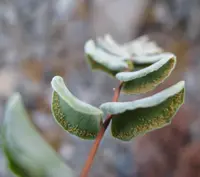
The fronds are divided into small, rounded pinnae that line up along the midrib, giving a delicate bead-like or chain-like appearance that is characteristic of lace ferns in this group.

Botan icon

Did you know?

This species is considered one of the few ferns well adapted to relatively dry, open habitats in Mediterranean-type climates, making it unusually drought-tolerant compared with most ferns that require consistently moist, shaded environments.

FAQs about California lacefern

Brown tips or fronds usually come from low humidity, underwatering, or excess direct sun. Check soil moisture, increase ambient humidity, and remove the worst fronds. Persistent browning can also follow salt buildup from hard water or overfertilizing.

Grow Healthy Plants with Botan Care

Keep your plants happy and healthy with plant identification, disease detection, and easy care guidance.

Botan plant care app — identify plants on mobile

Explore More Plants