Rocky substrate layer
Mimic its natural rocky habitat by setting the pot on a shallow tray filled with coarse gravel or lava rock so runoff drains freely away from the base, reducing the risk of crown rot while still allowing some local humidity.

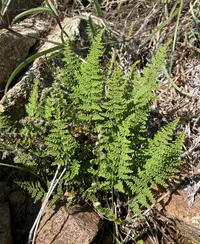
Fendler's lip fern, Hemionitis fendleri, is a small, clumping fern native to rocky slopes and canyon walls in the southwestern United States and northern Mexico. It often grows in crevices, anchoring itself in thin, well-drained soils.
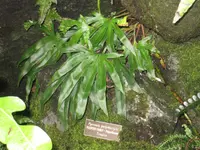
The fronds are finely divided, forming delicate tufts that can stay green in sheltered, slightly moist spots but tolerate periods of dryness. Its slow growth, need for sharp drainage, and dislike of heavy, wet soil make it moderately challenging for beginners.
Those conditions also mean it suits careful rock garden or container culture, especially for growers who want to learn how to care for Fendler's lip fern in drier climates.

Care Difficulty
Moderate Care

Light Preference
Partial Shade

Water Requirements
Keep Soil Moist

Temperature Preference
Tropical / Frost Sensitive

Hardiness Zone
10–11

Soil Texture
Loamy, Peaty, Organic-rich

Soil pH
Acidic (5.5–6.5)

Soil Drainage
Moist but well-drained

Fertilization
Minimal (feed rarely)
Scan your plant to receive care tips personalized for your specific plant
Available on iOS and Android
This fern prefers bright, filtered light that mimics a lightly shaded rocky habitat.
Watering should keep the root zone lightly moist but never saturated.
Stable, mild temperatures support steady growth and prevent stress damage.
This fern prefers steady moderate humidity and reacts quickly to very dry air.
Soil for Hemionitis fendleri should be loose, moisture-retentive, and sharply draining.
This species adapts well to container growing when moisture and stability are managed carefully.
This fern benefits from light, periodic feeding in active growth but is sensitive to excess salts.
Pruning needs for Hemionitis fendleri are minimal and focus on hygiene rather than shaping.
Hemionitis fendleri prefers stable conditions, so repotting or transplanting should be infrequent and careful.
Propagation of Hemionitis fendleri is possible but slower than many common house ferns.
Winter care depends on local climate and whether the fern grows in the ground or a container.

Plant Health Check
Not sure what's wrong with your plant? Check your plant's health inside the app.
This fern is native to arid canyon systems of the southwestern United States and northern Mexico, where it grows on shaded rock faces and ledges rather than typical moist forest floors.
Its roots anchor deeply into narrow rock crevices, allowing the plant to access tiny, slow-drying moisture pockets that remain available long after surface water has evaporated.
In many of its native sites, it remains evergreen through long dry periods, relying on sheltered microhabitats and night-time humidity rather than consistently moist soil, which is a key detail for Hemionitis fendleri care.
This species is semi-evergreen to evergreen in mild climates, holding foliage most of the year. In colder or very dry conditions it may partially die back, then push new fronds once moisture and temperatures improve.
Keep your plants happy and healthy with plant identification, disease detection, and easy care guidance.