cutleaf grapefern Care (Botrychium dissectum)

cutleaf grapefern

About cutleaf grapefern

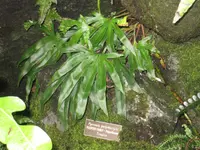
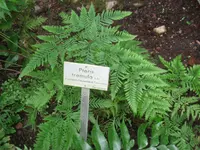
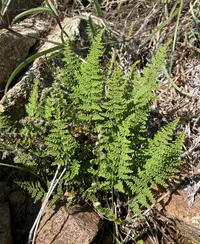
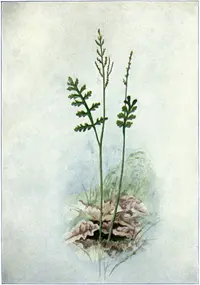
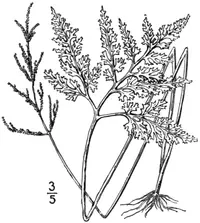
Cutleaf grapefern, Botrychium dissectum, is a small woodland fern native to eastern North America. It grows from an underground stem and usually appears as a single, finely divided frond. The frond often has a lacy, grape-leaf look, with a separate fertile spike that carries spores instead of flowers or seeds.

In nature it is found in moist, shaded forests, often in leaf litter or mossy soil. This species can be slow to establish and sensitive to disturbance, which makes it more challenging to cultivate. Those who wish to care for cutleaf grapefern should provide cool shade, consistent moisture, and humus-rich, well-drained soil.

Main Plant Requirements

Care Difficulty

Hard Care

Light Preference

Partial Shade

Water Requirements

Keep Soil Moist

Temperature Preference

Cold Hardy

Hardiness Zone

3–8

Soil Texture

Loamy, Silty, Organic-rich

Soil pH

Acidic (5.5–6.5)

Soil Drainage

Moist but well-drained

Fertilization

Minimal (feed rarely)

Get Personalized Care Plan

Scan your plant to receive care tips personalized for your specific plant

Available on iOS and Android

How to Care for the cutleaf grapefern

This woodland fern prefers low, filtered light that mimics a forest floor environment.

  • Provide bright shade or dappled light under trees, with no more than 1–2 hours of gentle morning sun and no direct afternoon sun.
  • Aim for locations that receive 4–6 hours of indirect or filtered light; too little light reduces frond vigor, while strong sun scorches and bleaches foliage.
  • In summer, shift cutleaf grapefern to deeper shade or increase overhead cover; in cooler seasons, slightly brighter indirect light is acceptable.

This species prefers consistently moist, cool soil without becoming waterlogged.

  • Maintain soil that stays evenly moist, letting only the top 2–3 cm feel slightly dry before the next thorough watering in garden settings.
  • Use humus-rich, well-draining soil so excess water moves away from the roots; standing water or soggy ground promotes rot and blackened, collapsing fronds.
  • During hot, dry periods, increase watering frequency as soon as fronds begin to droop or soil feels dry deeper than 3–5 cm; reduce slightly in cool, rainy seasons.

This fern is adapted to cool-temperate climates with distinct seasons.

  • Active growth occurs best around 55–70°F (13–21°C), typical of shaded woodland conditions with cool soil and moderate air temperatures.
  • Dormant rhizomes tolerate cold down to about 0°F (-18°C) under mulch or leaf litter; prolonged exposure below this can damage underground structures.
  • In summer, growth slows if temperatures exceed 80–85°F (27–29°C); provide deep shade and mulch to keep soil cool and reduce heat stress on Botrychium dissectum.

This fern prefers consistently moist air but copes with typical home humidity if soil moisture is stable.

  • Aim for 50–70% humidity, especially during active growth in spring and summer.
  • Tolerates brief dips to 35–40%, but frond tips may brown or curl when air stays too dry around cutleaf grapefern.
  • Increase humidity by grouping pots, placing trays with water and pebbles nearby, or lightly misting fronds in the morning.

Botrychium dissectum grows best in a loose, moist, humus-rich substrate that mimics a shaded forest floor.

  • Use a mix of 50–60% leaf mold or compost, 20–30% fine pine bark, and 10–20% perlite or coarse sand for structure and drainage.
  • Soil should be loamy and slightly acidic to neutral, targeting roughly pH 5.5–7.0.
  • Keep the mix evenly moist but never waterlogged; excess water must drain within a few minutes of watering.
  • Avoid heavy clay, peat-only mixes, and compacted ground that stays soggy or forms surface crusts, which restrict oxygen to roots and rhizomes.

This species can be grown in containers if moisture and root-cool conditions are carefully managed.

  • Choose a deep, shaded pot position so the container wall does not overheat and dry the root zone too quickly.
  • Use a tall, narrow container to provide vertical space for roots while keeping the moist mix more evenly hydrated.
  • Select plastic or glazed ceramic over unglazed clay, as these materials slow evaporation and help maintain consistent moisture.

This woodland fern is adapted to low-nutrient soils, so cutleaf grapefern needs only minimal supplemental feeding in cultivation.

  • Use a light top-dressing of leaf mold or compost in early spring instead of synthetic fertilizer whenever possible.
  • If using fertilizer, apply a balanced, dilute liquid (around 1/4 strength) once in mid–late spring during active growth.
  • Avoid feeding during summer dormancy or winter, as inactive roots are prone to fertilizer burn.
  • Do not apply fertilizer directly on the crown; water first, then feed onto the surrounding soil.

Pruning Botrychium dissectum is limited to simple cleanup, since this fern does not respond to shaping like shrubs or trees.

  • Cut back dry, yellow, or damaged fronds at the base in late fall or very early spring.
  • Leave healthy green fronds intact through the season to support photosynthesis and storage in the underground structures.
  • Use clean, sharp scissors or snips to make precise cuts and reduce the risk of transmitting disease.
  • Avoid heavy cutting into the crown or roots, which can reduce vigor and future frond production.

This fern is usually grown in the ground, so care focuses more on careful transplanting than frequent repotting.

  • Transplant only if necessary, ideally in early spring or early fall when temperatures are mild.
  • Choose a shaded site with moist, well-drained, humus-rich soil and match the original planting depth.
  • Minimize root disturbance; lift with a wide soil ball and replant quickly to limit stress.
  • Water thoroughly after transplanting and keep the soil evenly moist until new fronds indicate recovery.

Propagation of Botrychium dissectum is specialized and rarely successful in home settings, so most gardeners rely on purchased plants or natural spread.

This hardy woodland fern tolerates typical winter conditions in much of its native range and usually needs little special care.

  • Allow fronds to die back naturally; they can insulate the crown through freezing periods.
  • In colder areas or exposed sites, apply a light layer of leaf mulch over the root zone after the ground cools.
  • Container-grown plants in cold regions are best overwintered in a sheltered, unheated space to prevent repeated freeze–thaw cycles.

Care Tips

Spore-based renewal

Allow some fertile fronds to mature and release spores onto nearby leaf litter so the colony can slowly expand and fill gaps where older crowns decline.

Leaf-litter mulching

Top-dress around the plants with a thin, loose layer of deciduous leaf litter each autumn to mimic woodland duff, helping retain moisture and sheltering the underground structures without smothering the fronds.

Gentle site marking

Mark each plant’s location with discreet, non-rusting labels or small stones in late summer so the dormant crowns are not disturbed by raking, foot traffic, or new plantings once the fronds die back.

Soil disturbance control

Avoid digging, tilling, or heavy foot traffic within 20–30 cm of the crowns to protect the delicate roots and mycorrhizal fungi that support long-term Botrychium dissectum plant care.

Careful companion choice

Pair with shallow-rooted, non-aggressive woodland perennials rather than vigorous groundcovers so neighboring plants do not outcompete the grapefern for moisture and underground space.

Common Pests and Diseases

Fern aphids

These insects feed on tender fronds and undersides of pinnae, causing distortion, yellowing, and sticky honeydew that can support sooty mold growth.

Solution

Rinse fronds thoroughly with a firm stream of water, then spot-treat colonies with insecticidal soap or a diluted neem oil spray, ensuring full coverage of undersides. Reduce excess nitrogen fertilization and maintain good air movement to make colonies less likely to build up when growing cutleaf grapefern along woodland edges or in shaded beds.

Fern scale

This pest appears as small, flattened bumps on stipes and lower frond surfaces, slowly weakening the plant and causing patchy yellowing or premature frond dieback.

Solution

Gently scrape or wipe off individual scales with a cotton swab dipped in isopropyl alcohol, then treat remaining areas with a light application of horticultural oil during cool parts of the day. Monitor closely for several weeks and remove heavily infested fronds to prevent re-establishment of the population.

Rhizoctonia blight

This disease affects crowns and young fronds, leading to sudden collapse of emerging growth and brown, water-soaked lesions at the soil line in overly wet or compacted sites.

Solution

Remove and dispose of affected fronds and any obviously infected crown tissue, then improve drainage by loosening soil and reducing watering frequency. Avoid overhead irrigation, keep mulch slightly away from crowns, and space plants to improve airflow so surfaces dry more quickly after rain.

Leaf spot complex

Symptoms include small tan to dark brown spots on fronds that may coalesce into irregular blotches, more common in dense, shaded stands with prolonged leaf wetness.

Solution

Cut and discard heavily spotted fronds to reduce spore spread, and water at soil level rather than over the foliage. Increase spacing, thin competing vegetation, and ensure some air movement through the planting; in persistent cases, avoid high-nitrogen fertilization that encourages overly soft, susceptible tissue.

Interesting Facts

Seasonally dimorphic fronds

This species produces two distinct frond types from the same bud: a sterile, finely divided leaf-like frond and a separate, upright fertile frond that bears the spores, often appearing at slightly different times in the season.

Subterranean fungal dependence

Most of its biomass remains underground and relies heavily on mycorrhizal fungi for nutrition, so much so that very young plants can persist for years almost entirely below the soil surface with little visible growth above ground.

Genetic and morphological variability

Populations show notable variation in leaf dissection and growth form, and cytological studies have revealed both diploid and polyploid races, making it a useful subject in fern evolution and Botrychium dissectum plant care research contexts.

Botan icon

Did you know?

Many individuals in a population may skip producing an above-ground frond in some years, remaining completely hidden below the surface, which makes populations easy to overlook and complicates accurate field surveys and conservation assessments.

FAQs about cutleaf grapefern

This species spreads slowly by spores and short underground structures called rhizomes. It usually forms small, scattered clumps rather than large colonies and is not considered aggressive in typical garden or woodland settings.

Grow Healthy Plants with Botan Care

Keep your plants happy and healthy with plant identification, disease detection, and easy care guidance.

Botan plant care app — identify plants on mobile

Explore More Plants