Eaton's lip fern Care (Hemionitis eatonii)

Eaton's lip fern

About Eaton's lip fern

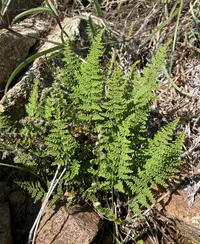
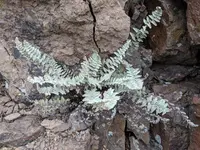
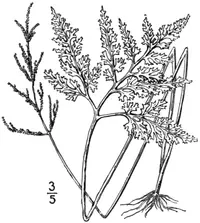
Eaton's lip fern, Hemionitis eatonii, is a compact, clump-forming fern adapted to dry, rocky habitats. It usually grows close to the ground, forming neat rosettes of finely divided fronds.

In nature it occurs mainly in the southwestern United States and northern Mexico, often on limestone outcrops or in crevices with sharp drainage. Its tolerance of drier conditions than many ferns makes it appealing but slightly more specialized.

Gardeners who want to care for Eaton's lip fern should provide a stable environment with good air circulation, moderate light, and protection from waterlogging or extreme humidity swings.

Main Plant Requirements

Care Difficulty

Moderate Care

Light Preference

Partial Shade

Water Requirements

Keep Soil Moist

Temperature Preference

Tropical / Frost Sensitive

Hardiness Zone

10–11

Soil Texture

Loamy, Peaty, Organic-rich

Soil pH

Acidic (5.5–6.5)

Soil Drainage

Moist but well-drained

Fertilization

Light (every 4–6 weeks)

Get Personalized Care Plan

Scan your plant to receive care tips personalized for your specific plant

Available on iOS and Android

How to Care for the Eaton's lip fern

This fern prefers gentle, filtered light that mimics its native rocky, partially shaded habitats.

  • Provide bright, indirect light or light dappled shade, with 2–4 hours of soft morning sun and protection from harsh midday and afternoon sun.
  • Eaton's lip fern grows well on east or north exposures, or under open tree canopy where light is broken by leaves or rocks.
  • Too much direct sun scorches fronds and causes bleaching, while deep shade leads to stretched, sparse growth with smaller, pale fronds.

This species prefers consistently lightly moist conditions but suffers if soil stays saturated.

  • Water when the top 1–2 cm of soil or substrate feels barely dry, aiming for evenly moist but not soggy conditions around the rhizomes.
  • Use a sharply drained, gritty or rocky mix so excess water runs off quickly; avoid sites where water stands after rain to reduce root and rhizome rot risk.
  • In warmer months, monitor more often as soil dries faster; in cooler seasons, let the surface dry slightly deeper and watch for crisping fronds (too dry) or blackened bases (too wet).

This fern prefers mild, frost-free temperatures with limited extremes.

  • Aim for 60–80°F (16–27°C) for steady growth; short peaks to 85°F (29°C) are tolerated if humidity and soil moisture remain stable.
  • Protect Hemionitis eatonii from cold; growth slows below 55°F (13°C) and damage occurs near 40°F (4°C), with hard frost likely killing fronds.
  • In hot summers, provide shade and extra airflow to prevent heat stress, and in cooler seasons avoid planting in low spots where cold air collects.

This fern prefers consistently moist air and reacts quickly to dry conditions indoors.

  • Aim for 60–80% humidity to keep fronds lush and reduce browning.
  • Tolerates brief dips to 40–50%, but prolonged dry air causes crisp tips, curled fronds, and stalled growth.
  • Place near a humidifier, on a pebble tray, or group with other plants to raise humidity around Eaton's lip fern.

Hemionitis eatonii needs a loose, humus-rich substrate that stays evenly moist but never waterlogged.

  • Use a mix of 50% peat or coco coir, 30% fine bark, and 20% perlite to balance moisture retention and aeration.
  • Aim for slightly acidic to neutral pH, around 5.5–7.0, which supports nutrient availability and healthy root function.
  • Ensure rapid drainage by using a pot with large holes and avoiding saucers left filled with standing water.
  • Avoid heavy garden soil, high-clay mixes, or compacted media that suffocate fine roots and encourage rot.

This species adapts well to container growing when moisture and root space are carefully managed.

  • Choose a relatively deep pot so the fine roots can spread downward, which helps stabilize the fronds above.
  • Select a slightly heavier material like ceramic to reduce tipping as the fern develops a fuller canopy.
  • Elevate the container on feet or a stand so drainage water clears quickly and the lower root zone does not stay saturated.

This fern benefits from light, consistent feeding during active growth but is sensitive to excess salts.

  • Use a balanced liquid fertilizer (around 10-10-10 or 20-20-20) diluted to 1/4–1/2 strength for Eaton's lip fern.
  • Apply every 4–6 weeks in spring and summer when growth is active.
  • Skip or reduce feeding to once in midwinter if growth slows under low light.
  • Flush the pot with plain water every 1–2 months to limit fertilizer salt buildup.

Pruning Hemionitis eatonii is mainly hygienic and shaping rather than structural.

  • Trim dead, yellowing, or damaged fronds at the base year-round using clean, sharp scissors.
  • In late winter or early spring, remove the oldest crowded fronds to open the center and improve air flow.
  • Avoid cutting into the central crown; focus on individual frond stalks only.
  • Light pruning supports a tidier form and encourages fresh, healthy frond production.

This fern prefers slightly snug pots and gentle handling when moved.

  • Plan repotting every 2–3 years in spring when roots circle the pot, drainage slows, or growth declines.
  • Move Hemionitis eatonii only 1 pot size up into a shallow container with airy, well-drained, peat-free fern mix.
  • Water thoroughly the day before and gently tease roots apart, removing only loose, dead material.
  • After repotting, keep in bright, indirect light with slightly higher humidity and moderate watering to limit stress.

Propagation of this fern is possible but slower than many common houseplants.

  • Use division in spring, separating a well-established clump into sections each with healthy fronds and rhizomes.
  • Replant divisions into small, shallow pots with moist, fine-textured fern mix.
  • Maintain high humidity (60–70%), steady moisture, and warm temperatures around 70–75°F to encourage establishment.
  • Spore propagation is possible but requires sterile tools, fine misting, and patience due to very slow development.

Hemionitis eatonii is frost-sensitive and is best treated as an indoor or mild-climate fern in winter.

  • Move container plants indoors before temperatures drop below 50°F and keep away from drafts.
  • Maintain indoor temperatures around 60–75°F and avoid cold windowsills at night.
  • Keep the potting mix lightly moist but reduce watering compared with summer to prevent root rot.
  • If grown outdoors in mild zones, use a light mulch around the root zone to buffer short cool spells.

Care Tips

Cooler root zone

Place the pot inside a slightly larger cachepot with a layer of damp sphagnum moss or fine bark between them to keep the root zone cooler and more stable than the surrounding room air.

Shielded air movement

Position the fern where it receives gentle, indirect air movement from a nearby fan or open doorway, but use a solid object like a bookcase edge or screen to break direct drafts that can desiccate the fronds.

Careful division timing

If division is needed, do it only in late spring when new croziers are just emerging and split the rhizome into 2–3 sections with at least 3 healthy fronds each to reduce transplant shock and mortality.

Targeted pest inspection

Inspect the undersides of fronds and the fuzzy stipes with a magnifying glass every 2–3 weeks, since the plant’s texture can hide early mealybug or scale infestations that are easier to control when caught quickly.

Gradual microclimate shifts

When adjusting humidity setups or moving the plant to a different room, change one factor at a time over 7–10 days, which helps the fern acclimate smoothly and supports long-term success in growing Eaton's lip fern.

Common Pests and Diseases

Scale insects

This pest feeds on fern fronds and rachises, causing yellowing, stunted growth, and sticky honeydew that can lead to sooty mold. Infestations often start along the midrib on sheltered, humid indoor plants.

Solution

Remove heavily infested fronds and gently scrape or wipe remaining insects with a cotton pad dipped in 70% isopropyl alcohol, then rinse the foliage with lukewarm water. Improve air movement, avoid overfertilizing, and, if needed, use a light horticultural oil labeled for ferns, testing on a small area first to ensure no frond burn.

Fern aphids

These insects cluster on the youngest fronds and undersides of pinnae, causing puckering, distortion, and a fine sticky residue. Symptoms include slowed growth and weakened plants, especially in warm, soft growth conditions common in Eaton's lip fern indoor care.

Solution

Shower the plant under a gentle stream of lukewarm water, focusing on new growth and frond undersides, then allow it to dry with good air circulation. For persistent populations, apply insecticidal soap or a neem-based product labeled for ferns, repeating at 5–7 day intervals until no new aphids appear.

Rhizoctonia leaf blight

This disease causes irregular brown lesions on fronds that may start water-soaked, then dry and coalesce, leading to dieback from the tips inward. Symptoms include patchy decline in dense, moist clumps where foliage stays wet for long periods.

Solution

Trim and discard affected fronds, sterilizing scissors between cuts, and reduce overhead watering so foliage dries quickly. Increase spacing and airflow, water at the base in the morning, and if spread continues, use a fungicide labeled for ornamental ferns according to directions.

Pythium root rot

This disease affects plants kept in saturated, poorly drained media, leading to black, mushy roots, frond wilt, and collapse despite moist soil. Symptoms include slow decline and fronds that fail to recover turgor after watering.

Solution

Unpot the plant, cut away all soft, dark roots, and repot in a fresh, fine but well-drained mix in a pot with open drainage, watering only when the top layer feels just barely dry. Discard the old soil, sterilize containers and tools, and in severe cases use a systemic fungicide labeled for Pythium on ornamentals, then adjust watering to maintain evenly moist, not waterlogged, conditions.

Botrytis gray mold

This disease appears as soft, tan to brown patches on older or damaged fronds that develop a gray, fuzzy mold in high humidity and poor air circulation. Symptoms include blighted frond tips and spotting where dead tissue or old spores remain on the plant surface.

Solution

Remove and discard all affected fronds and any dead plant material from the soil surface, then increase ventilation and avoid overhead misting that keeps foliage wet. Water early in the day at the soil level and, if humidity is very high or the problem recurs, apply a botrytis-targeted fungicide suitable for ornamental ferns, following label rates.

Interesting Facts

Naturally a lithophyte

This fern often grows as a lithophyte, meaning it anchors into crevices on limestone or other calcareous rocks rather than typical forest soil, reflecting adaptation to mineral-rich but shallow substrates.

Preference for alkaline rock

In nature it is closely associated with limestone and other basic rocks, which is unusual for many ferns that more often favor acidic substrates, making its habitat selection quite specialized.

Compact fern morphology

The plant forms small, tufted rosettes of delicate fronds arising from short creeping rhizomes, giving it a compact growth habit that differs from the sprawling form of many larger woodland ferns.

FAQs about Eaton's lip fern

This species is naturally an outdoor rock crevice fern, doing best in bright, shaded, well-drained sites with good air movement. Indoors it is trickier, needing stable humidity and careful watering, so outdoor culture is usually more reliable.

Grow Healthy Plants with Botan Care

Keep your plants happy and healthy with plant identification, disease detection, and easy care guidance.

Botan plant care app — identify plants on mobile

Explore More Plants