Shallow pot choice
Use a wide, shallow pot with many drainage holes to accommodate the fern’s creeping rhizomes, and repot only when roots reach the pot edge rather than on a fixed schedule.

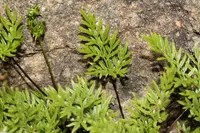
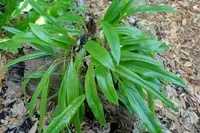
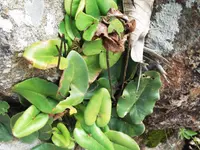
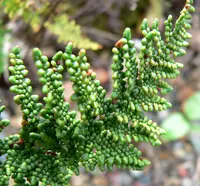
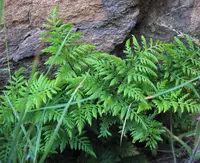
Indian's dream (Hemionitis densa) is a small, delicate fern valued for its finely divided fronds and compact clumping habit. It is typically grown as an indoor accent plant or in terrariums. In nature, it is found in humid, shaded habitats, often on forest floors or rocky slopes in tropical and subtropical regions. The plant prefers consistently moist conditions, stable warmth, and good air humidity, which can make it more demanding than common houseplants. Its thin roots and fronds are sensitive to drying out and to sudden environmental changes. Those factors influence how to care for Indian's dream successfully in a home setting.

Care Difficulty
Hard Care

Light Preference
Partial Shade

Water Requirements
Keep Soil Moist

Temperature Preference
Tropical / Frost Sensitive

Hardiness Zone
11–12

Soil Texture
Loamy, Silty, Organic-rich

Soil pH
Acidic (5.5–6.5), Slightly acidic (6.5–7.0)

Soil Drainage
Moist but well-drained

Fertilization
Light (every 4–6 weeks)
Scan your plant to receive care tips personalized for your specific plant
Available on iOS and Android
This fern prefers soft, indirect light that mimics a shaded forest floor.
This fern needs consistently moist conditions without staying waterlogged.
This species prefers mild, stable temperatures similar to a sheltered woodland habitat.
This fern needs consistently high humidity to thrive indoors.
This species prefers a loose, moisture-retentive but airy substrate similar to a fine orchid or fern mix.
This fern adapts well to container culture when moisture and drainage are balanced carefully.
This fern benefits from modest feeding in active growth but is sensitive to excess salts, so use dilute products and a light schedule when caring for Indian's dream.
Pruning needs for Hemionitis densa are minimal and focus on cleanliness and maintaining an open clump.
This fern prefers stable conditions and light root disturbance, so repotting or transplanting should be infrequent and careful.
Propagation of Hemionitis densa is usually done by careful division rather than from spores, which need specialized conditions.
This fern is not strongly frost hardy and benefits from thoughtful winter care, especially in cooler climates.

Plant Health Check
Not sure what's wrong with your plant? Check your plant's health inside the app.
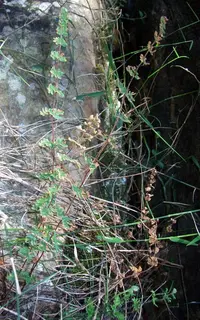
This small fern naturally grows on moist, shaded stream banks and rocky seeps in parts of Malesia and New Guinea, often forming loose colonies along constantly damp substrates rather than in drier forest floor sites.
It has slender, creeping rhizomes (horizontal stems) that slowly spread across mossy rocks or soil, anchoring the plant and allowing it to occupy narrow, humid microhabitats along watercourses.
Molecular and morphological studies led to this species being moved from the genus Microlepia into Hemionitis, reflecting a refined understanding of its evolutionary relationships within the fern family Dennstaedtiaceae.
Brown leaf tips or edges usually result from low humidity, underwatering, or salt buildup from fertilizer. Improve ambient humidity, water thoroughly but less often, and occasionally flush the potting mix with clean water to remove excess salts.
Keep your plants happy and healthy with plant identification, disease detection, and easy care guidance.