Myriopteris aurea Care (Hemionitis bonariensis)

Also known as: golden lip fern, Bonaire lip fern
Myriopteris aurea

About Myriopteris aurea

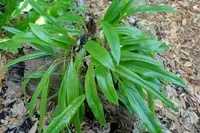
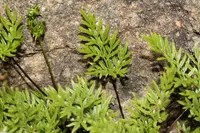
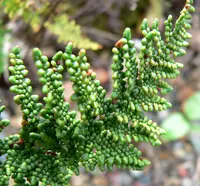
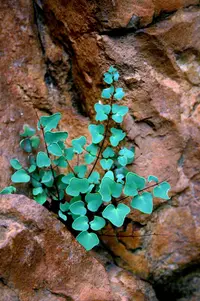
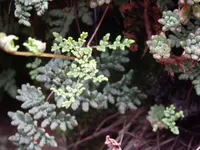
Myriopteris aurea, also known in older literature as Hemionitis bonariensis, is a small terrestrial fern with finely divided, feathery fronds. It often forms loose clumps that give a delicate, airy look despite its relatively tough nature.

This species occurs naturally in rocky, often dry habitats in parts of South America and neighboring regions, where it adapts to seasonal changes in moisture. Its preference for well-drained, gritty substrates and moderate moisture means it can be more challenging for beginners who tend to overwater. Those who learn how to care for Myriopteris aurea usually find it manageable under bright, indirect light and steady, light soil moisture.

Main Plant Requirements

Care Difficulty

Moderate Care

Light Preference

Partial Shade

Water Requirements

Keep Soil Moist

Temperature Preference

Tropical / Frost Sensitive

Hardiness Zone

10–11

Soil Texture

Loamy, Peaty, Organic-rich

Soil pH

Acidic (5.5–6.5), Slightly acidic (6.5–7.0)

Soil Drainage

Moist but well-drained

Fertilization

Light (every 4–6 weeks)

Get Personalized Care Plan

Scan your plant to receive care tips personalized for your specific plant

Available on iOS and Android

How to Care for the Myriopteris aurea

This fern prefers soft, woodland-style light rather than direct, open sun.

  • Provide bright dappled shade or filtered light, such as beneath shrubs or high tree canopy, with 2–3 hours of gentle morning sun if possible.
  • Avoid harsh midday and afternoon sun, which can scorch fronds and cause fading or crisp brown edges, especially in hot, dry climates.
  • In summer, increase shade or add light mulch to protect roots; in winter, when the sun is lower, slightly more exposure is acceptable, similar to growing Myriopteris aurea in sheltered sites.

This species prefers evenly moist but not saturated soil throughout the growing season.

  • Water when the top 2–3 cm of soil feel slightly dry, then soak the root zone thoroughly so excess water drains away.
  • Use a loose, well-drained, humus-rich soil; standing water or heavy clay promotes root rot, yellowing fronds, and a sour smell in the soil.
  • In cooler months, let the top 3–4 cm dry before watering; crisp, curling fronds indicate underwatering, while blackened bases or mushy roots indicate overwatering in Hemionitis bonariensis.

This fern thrives in mild, frost-free conditions with stable, moderate temperatures.

  • Aim for 60–75°F (16–24°C) for active growth, avoiding sudden swings; consistent conditions support steady frond production.
  • Protect from cold below about 40°F (4°C); brief dips may be tolerated, but freezing temperatures and frost can damage or kill fronds and crowns.
  • In hot weather above 86°F (30°C), increase shade and soil moisture, and use mulch to keep roots cooler while maintaining airflow to prevent fungal issues.

This fern grows best in consistently moist air and is sensitive to very dry indoor conditions.

  • Aim for 60–80% humidity; it tolerates brief dips to 40–50% but fronds may crisp at the edges.
  • Low humidity stress shows as brown leaf tips, curled fronds, and slowed unfurling of new growth.
  • Increase humidity with a pebble tray, grouping plants, or a small humidifier, as used for Myriopteris aurea indoor care.

Soil for this fern must stay evenly moist yet airy so roots do not suffocate or rot.

  • Use a loose, organic-rich mix such as 2 parts peat or coco coir, 1 part fine bark, and 1 part perlite for structure.
  • The substrate should drain freely but retain moisture, mimicking a forest floor with constant but not stagnant dampness.
  • Target slightly acidic to neutral pH around 5.5–7.0, avoiding limy mixes that can bind nutrients and slow growth.
  • Improve aeration and prevent compaction by adding fine bark and perlite, and avoid heavy clay or dense garden soil in containers.

This species is well suited to container growing when moisture and drainage are carefully controlled.

  • Choose a relatively wide, shallow pot to match its fibrous root system and keep the mix from staying wet in the lower zone.
  • Use a pot material that matches your conditions: plastic to slow drying in hot, arid homes, or unglazed clay to reduce waterlogging.
  • Place the container where it cannot tip easily, since arching fronds can create uneven weight as the plant matures.

Hemionitis bonariensis benefits from modest, carefully controlled feeding in active growth.

  • Use a balanced liquid fertilizer (such as 10-10-10) at 1/4–1/2 label strength for Hemionitis bonariensis plant care.
  • Feed every 4–6 weeks during spring and summer when fronds are expanding and color is strong.
  • Reduce or stop feeding in fall and winter, resuming only when new growth appears in spring.
  • Many ferns, including those grown alongside Myriopteris aurea, respond well to light compost top-dressing instead of heavy fertilization.

Hemionitis bonariensis needs light, maintenance pruning to stay tidy and healthy.

  • Best timing is late winter to early spring, before strong new growth, or after a flush of fronds has hardened.
  • Remove dead, yellowing, or damaged fronds at the base using clean, sharp scissors or bypass pruners.
  • Thin out crowded or crossing fronds to improve airflow, which reduces fungal issues and keeps the plant compact.
  • Avoid cutting healthy crowns; selective removal preserves the natural arching habit and steady growth.

Hemionitis bonariensis adapts well to containers but prefers gentle, infrequent repotting.

  • Plan to repot every 2–3 years in spring when roots circle the pot, drainage slows, or growth becomes weak.
  • Choose a container 2–5 cm wider with ample drainage and a loose, humus-rich, slightly acidic mix.
  • Water well the day before, then ease the root ball out and tease circling roots lightly without tearing.
  • Set at the same depth, backfill carefully, water to settle soil, then keep in bright, indirect light while roots recover.

Hemionitis bonariensis is most reliably propagated by careful division rather than from spores.

  • Divide established clumps in spring when active growth starts and temperatures are mild.
  • Lift the plant, then separate the root mass into sections, each with healthy rhizome pieces and several fronds.
  • Plant divisions into small pots with moist, fine-textured fern mix and firm gently around roots.
  • Maintain high humidity, consistent moisture, and bright, indirect light until robust new fronds develop.

Hemionitis bonariensis has limited frost tolerance and needs some winter protection in cooler climates.

  • In regions below about 30–35°F, grow in containers so plants can be moved indoors or to a cool greenhouse.
  • Keep indoor winter temperatures around 55–65°F with bright, indirect light and slightly reduced watering.
  • Outdoors in mild climates, mulch the root zone lightly to buffer temperature swings without burying the crown.
  • Avoid cold drafts and sudden temperature drops, which can scorch fronds and slow recovery in spring.

Care Tips

Shallow pot choice

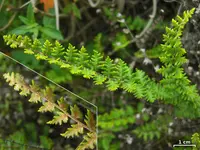
Use a wide, shallow pot with many drainage holes to accommodate its creeping rhizomes and allow you to divide and rejuvenate the plant more easily when the clump becomes crowded.

Divide on schedule

Plan to lift and divide congested clumps every 2–3 years in late winter or early spring, cutting the rhizomes into several pieces with at least 2–3 fronds each to keep growth vigorous and reduce fungal problems in the center of the plant.

Targeted frond grooming

Remove individual old, yellowing, or misshapen fronds by cutting them close to the rhizome with clean scissors, which improves airflow through the foliage and makes it easier to monitor for early signs of scale or mites.

Pebble-tray buffering

Place the pot on a wide pebble tray with water below the top of the stones to create a stable humid microclimate around the fronds and reduce edge-browning during dry indoor heating periods without overwatering the root zone.

Quarantine new ferns

Keep any newly purchased ferns or foliage plants in a separate area for 2–3 weeks and inspect them regularly, since early isolation greatly lowers the risk of introducing scale insects or fungal spores to established specimens when caring for Myriopteris aurea or other sensitive ferns.

Common Pests and Diseases

Scale insects

This pest attaches to fronds and stems, appearing as small tan, brown, or dark bumps that cause yellowing and reduced vigor.

Solution

Remove heavily infested fronds and gently scrape or wipe remaining scales with a cotton swab dipped in isopropyl alcohol, then wash foliage under lukewarm running water and maintain higher humidity and stable temperatures to reduce stress that favors outbreaks.

Spider mites

These insects thrive on finely divided fern fronds in dry indoor air, causing stippled, dull foliage and fine webbing along the undersides of pinnae.

Solution

Increase humidity, rinse fronds thoroughly with a gentle shower to dislodge mites, and repeat rinsing every few days; for persistent infestations, apply a ready-to-use insecticidal soap to both sides of the fronds, keeping the plant out of direct sun until leaves are dry.

Rhizoctonia leaf blight

This disease produces irregular brown lesions that may merge and cause entire frond sections to collapse, especially in crowded or poorly ventilated conditions.

Solution

Prune and discard affected fronds, improve air circulation around the plant, avoid overhead watering that keeps foliage wet for long periods, and, if spread continues, use a fern-safe fungicide labeled for Rhizoctonia, following directions closely.

Bacterial leaf spot

Symptoms include small, water-soaked translucent spots on fronds that turn dark brown or nearly black and may have a yellowish halo.

Solution

Remove and destroy spotted fronds, avoid splashing water onto foliage, water at the soil level, and keep leaves dry; in collections where the problem recurs, isolate affected plants and sterilize tools between cuts to prevent spread.

Interesting Facts

Unusual fern morphology

This species often develops a distinct, somewhat fleshy rhizome and produces fronds with a relatively narrow, elongated blade, giving it a more delicate and upright look compared with many broader-leaved ferns in related groups.

Native South American range

It is naturally distributed in parts of South America, including regions of Argentina and neighboring areas, where it grows in rocky or open habitats rather than deep forest, which is atypical for many commonly known ferns.

Taxonomic reclassifications

Historically placed in Cheilanthes and allied xeric fern genera, it has been shifted between genera as molecular phylogenetic studies clarified relationships within the cheilanthoid ferns, illustrating how DNA evidence reshapes fern classification.

FAQs about Myriopteris aurea

This fern spreads slowly by short rhizomes, forming small, tight clumps rather than running widely. It does not behave aggressively in gardens or containers and is unlikely to outcompete neighboring plants under normal conditions.

Grow Healthy Plants with Botan Care

Keep your plants happy and healthy with plant identification, disease detection, and easy care guidance.

Botan plant care app — identify plants on mobile

Explore More Plants