Use shallow pots
Choose wide, shallow containers with good side drainage to accommodate the fern’s creeping rhizomes and repot only when roots reach the pot edge, rather than on a fixed schedule.

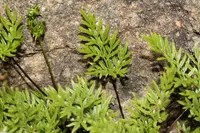
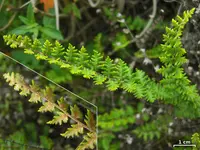
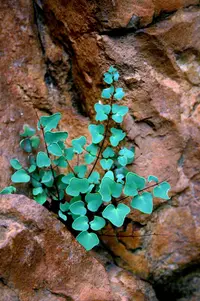
Hemionitis integerrima is a small tropical fern, often called a heart fern, valued for its glossy, heart-shaped fronds and compact, clumping growth. It is typically grown as a decorative foliage plant in containers or terrariums.
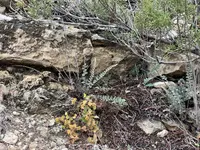
In nature it occurs in humid tropical forests, usually on moist, shaded rock or soil, where temperatures stay warm and air humidity is high. Its thin, delicate fronds and fine roots mean it can be sensitive to drying out or strong light, so it suits growers who can monitor moisture closely.
Those who want to learn how to care for Hemionitis integerrima should focus on steady warmth, soft indirect light, and a consistently moist but well-aerated substrate.

Care Difficulty
Moderate Care

Light Preference
Partial Shade

Water Requirements
Keep Soil Moist

Temperature Preference
Tropical / Frost Sensitive

Hardiness Zone
11–12

Soil Texture
Loamy, Peaty, Organic-rich

Soil pH
Acidic (5.5–6.5)

Soil Drainage
Moist but well-drained

Fertilization
Light (every 4–6 weeks)
Scan your plant to receive care tips personalized for your specific plant
Available on iOS and Android
This fern prefers soft, filtered light that mimics a forest understory.
Moist, never soggy soil suits this fern best.
Stable, mild temperatures support steady frond growth and root health.
This fern needs consistently high humidity to maintain healthy foliage.
Use a loose, humus-rich mix that stays evenly moist yet drains freely.
This species is suitable for container growing when moisture and drainage are carefully balanced.
This fern benefits from light, consistent nutrients but is sensitive to overfeeding.
Pruning is minimal and focuses on maintaining frond health and plant appearance.
Repotting aims to refresh the mix and prevent root crowding rather than upsizing frequently.
Propagation is possible but somewhat slow, so patience and stable conditions are important.
This fern is not frost hardy and needs mild, protected winter conditions, especially in containers.

Plant Health Check
Not sure what's wrong with your plant? Check your plant's health inside the app.
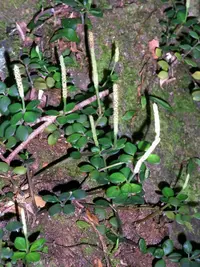
This species often grows as an epiphyte, anchoring on mossy tree trunks and branches rather than rooting in soil, which allows it to exploit humid, shaded forest microhabitats in its native Central and South American range.
The plant produces thick, leathery, heart-shaped sterile fronds and narrower fertile fronds on the same plant, a dimorphic leaf pattern that makes it easy to distinguish from many other ferns.
In nature it can occur both on the forest floor and higher up on trees, showing notable ecological flexibility in how it uses light, moisture, and support surfaces.
This fern generally performs better in sheltered, humid, frost-free conditions, so bright, protected indoor or greenhouse environments suit it well in many climates. Outdoors, it needs mild temperatures, shade, and consistently moist, humus-rich soil to thrive.
Keep your plants happy and healthy with plant identification, disease detection, and easy care guidance.