

Mounting technique
Grow this fern on a mount or in a slatted hanging basket with a fine, moisture-retentive epiphyte mix wrapped in sphagnum so the long fronds can hang freely without kinking or rotting on a pot rim.

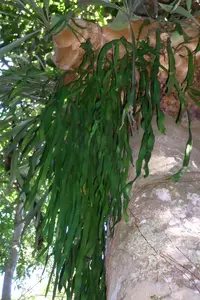
Old World adderstongue (Ophioglossum pendulum) is a primitive fern ally known for its long, ribbon-like fronds that hang gracefully from baskets or mossy mounts. It has a distinctive fertile spike that rises from the leaf surface, giving it an unusual, almost reptile-tongue look.
This species naturally occurs in humid tropical forests of Southeast Asia, growing as an epiphyte on trees or on rocks with constant moisture. It prefers stable warmth, high humidity, and gentle, filtered light, which can make how to care for Old World adderstongue more challenging for beginners.
It suits experienced or very dedicated indoor growers who can provide consistent moisture without waterlogging and a loose, airy, organic substrate.

Care Difficulty
Hard Care

Light Preference
Partial Shade

Water Requirements
Keep Soil Moist

Temperature Preference
Tropical / Frost Sensitive

Hardiness Zone
11–12

Soil Texture
Loamy, Peaty, Organic-rich

Soil pH
Acidic (5.5–6.5)

Soil Drainage
Moist but well-drained

Fertilization
Light (every 4–6 weeks)
Scan your plant to receive care tips personalized for your specific plant
Available on iOS and Android
This fern prefers low to medium light that mimics shaded forest canopies.
This fern needs consistently moist but not waterlogged conditions.
This species prefers warm, stable, frost-free conditions year-round.
This fern needs high, stable humidity to keep its pendulous fronds healthy.
This epiphytic fern prefers a loose, moisture-retentive yet airy substrate rather than dense garden soil.
This species adapts well to containers, especially hanging setups that respect its naturally pendulous growth.
This fern benefits from light, careful feeding rather than heavy fertilization.
Ophioglossum pendulum requires minimal pruning, mainly for cleanliness and light management.
This species prefers stable conditions, so repotting or transplanting should be infrequent and gentle.
Propagation of Ophioglossum pendulum is specialized and usually left to experienced growers or laboratories.
This tropical fern is not frost hardy and needs warm, stable conditions through winter.

Plant Health Check
Not sure what's wrong with your plant? Check your plant's health inside the app.
This fern produces very long, narrow, ribbon-like fronds that hang pendulously from tree trunks or rocks, sometimes reaching more than 1 m in length in humid tropical forests.
Each frond usually bears a single, distinct fertile spike along its margin, where rows of tiny spore cases (sporangia) are embedded rather than exposed in dots or lines like in most other ferns.
This species belongs to the small family Ophioglossaceae, an evolutionarily old fern group whose members have unusually simple fronds and subterranean, fungus-associated gametophytes compared with many modern ferns.

This species relies heavily on a close association with mycorrhizal fungi throughout its life cycle, including in its underground gametophyte stage, which makes it difficult to propagate and maintain outside its natural humid forest habitat and is a key challenge in Ophioglossum pendulum plant care.
Growth is slow to moderate. Fronds lengthen gradually over several months, and noticeable size increase may take 1–2 years. Stable warmth, consistent moisture, and high humidity are key factors influencing growth rate and overall vigor.
Keep your plants happy and healthy with plant identification, disease detection, and easy care guidance.

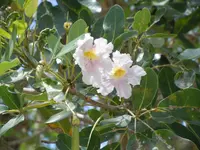
Pink manjack
Tabebuia heterophylla
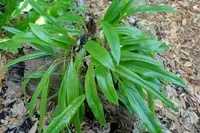
Lanceleaf Tongue Fern
Pyrrosia lanceolata
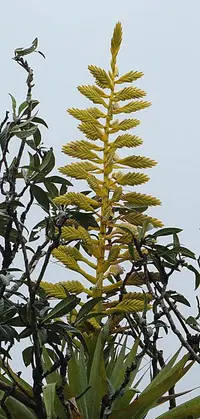
Tillandsia oerstediana
Tillandsia oerstediana
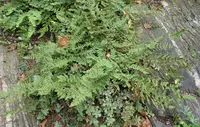
hairy lip fern
Hemionitis lanosa
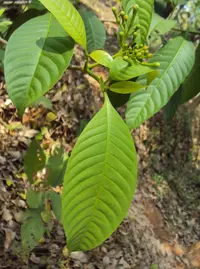
alternate-leaved crape jasmine
Tabernaemontana alternifolia
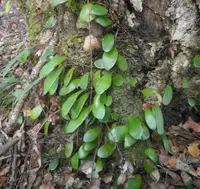
leather-leaf fern
Pyrrosia eleagnifolia
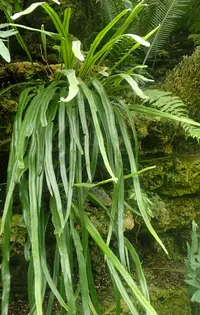
Long-leaved Pyrrosia
Pyrrosia longifolia
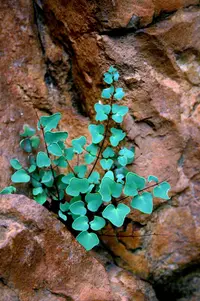
Hemionitis calomelanos
Hemionitis calomelanos