

Rocky mounting
Mount the fern on a piece of tufa, lava rock, or very coarse, shallow substrate so its rhizomes can cling and dry quickly between moisture events, which closely mimics its natural crevice habitat.

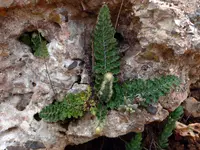
Scaly lip fern (Cosentinia vellea) is a small, drought-adapted fern known for its finely divided fronds covered in tiny pale scales. It forms low, tufted clumps that sit close to the ground.
In nature it grows on rocky slopes and cliffs in dry, often sunny or lightly shaded sites around the Mediterranean and parts of western Asia. This background makes it more tolerant of dryness and light than many other ferns.
Its slow growth, small size, and need for sharp drainage make it suited to rock gardens, troughs, and specialist collections. Understanding how to care for Scaly Lip Fern mainly involves balancing bright light with protection from prolonged, intense heat and avoiding waterlogged soil.

Care Difficulty
Hard Care

Light Preference
Partial Shade

Water Requirements
Moderate Water

Temperature Preference
Cool Climate

Hardiness Zone
6–9

Soil Texture
Sandy, Rocky, Loamy

Soil pH
Acidic (5.5–6.5)

Soil Drainage
Well-drained

Fertilization
Minimal (feed rarely)
Scan your plant to receive care tips personalized for your specific plant
Available on iOS and Android
This small rock-dwelling fern prefers bright but gentle light that mimics shaded cliffs and ledges.
This fern prefers slightly moist but never waterlogged conditions around its shallow roots.
This species favors cool to mild conditions similar to shaded rocky slopes.
This fern prefers moderately dry air and usually needs no special humidity control.
Cosentinia vellea grows best in a sharply draining, rocky mix that mimics crevices on dry slopes.
This species is suitable for container growing when provided with a shallow, very free-draining setup.
Cosentinia vellea is adapted to low-nutrient rocky habitats and usually needs minimal feeding in cultivation.
Pruning Cosentinia vellea focuses on hygiene rather than reshaping the plant.
Cosentinia vellea is usually grown in shallow containers or rock gardens and dislikes frequent disturbance.
Propagation of Cosentinia vellea is possible but tends to be slower and is usually done by division or spores.
Cosentinia vellea is relatively cold tolerant in well-drained sites but benefits from simple winter precautions in colder regions.

Plant Health Check
Not sure what's wrong with your plant? Check your plant's health inside the app.
This species is a classic resurrection fern that survives severe drought by curling its fronds, losing almost all free water, and entering a metabolically inactive state, then rapidly rehydrates and greens up after rainfall or mist.
The fronds are covered with dense white to gray scales on the underside, which reflect light, slow water loss, and protect the leaf surface from intense sun in its native dry, rocky habitats.
It typically grows on calcareous or siliceous rocks in Mediterranean and Macaronesian regions, anchoring its short rhizomes in crevices where small amounts of moisture and fine soil accumulate.

Molecular and morphological studies placed this fern in its own monotypic genus Cosentinia, meaning it is the only species in the genus, reflecting its distinct evolutionary lineage within the cheilanthoid ferns.
This species is better suited to outdoor conditions that mimic rocky, well-drained, often dry habitats. Indoors it is challenging to maintain proper airflow and dryness, so Scaly Lip Fern indoor care is generally considered advanced.
Keep your plants happy and healthy with plant identification, disease detection, and easy care guidance.

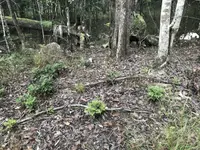
Hemionitis concolor
Hemionitis concolor
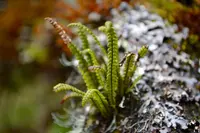
Grammitis moniliformis
Grammitis moniliformis
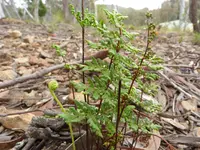
Hemionitis austrotenuifolia
Hemionitis austrotenuifolia
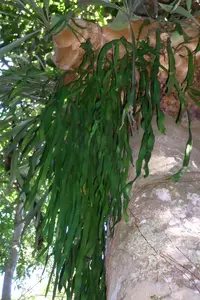
Old World adderstongue
Ophioglossum pendulum
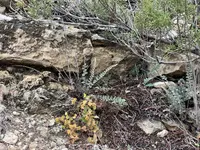
Hemionitis integerrima
Hemionitis integerrima
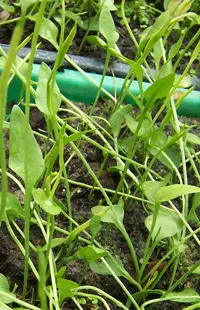
Least Adder's-tongue
Ophioglossum lusitanicum
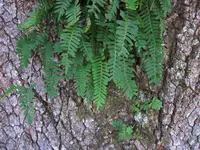
resurrection fern
Pleopeltis michauxiana
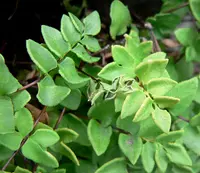
Brewer's cliffbrake
Hemionitis breweri