Grammitis pseudociliata Care

Grammitis pseudociliata

About Grammitis pseudociliata

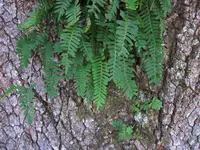
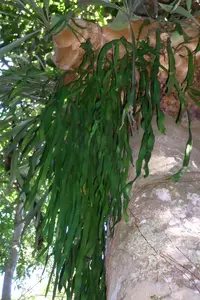
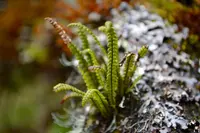
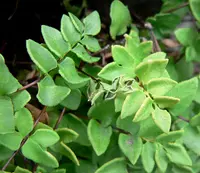
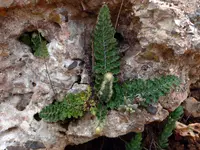
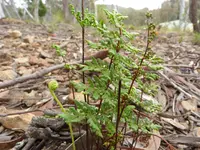
Grammitis pseudociliata is a small epiphytic fern that usually grows on tree trunks or mossy rocks in humid tropical forests. It forms delicate, narrow fronds that create a fine, tufted clump rather than a large leafy plant.

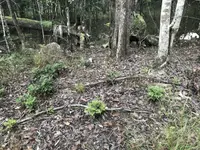
This fern occurs mainly in cloud forest habitats, where light is filtered and moisture is constant. Its preference for stable humidity and gentle airflow makes it more challenging than common houseplants.

Those who wish to care for Grammitis pseudociliata should understand its need for consistently moist, airy substrate and soft, indirect light, often best provided in a terrarium or specialized fern setup.

Main Plant Requirements

Care Difficulty

Hard Care

Light Preference

Shade

Water Requirements

Keep Soil Moist

Temperature Preference

Tropical / Frost Sensitive

Hardiness Zone

Unknown

Soil Texture

Peaty, Organic-rich, Loamy

Soil pH

Strongly acidic (4.5–5.5), Acidic (5.5–6.5)

Soil Drainage

Moist but well-drained

Fertilization

Minimal (feed rarely)

Get Personalized Care Plan

Scan your plant to receive care tips personalized for your specific plant

Available on iOS and Android

How to Care for the Grammitis pseudociliata

This small epiphytic fern prefers soft, filtered light that mimics a forest understory.

  • Provide bright, filtered light such as dappled shade under taller plants, or 2–3 hours of gentle morning sun, avoiding harsh midday and afternoon sun.
  • Allow partial shade; 6–8 hours of bright, indirect light maintains compact growth, while deep shade leads to sparse fronds and slow growth.
  • In summer, protect Grammitis pseudociliata from direct sun scorch; in winter, move slightly closer to a bright window or canopy gap to offset shorter days.

Moist but air-filled roots are essential for this fine-rooted fern.

  • Water when the surface and upper 2–3 cm of the mix feel just barely dry, aiming for consistently moist, not soggy, conditions.
  • Use a very free-draining, airy substrate; excess water should drain within seconds to reduce the risk of root rot and yellowing fronds from overwatering.
  • In warmer months, expect faster drying and more frequent watering; in cooler seasons, drying slows, so extend intervals and watch for limp, curling fronds as a sign of underwatering.

Stable, mild temperatures support steady growth and reduce stress.

  • Aim for 65–80°F (18–27°C) as the main growing range, where fronds develop evenly and roots stay active.
  • Avoid temperatures below 55°F (13°C); brief dips to 50°F (10°C) may be tolerated but repeated exposure slows growth and can blemish foliage.
  • Protect from frost and hot, dry air above 86°F (30°C); in heat waves, increase air movement and humidity to prevent frond scorch and moisture loss.

This fern prefers consistently high humidity to maintain healthy fronds and fine roots.

  • Aim for 60–80% humidity, as Grammitis pseudociliata naturally grows in moist, sheltered forest habitats.
  • Dry air causes crispy frond tips, curled edges, and slow new growth, especially near heating or air-conditioning vents.
  • Increase humidity with a nearby humidifier, grouped plants, or a fine-mist sprayer used lightly without soaking the foliage.

This epiphytic fern needs a very airy, organic-rich medium that drains rapidly yet stays lightly moist.

  • Use a loose mix of fine orchid bark, sphagnum moss, and perlite to mimic its natural growth on trees or rock surfaces.
  • Ensure rapid drainage; the mix should feel springy and open, never compacted or heavy after watering.
  • Keep pH slightly acidic to neutral, around 5.5–7.0, which supports nutrient uptake and healthy root hairs.
  • Avoid dense peat alone, standard garden soil, or clay-heavy mixes that hold water around the roots and limit aeration.

This species is suitable for container growing when given a shallow, well-ventilated setup that mimics an epiphytic mount.

  • Choose a shallow pot or basket that allows the root system to spread horizontally rather than deeply.
  • Use many side and bottom openings or slats so air reaches the medium and excess moisture escapes quickly.
  • Secure the plant firmly with ties or mesh so the rhizomes do not shift when watered or handled, which can damage fine roots.

This fern grows in low‑nutrient forest habitats, so Grammitis pseudociliata needs only light, careful feeding in cultivation.

  • Use a balanced liquid fertilizer (around 10‑10‑10) diluted to 1⁄4–1⁄2 strength for container plants in active growth.
  • Feed every 4–6 weeks during the growing season if fronds look pale or growth is weak.
  • Avoid granular or strong slow‑release products that can burn fine roots in tight substrates.
  • Stop feeding in winter or dormancy, resuming only when new fronds begin to emerge.

Pruning needs are minimal and focus on hygiene rather than shaping for Grammitis pseudociliata.

  • Inspect fronds every few months and remove dead, yellowed, or diseased tissue at the base with clean scissors.
  • Cut damaged tips back to healthy green tissue to limit spread of rot and improve appearance.
  • Thin out badly crowded, overlapping fronds to improve air flow and reduce fungal risk in humid conditions.
  • Disinfect tools with alcohol before and after use to lower the chance of transmitting pathogens.

Container or mounted plants of Grammitis pseudociliata benefit from careful, infrequent repotting to avoid root disturbance.

  • Look for roots circling the container, pushing out drainage holes, or noticeably slower growth as signals to repot.
  • Plan repotting for early spring, about every 2–3 years, when new root and frond growth is starting.
  • Move into a slightly larger pot or fresh mount with airy, fine orchid‑style mix to maintain high drainage and moisture.
  • Handle the root mass gently, keep attached substrate where possible, and shade, mist, and keep evenly moist for 1–2 weeks after moving.

Propagation of Grammitis pseudociliata is specialized and usually handled by spore culture rather than home division.

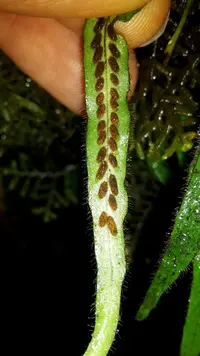
  • Collect ripe brown sori (spore clusters) from mature fronds at the end of the growing season.
  • Sow spores on sterile, fine, moist medium under high humidity and bright, indirect light.
  • Maintain stable warmth around 70–75°F and avoid direct sun to support slow germination and gametophyte development.
  • Keep containers sealed or in a covered propagator to prevent contamination by fungi and algae.

This fern has low frost tolerance and needs protection from freezing conditions in cultivation.

  • Keep temperatures above 45–50°F, especially at night, to avoid cold damage to fronds and rhizomes.
  • Move container plants indoors or into a frost‑free greenhouse before the first hard frost.
  • Maintain lightly moist, not wet, substrate in winter and avoid cold drafts or unheated windowsills.

Care Tips

Mounting technique

Attach the rhizome to a rough bark slab or tree-fern panel with sphagnum moss and soft ties, keeping the rhizome exposed while only the roots are in contact with the moist medium to prevent rot and mimic its natural epiphytic habit.

Moisture zoning

Create a moisture gradient on the mount by packing moss more densely at the center and thinner at the edges so the plant can extend roots into the wetter zone while fronds stay in the better-aerated perimeter.

Airflow management

Position the plant where there is gentle, constant air movement from a small fan set on low to keep fronds dry between misting sessions and reduce fungal spotting without lowering humidity too much.

Water quality control

Use rainwater, distilled, or reverse-osmosis water and occasionally flush the mount thoroughly to remove accumulated salts, which can burn the fine roots of this fern over time.

Routine division checks

Inspect the creeping rhizome once or twice a year and, if it overgrows the mount, trim and reattach healthy segments to fresh mounting material to rejuvenate the plant and simplify caring for Grammitis pseudociliata in limited space.

Common Pests and Diseases

Scale insects

This pest taps into fronds and rhizomes to suck sap, causing yellowing pinnae and weak, stunted growth in dense clumps. Symptoms include small, dome-shaped bumps along the rachis and undersides of fronds, often with sticky honeydew and sooty mold on nearby surfaces.

Solution

Remove affected fronds and gently scrape or wipe insects off the rachis and rhizome with a cotton swab dipped in 70% isopropyl alcohol, taking care not to damage the thin leaf tissue. Improve air movement around the fern, reduce excess fertilizer, and if the infestation persists on a larger planting, use a light horticultural oil spray labeled for ferns, applied in the early evening under cool, shaded conditions.

Fern aphids

These insects colonize the tender tips and undersides of fronds, where they deform new growth and leave a shiny honeydew residue that can attract sooty mold. This pest is more common in humid, sheltered collections and terraria where air circulation is low.

Solution

Rinse colonies off with a gentle but thorough stream of water, repeating over several days to break the life cycle. In enclosed or indoor setups, introduce or encourage biological controls such as lady beetles where feasible, or apply an insecticidal soap formulated for delicate ferns, ensuring the fronds are fully coated and then allowed to dry in bright shade with good ventilation.

Rhizoctonia blight

This disease causes blackish, water-soaked lesions at the base of fronds and along the creeping rhizome, leading to patchy dieback in mats of the fern. Symptoms include sudden collapse of fronds in humid, crowded conditions, with brown webby fungal growth visible at the soil or substrate surface.

Solution

Cut out and discard affected fronds and rhizome sections, then thin and divide clumps to increase spacing and airflow. Allow the surface of the substrate to dry slightly between waterings, avoid overhead watering in cool periods, and if the issue persists in a collection, drench with a fungicide labeled for Rhizoctonia on ferns, following label rates carefully.

Leaf spot fungi

This disease presents as small brown to black spots that may merge into irregular patches on the delicate pinnae, often starting on older fronds in constantly moist environments. Symptoms include prematurely browning fronds and a speckled or patchy appearance that reduces photosynthesis.

Solution

Remove and discard heavily spotted fronds to reduce inoculum, and avoid wetting the foliage when watering, especially late in the day. Improve air circulation around the plant, reduce overcrowding of fronds, and for valuable collections apply a protective fungicide labeled for fern leaf spot on a preventive schedule during prolonged humid periods as part of broader Grammitis pseudociliata care instructions.

Interesting Facts

Epiphytic rock specialist

This fern has been recorded growing both as an epiphyte on tree trunks and on mossy rocks in very humid montane forests, showing a strong preference for constantly moist, shaded microhabitats.

Miniaturized frond structure

The species develops relatively small, narrow fronds adapted to cling closely to its substrate, which reduces water loss and helps it withstand intermittent drying in cloud-forest conditions.

Restricted Neotropical range

Published floristic records place this species in a limited section of the Neotropics, where it occurs in mid- to high-elevation forests rather than lowland tropical habitats.

FAQs about Grammitis pseudociliata

This fern can work indoors if humidity stays high and temperatures remain mild and stable. It suits terrariums, orchid cabinets, or shaded bathrooms better than dry living rooms. Grammitis pseudociliata indoor care is easier with consistent moisture and airflow.

Grow Healthy Plants with Botan Care

Keep your plants happy and healthy with plant identification, disease detection, and easy care guidance.

Botan plant care app — identify plants on mobile

Explore More Plants