


Divide Older Clumps
Every 3–4 years, lift and divide crowded crowns in early spring, trimming damaged roots and replanting divisions at the same depth to keep the fern vigorous and finely textured.

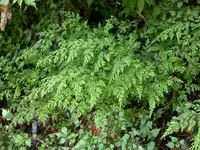
Sichuan lace, Onychium japonicum, is a small, fine-textured fern valued for its delicate, lacy fronds. It forms low, airy clumps that give a light, feathery look. Native to parts of East Asia, it usually grows in shaded, humid forest environments with consistently moist soil. This natural habitat explains its preference for soft light, even moisture, and well-drained, humus-rich substrates. The plant stays relatively compact and is not fast-growing, which makes it suited to containers and smaller indoor spaces. With stable conditions and no extreme temperature or light swings, it is moderately easy to care for Sichuan lace.

Care Difficulty
Moderate Care

Light Preference
Partial Shade

Water Requirements
Keep Soil Moist

Temperature Preference
Warm Climate

Hardiness Zone
7–10

Soil Texture
Loamy, Peaty, Organic-rich

Soil pH
Acidic (5.5–6.5), Slightly acidic (6.5–7.0)

Soil Drainage
Moist but well-drained

Fertilization
Light (every 4–6 weeks)
Scan your plant to receive care tips personalized for your specific plant
Available on iOS and Android
Onychium japonicum prefers soft, dappled light similar to a bright forest floor.
This fern thrives in consistently moist but not waterlogged soil.
This species prefers mild, stable temperatures and struggles with extremes.
This fern prefers moderately moist air and benefits from elevated humidity.
This fern prefers loose, humus-rich soil that stays evenly moist yet drains freely.
This species adapts well to container growing when moisture and drainage are carefully balanced.
Onychium japonicum benefits from light, consistent feeding during active growth, but heavy fertilization is not necessary.
Pruning Onychium japonicum is mainly light grooming that keeps the fern tidy and healthy.
Container-grown plants benefit from careful repotting that prevents crowding while keeping the fern slightly snug.
Onychium japonicum is most commonly propagated by division rather than from spores in home settings.
This fern is moderately cold tolerant but benefits from some winter protection in colder regions.

Plant Health Check
Not sure what's wrong with your plant? Check your plant's health inside the app.
The fronds are finely divided two or more times (bipinnate to tripinnate), giving a lace-like texture that distinguishes it from many other small terrestrial ferns in its native range.
In some populations, fertile fronds bearing spores are more upright and often slightly different in shape and texture from the more spreading, feathery sterile fronds, a pattern known as frond dimorphism.
Its spores are adapted to establish in cool, shaded, well-drained forest floors, where stable moisture and low light allow slow but steady colony formation over time.
Brown tips or fronds usually result from low humidity, inconsistent watering, or excess fertilizer salts. Increase humidity, water when the top surface just begins to dry, flush the pot occasionally, and keep it away from hot or cold drafts.
Keep your plants happy and healthy with plant identification, disease detection, and easy care guidance.


Hemionitis concolor
Hemionitis concolor
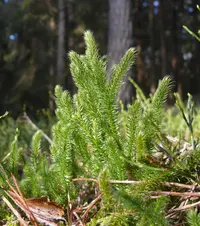
Stag's-horn Clubmoss
Lycopodium clavatum

hairy false cloak fern
Hemionitis incana
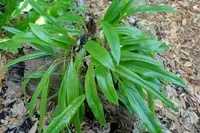
Lanceleaf Tongue Fern
Pyrrosia lanceolata

Long-leaved Pyrrosia
Pyrrosia longifolia

Pyrrosia polydactyla
Pyrrosia polydactyla

Hemionitis calomelanos
Hemionitis calomelanos

resurrection fern
Pleopeltis michauxiana