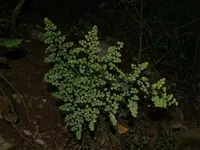
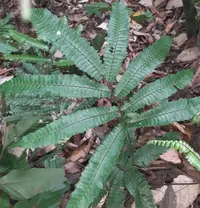
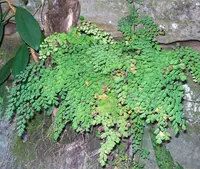
wild birdnest fern Care (Asplenium serratum)

Also known as: American bird's-nest fern
wild birdnest fern

About wild birdnest fern

The wild birdnest fern, Asplenium serratum, is an evergreen tropical fern that forms a central rosette of long, arching fronds. Its leaves are usually strap-shaped, glossy, and leathery, creating a shallow bowl that resembles a bird nest.

This species occurs naturally in humid forests and coastal areas of the Caribbean, Central America, and parts of Florida, often growing on trees or rocks as an epiphyte. Its preference for steady moisture, high humidity, and gentle, filtered light makes it moderately challenging for beginners.

Those conditions explain how to care for wild birdnest fern in homes or greenhouses, especially where indoor air is dry or light levels are very strong.

Main Plant Requirements

Care Difficulty

Moderate Care

Light Preference

Partial Shade

Water Requirements

Keep Soil Moist

Temperature Preference

Tropical / Frost Sensitive

Hardiness Zone

10–11

Soil Texture

Loamy, Peaty, Organic-rich

Soil pH

Strongly acidic (4.5–5.5), Acidic (5.5–6.5)

Soil Drainage

Moist but well-drained

Fertilization

Light (every 4–6 weeks)

Get Personalized Care Plan

Scan your plant to receive care tips personalized for your specific plant

Available on iOS and Android

How to Care for the wild birdnest fern

This fern prefers soft, filtered light that mimics dappled forest shade.

  • Provide 4–6 hours of bright, indirect light each day, such as under a shade tree or beneath 30–50% shade cloth.
  • Tolerates deep to partial shade, but fronds of wild birdnest fern may grow thinner and more open if light is too low.
  • Avoid direct midday and afternoon sun, which can scorch fronds; limited early-morning sun in cooler months is usually safe.

This species needs evenly moist but not waterlogged soil around its roots.

  • Water when the top 2–3 cm of soil feel slightly dry, soaking the root zone, then let excess drain away fully.
  • Increase watering frequency in warm, active growth periods and reduce it in cooler months, while never allowing the soil to dry out completely.
  • Watch for yellowing, limp fronds as a sign of overwatering and crisp, browning edges as a sign the Asplenium serratum is too dry.

Stable, warm conditions support steady growth and healthy fronds.

  • Aim for 65–80°F (18–27°C) for best growth, with sheltered, humid sites offering the most reliable results outdoors.
  • Protect from cold below 55°F (13°C), as growth slows sharply; prolonged exposure near 40°F (4°C) can cause tissue damage or death.
  • This fern tolerates brief heat up to about 90°F (32°C) if shaded and well hydrated, but hot, dry wind quickly stresses the fronds.

This fern prefers consistently moist, humid air to maintain healthy fronds.

  • Aim for 60–80% humidity; use a hygrometer to check levels near the plant.
  • It tolerates brief dips to 40–50%, but frond tips may brown and curl in dry indoor air.
  • If your wild birdnest fern shows crisp edges or slow unfurling fronds, group plants, use a pebble tray, or run a small humidifier nearby.

Asplenium serratum grows best in loose, moisture-retentive but airy substrate.

  • Use a mix of 40% peat or coco coir, 30% fine bark, 20% compost, and 10% perlite for a humus-rich, fibrous structure.
  • Ensure water drains freely yet leaves the mix evenly damp, mimicking leaf-litter forest floors rather than staying soggy.
  • Keep pH slightly acidic to neutral, around 5.5–7.0, avoiding lime-heavy amendments that push the mix alkaline.
  • Improve aeration by increasing bark and perlite if the mix compacts or dries slowly at the center after watering.

This species is well suited to container culture when moisture and stability are managed carefully.

  • Choose a wide, relatively shallow pot that matches the spreading root system and rosette rather than a very deep vessel.
  • Select heavier ceramic or clay containers outdoors if wind is an issue, as the upright fronds can act like a sail.
  • Ensure the potting cavity tapers minimally so water moves evenly through the mix instead of pooling at a narrow base section.

This fern benefits from light, consistent feeding during active growth but is sensitive to excess salts.

  • Use a diluted balanced liquid fertilizer (such as 10-10-10) at 1/4–1/2 strength every 4–6 weeks in spring and summer for wild birdnest fern indoor care.
  • Alternatively, apply a small amount of slow-release fertilizer in early spring, keeping granules off the fronds.
  • Skip synthetic fertilizer in winter; use only a thin layer of compost on the soil surface if needed.

Asplenium serratum needs only light pruning to keep the rosette clean and healthy.

  • Best timing is late winter or early spring, and as needed during the growing season.
  • Remove dead, yellowing, or damaged fronds at the base with clean, sharp scissors or pruners.
  • Thin crowded, inward-growing fronds sparingly to maintain good air flow without disturbing the central crown.
  • Avoid cutting into the crown, as this can stunt growth and deform new fronds.

This fern dislikes frequent disturbance, so repot or transplant only when clearly rootbound or struggling.

  • Repot every 2–3 years when roots circle the pot, growth slows, or water drains too quickly.
  • Choose early spring for repotting, using a slightly larger container with a loose, well-drained, peat-free fern mix.
  • Gently tease roots apart, remove dead material, and keep the root ball as intact as possible to reduce shock.
  • Water thoroughly after repotting, keep humidity high, and shade from strong light for 1–2 weeks while it recovers.

Asplenium serratum is slow to propagate and is usually grown from spores rather than division.

  • Collect mature brown spores from the undersides of fronds in late summer or early fall.
  • Sow spores on the surface of sterile, moist, fine-textured medium and do not cover them.
  • Maintain constant warmth around 70–75°F, high humidity, and bright, indirect light for germination.
  • Keep the medium just moist and be patient; sporelings may take many months before they are large enough to separate.

This tropical fern is frost-sensitive and needs mild, protected conditions in winter.

  • In regions below 40°F, grow in containers and move indoors before the first frost.
  • Indoors, maintain 60–75°F with bright, indirect light and 50–60% humidity.
  • In mild climates, mulch lightly around the root zone, keeping mulch away from the crown to prevent rot.

Care Tips

Frond protection

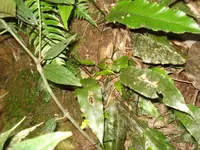
Position the pot where the emerging fronds cannot be brushed or bent by passing people, pets, or nearby doors, since mechanical damage to the still-coiled fronds often leads to deformed mature leaves and weak overall growth.

Salt and chemical control

Use low-mineral, soft, or filtered water and avoid leaf-shine products or harsh pesticides, as salt and chemical buildup on the fronds of this fern easily causes tip burn and patchy necrosis.

Airflow management

Provide gentle, indirect airflow from a nearby oscillating fan or open doorway to reduce fungal problems, but keep the plant out of direct drafts from air conditioners or heaters that cause rapid frond desiccation.

Hygienic leaf care

Wipe mature fronds occasionally with a barely damp, soft cloth to remove dust so that stomata (leaf pores) stay clear, allowing more efficient gas exchange and photosynthesis when growing wild birdnest fern indoors.

Container depth choice

Select a pot that is wider than it is deep, with enough diameter for the rosette to expand, since the root system is relatively shallow and benefits more from horizontal space than from extra depth.

Common Pests and Diseases

Scale insects

This pest attaches to frond midribs and undersides, sucking sap and causing yellowing, stunting, and sticky honeydew that can lead to sooty mold. Infestations often start in sheltered crown areas where humidity is high.

Solution

Remove heavily infested fronds, then gently wipe remaining fronds and midribs with a soft cloth dipped in diluted insecticidal soap or horticultural oil labeled safe for ferns. Improve air movement around the plant and repeat treatments every 7–10 days until new growth appears clean.

Mealybugs

These insects hide in the crown and along frond bases, appearing as white cottony clusters that weaken the plant over time. Symptoms include distorted new fronds and sticky residue on nearby surfaces.

Solution

Isolate the plant, then use cotton swabs dipped in isopropyl alcohol (70%) to dab visible colonies, avoiding runoff into the crown. Follow with light applications of insecticidal soap on both sides of the fronds and check the crown weekly, repeating spot treatments until no new insects appear.

Fern scale (armored)

This pest forms small, hard, oval or circular shells on frond surfaces and stipes, often blending with the tissue. Symptoms include dull, mottled fronds and gradual decline despite adequate water and shade.

Solution

Manually scrape or rub off scale with a soft toothbrush or cloth while supporting the frond from below, then apply a light horticultural oil spray formulated for ferns to suffocate remaining individuals. Monitor shaded undersides and the crown zone closely and repeat oil applications at low concentration every 2–3 weeks as needed.

Rhizoctonia crown rot

This disease affects the central rosette, causing browning and collapse of the crown and inner fronds, often with a foul smell and dark, sunken tissue at the base. Symptoms include sudden wilt despite moist soil and fronds that detach easily at the base.

Solution

Remove and discard all affected fronds and any soft, discolored crown tissue with sterilized tools, then allow the crown surface to dry slightly by reducing watering and avoiding overhead wetting. Improve drainage and airflow, water early in the day, and in severe cases drench the remaining healthy root zone with a fungicide labeled for Rhizoctonia and ornamental ferns.

Leaf spot (Cercospora/Alternaria)

This disease causes small brown to black spots with possible yellow halos on the fronds, which can merge into larger blighted areas under high humidity and poor air circulation. Symptoms include premature frond browning and a patchy, unsightly canopy.

Solution

Prune and discard affected fronds, avoiding disturbance of spores, and water at the soil level rather than over the foliage. Increase spacing and air movement, then apply a preventive fungicide suitable for ferns if new spots continue to appear, especially in shaded, humid indoor locations where wild birdnest fern indoor care can be challenging.

Interesting Facts

Coastal rock specialist

This fern naturally grows on exposed limestone and coastal rocks in the Caribbean and Florida, tolerating salt-laden winds far better than many other Asplenium species.

Unusual narrow fronds

Its fronds are distinctly narrow and often sickle-shaped compared with the broader rosettes of most bird’s‑nest ferns, giving it a more grass-like or strap-like appearance in mature plants.

Epiphytic and terrestrial

In the wild it can grow both as an epiphyte on tree trunks and branches and terrestrially on rocks or in leaf litter, showing strong plasticity in root anchoring and nutrient uptake strategies.

Botan icon

Did you know?

Asplenium serratum is one of the few New World bird’s‑nest type ferns, and molecular studies have helped clarify that it belongs to a lineage distinct from the better-known Asian species Asplenium nidus, despite their similar growth form.

FAQs about wild birdnest fern

Brown leaf tips or patches usually come from low humidity, inconsistent watering, or exposure to hot, dry air. Check for direct drafts, allow only the top surface to dry slightly, and gently remove completely dead fronds.

Grow Healthy Plants with Botan Care

Keep your plants happy and healthy with plant identification, disease detection, and easy care guidance.

Botan plant care app — identify plants on mobile

Explore More Plants