Frond support strategy
In larger pots, insert discreet, slim stakes or a low wire hoop around the plant’s base to keep arching fronds off the soil surface and reduce mechanical damage and fungal spotting.

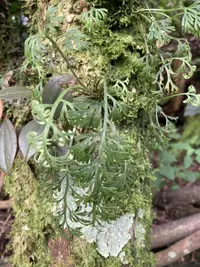
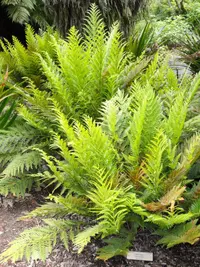
Asplenium theciferum is an evergreen fern with long, arching fronds that often develop a slightly weeping habit. It forms a graceful clump that fits well in shaded spaces. Native to parts of southern Africa, it usually grows in moist, sheltered forest habitats, often on rocky slopes or among leaf litter. This origin helps explain its preference for consistent moisture and good air circulation. The species is moderately easy to grow when its need for shade, humidity, and free-draining, organic-rich soil is respected. Indoors, understanding how to care for Asplenium theciferum mainly comes down to avoiding harsh sun, dry air, and waterlogged conditions.

Care Difficulty
Moderate Care

Light Preference
Partial Shade

Water Requirements
Keep Soil Moist

Temperature Preference
Tropical / Frost Sensitive

Hardiness Zone
10–11

Soil Texture
Loamy, Peaty, Organic-rich

Soil pH
Acidic (5.5–6.5)

Soil Drainage
Moist but well-drained

Fertilization
Light (every 4–6 weeks)
Scan your plant to receive care tips personalized for your specific plant
Available on iOS and Android
This fern favors soft, woodland-style light rather than strong direct sun.
This species prefers consistently moist but never waterlogged soil around its root zone.
This fern grows best in mild, consistently cool to warm conditions without temperature extremes.
This fern prefers consistently moist air and reacts quickly to dry indoor conditions.
This species needs loose, moisture-retentive but free-draining, organic-rich soil.
This fern grows well in containers when the pot supports its shallow, spreading root system and arching fronds.
This fern benefits from modest feeding but reacts poorly to heavy fertilizer applications.
This species needs only light pruning focused on hygiene, not shaping.
Container-grown plants appreciate occasional repotting to refresh substrate and relieve crowded roots.
Propagation is possible but slower and less straightforward than for many houseplants.
This fern dislikes hard frost and benefits from simple winter protection in cold regions.

Plant Health Check
Not sure what's wrong with your plant? Check your plant's health inside the app.
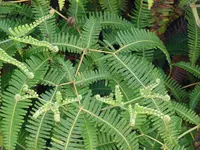
This species can form small plantlets, called bulbils, directly on its fronds, allowing it to clone itself when the plantlets fall and root in suitable substrate.
It is naturally restricted to southern Africa, where it grows in moist, shaded habitats such as forest understories and rocky crevices along stream banks.
The fern forms dense, tufted clumps from a short, erect rhizome, which helps it anchor tightly in rocky or vertical habitats that experience periodic water flow.
Growth is moderate rather than fast. In suitable shade and moisture, fronds may lengthen by 10–20 cm per year, forming a broader clump over several seasons. Poor humidity, low nutrients, or irregular watering noticeably slow development.
Keep your plants happy and healthy with plant identification, disease detection, and easy care guidance.