Edge Retention
After flowering, lightly shear back stems that flop over paths or walls to keep a tight mat and prevent the plant from thinning out in the center over time.

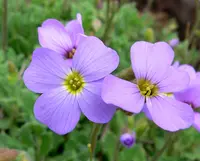
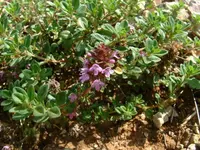
Lilacbush, Aubrieta deltoidea, is a low-growing, mat-forming perennial often used as a flowering groundcover in rock gardens and along walls. It forms dense cushions of small gray-green leaves covered in spring with many purple, pink, or violet blooms.
This plant is native to rocky slopes and cliffs in southeastern Europe and western Asia, where it naturally spreads over stones and crevices. Its compact habit and early flowering make it popular for adding color at the start of the growing season.
Lilacbush is generally easy to grow when given full sun, well-drained soil, and moderate moisture. Understanding how to care for lilacbush helps it stay dense, flower well, and avoid becoming thin or woody over time.

Care Difficulty
Easy Care

Light Preference
Full Sun

Water Requirements
Moderate Water

Temperature Preference
Cold Hardy

Hardiness Zone
4–9

Soil Texture
Sandy, Loamy, Rocky

Soil pH
Acidic (5.5–6.5), Slightly acidic (6.5–7.0)

Soil Drainage
Well-drained

Fertilization
Minimal (feed rarely)
Scan your plant to receive care tips personalized for your specific plant
Available on iOS and Android
This alpine perennial thrives in bright conditions with plenty of direct sun.
This plant prefers slightly dry, free-draining conditions rather than constant moisture.
This rock garden perennial is adapted to cool to mild climates with cold winters.
This alpine perennial tolerates a wide humidity range and rarely needs special humidity management.
This plant prefers lean, gritty soil that drains rapidly and does not stay wet.
This species suits containers when grown in shallow, free-draining setups on sunny patios or rock gardens.
Aubrieta deltoidea is a light feeder that benefits from modest nutrition to support dense growth and flowering.
Pruning Aubrieta deltoidea keeps the mat compact and encourages heavier flowering the following season.
Aubrieta deltoidea is usually grown in the ground or rock crevices, so transplanting matters more than container repotting.
Aubrieta deltoidea responds well to several simple propagation methods for expanding groundcover patches.
This plant is generally cold hardy in much of the US and needs only modest winter care in the ground.

Plant Health Check
Not sure what's wrong with your plant? Check your plant's health inside the app.
This species often colonizes limestone cliffs and rocky slopes in its native Balkan range, rooting into tiny crevices where many other plants cannot survive, thanks to its shallow but wide-spreading root system.
Its purple to violet flowers open very early in spring, providing one of the first consistent nectar and pollen sources for bees and other pollinating insects in many temperate gardens.
Wild populations show polyploidy, meaning they can have multiple sets of chromosomes, which contributes to their genetic diversity and ability to adapt to different rocky habitats.

Aubrieta deltoidea was widely used in early 20th‑century rock garden design in Europe and North America, becoming a model plant for breeding colorful spring-flowering groundcovers and influencing the development of many modern ornamental cultivars in the mustard family (Brassicaceae).
This species is a hardy perennial. It returns each year from the same root system, though individual stems are short-lived. Flowering quality often declines after several seasons, so many gardeners replant every 3–4 years for best display.
Keep your plants happy and healthy with plant identification, disease detection, and easy care guidance.