Thorn-conscious handling
Use thick gloves and long sleeves when repotting or shaping this spiny shrub, and position it away from paths or play areas to prevent injury from its sharp thorns.

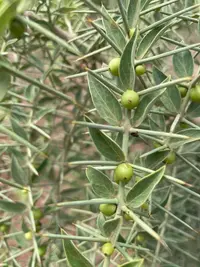
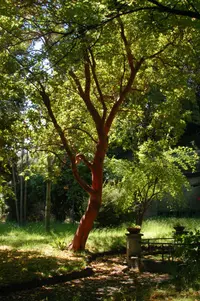
Balanites glabra is a drought-tolerant shrub or small tree, often with spines, native to arid and semi-arid regions of Africa and parts of the Middle East. It typically develops a deep root system, small tough leaves, and fleshy fruits adapted to hot, dry conditions.
This species is valued in its native range for its resilience in poor, sandy, or rocky soils and for its ability to withstand long dry periods. For growers, its slow to moderate growth, need for strong light, and sensitivity to excess moisture make it better suited to patient enthusiasts who want to learn how to care for Balanites glabra.
In cultivation it prefers full sun, excellent drainage, and infrequent but deep watering once established.

Care Difficulty
Moderate Care

Light Preference
Full Sun

Water Requirements
Low Water

Temperature Preference
Tropical / Frost Sensitive

Hardiness Zone
11–12

Soil Texture
Sandy, Loamy, Rocky

Soil pH
Neutral (7.0), Slightly alkaline (7.0–7.5)

Soil Drainage
Well-drained

Fertilization
Minimal (feed rarely)
Scan your plant to receive care tips personalized for your specific plant
Available on iOS and Android
This drought-adapted tree thrives in strong sun but copes with some light variation.
This species is highly drought-tolerant and prefers infrequent, deeper watering to constant moisture.
This arid-climate tree prefers sustained warmth and is highly sensitive to freezing temperatures.
This dryland species tolerates low humidity and does not need special moisture in the air.
This species prefers very well-drained, sandy or gravelly soil that mimics arid native conditions.
This species can be grown in containers when the pot is adapted to its deep, drought-tolerant root system.
This drought-adapted tree needs only light feeding in cultivation, as Balanites glabra is naturally adapted to poor soils.
Pruning is mainly used to maintain structure and remove damaged growth on Balanites glabra.
This species is more often field-grown than potted, so focus on careful transplanting rather than frequent repotting.
Propagation of Balanites glabra is usually done from seed, which can be slow but reliable with proper preparation.
This heat-adapted tree is not frost hardy and needs protection in regions with cold winters.

Plant Health Check
Not sure what's wrong with your plant? Check your plant's health inside the app.
This species is a spiny tree native to very dry savanna and semi-desert regions of East Africa, where it withstands high temperatures and low, erratic rainfall on poor, sandy or stony soils.
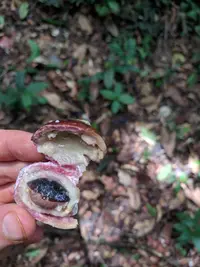
The seeds of this species contain an oil-rich kernel that is locally used as a food resource and for extracting vegetable oil, after careful processing to remove the bitter outer parts of the seed.
In its native range, livestock and wild herbivores browse its foliage and young shoots, making it an important dry-season fodder resource in rangeland ecosystems.

The fruits of this species are widely used in parts of East Africa as fish poison, taking advantage of naturally occurring saponins that interfere with respiration in fish when released into water.
This is a slow-growing desert tree. In suitable warm, dry climates it often adds only 10–30 cm of height per year when young, and growth slows further with age, especially in poor or very dry soils.
Keep your plants happy and healthy with plant identification, disease detection, and easy care guidance.