Candlestick Banksia Care (Banksia attenuata)

Also known as: Slender Banksia
Candlestick Banksia

About Candlestick Banksia

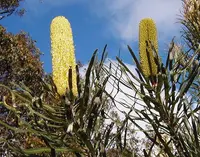
Candlestick banksia (Banksia attenuata) is an evergreen shrub or small tree from southwestern Australia, known for its tall, upright flower spikes that resemble candles. It belongs to the Proteaceae family and is adapted to dry, nutrient-poor environments.

Plants usually have narrow, serrated leaves and a rugged, gnarled trunk, giving a distinctly sculptural look in gardens. The large, nectar-rich flowers support birds and pollinators.

This species prefers full sun, low to moderate moisture, and very well-drained, low-phosphorus soil. It is drought-tolerant once established but dislikes root disturbance, which is important when planning how to care for Candlestick Banksia.

Main Plant Requirements

Care Difficulty

Hard Care

Light Preference

Full Sun

Water Requirements

Low Water

Temperature Preference

Warm Climate

Hardiness Zone

9–11

Soil Texture

Sandy, Loamy, Rocky

Soil pH

Strongly acidic (4.5–5.5), Acidic (5.5–6.5)

Soil Drainage

Well-drained

Fertilization

Minimal (feed rarely)

Get Personalized Care Plan

Scan your plant to receive care tips personalized for your specific plant

Available on iOS and Android

How to Care for the Candlestick Banksia

This species prefers strong, direct light typical of open coastal or woodland sites.

  • Provide full sun for 6–8 hours daily; Candlestick Banksia develops denser flowering and sturdier growth in unobstructed exposure.
  • Tolerates light or high, open shade for part of the day, but prolonged shade reduces flowering and produces sparse, elongated shoots.
  • In very hot inland summers, protect young plants from harsh late-afternoon sun with dappled shade while maintaining bright, direct morning light.

Banksia attenuata is drought-tolerant and needs careful watering to avoid root problems.

  • Water only when the top 5–8 cm of soil are completely dry; mature plants in the ground may go several weeks between deep soakings, especially on sandy soils.
  • Use very free-draining, sandy or gravelly soil so excess water runs off quickly, reducing the risk of root rot and yellowing foliage from overwatering.
  • In summer heat, watch for limp, curling leaves as a sign to water; in cooler months, reduce frequency further and avoid wet, cold soil around the crown.

This banksia thrives in warm, dry climates with mild winters and low humidity.

  • Optimal growth occurs around 65–80°F (18–27°C), similar to many Mediterranean or coastal climates with warm days and cooler nights.
  • Mature plants tolerate brief drops to about 25°F (−4°C), but repeated freezes or hard frosts can damage new growth and flower buds.
  • Handles dry heat up to 95–100°F (35–38°C) if soil is well-drained and roots are not waterlogged; young plants benefit from light shade and mulch during extreme heat.

This species tolerates low humidity well, so air moisture is rarely a concern for Candlestick Banksia.

Banksia attenuata needs very free-draining, low-nutrient soil to avoid root problems.

  • Use a sandy, gritty mix such as 60–70% coarse sand or fine gravel with 30–40% low-phosphorus native potting mix.
  • Aim for slightly acidic to neutral pH, around 6.0–7.0, and avoid high-phosphorus fertilizers or mixes.
  • Ensure the mix is loose and airy; incorporate coarse particles to prevent compaction and improve oxygen around the roots.
  • Avoid heavy clay, peat-heavy, or water-retentive substrates that hold moisture around the roots for long periods.

This species can be grown in containers, but long-term success is more challenging than in the ground.

  • Choose a tall, heavy container that stabilizes the plant’s deep, upright growth and resists tipping in wind.
  • Select unglazed clay or other porous materials to let the fast-draining mix dry quickly between waterings.
  • Raise the pot on feet or blocks so drainage holes stay clear and excess water escapes immediately after irrigation.

This nutrient-efficient Australian native needs very light feeding and is sensitive to high phosphorus levels.

  • Use a low-phosphorus, slow-release native plant fertilizer rather than standard balanced NPK products.
  • Apply a light dose once at the start of the growing season, then reassess growth instead of sticking to a strict schedule.
  • Dilute liquid feeds to 1⁄4–1⁄2 strength to avoid root burn and excessive soft growth.
  • On established Candlestick Banksia in the ground, rely mainly on good soil and mulch rather than frequent fertilizing.

Pruning helps maintain structure and flowering performance in Banksia attenuata without encouraging weak growth.

  • Carry out main pruning in late winter or early spring before strong new growth starts.
  • Remove dead, diseased, or storm-damaged wood with sharp, clean bypass pruners or loppers.
  • Thin congested interior branches to improve light and airflow, keeping the plant’s natural form.
  • Avoid cutting back into very old bare wood; tip-prune younger shoots after flowering to shape and encourage new flowering stems.

This species is usually grown in the ground, so focus on careful transplanting rather than frequent repotting.

  • Plan moves for late winter or early spring when temperatures are mild and growth is about to resume.
  • Look for signs such as roots circling the pot, water running straight through, or stalled growth before shifting a container plant.
  • Transplant with a generous root ball, keeping the original soil intact to limit disturbance of the sensitive proteoid roots.
  • Replant into sandy, free-draining soil at the same depth, water in thoroughly once, then allow the root zone to dry slightly between waterings.

Banksia attenuata is most reliably raised from seed, with vegetative methods used less often by home growers.

  • Collect mature cones, then extract and store seed dry before sowing in late winter to early spring.
  • Use a very free-draining, low-phosphorus seed mix and shallowly cover seeds, keeping medium just slightly moist.
  • Provide warm conditions around 65–75°F with bright light and good air movement for germination.
  • For semi-hardwood cuttings, take non-flowering shoots, use a rooting hormone, and maintain high humidity with bottom heat, accepting low success rates.

This Western Australian native is not fully cold hardy and benefits from targeted winter protection in cooler climates.

  • Mature plants tolerate light frosts but can suffer damage below about 25°F, especially when young.
  • Apply a 5–8 cm mulch layer around the root zone, keeping it slightly away from the trunk to insulate soil.
  • Wrap young or exposed plants with breathable frost cloth during forecast freezes to reduce stem and bud damage.
  • Grow Banksia attenuata in large containers in cold regions so it can be moved to a bright, frost-free, cool indoor or sheltered space.

Care Tips

Root disturbance control

Plant young specimens into their long-term position early and avoid disturbing the root zone later, as mature plants react poorly to transplanting and deep cultivation around the base.

Low-phosphorus mulching

Apply a thin, open-textured mulch layer such as coarse bark or gravel, keeping it 5–10 cm away from the stem, to conserve soil moisture while protecting the naturally shallow, sensitive roots from heat.

Firewise pruning strategy

In fire-prone areas, remove dead woody cones and lower dead branches during the cool season to reduce fuel load while keeping the healthy canopy intact for ongoing flowering.

Wind-hardening young plants

Gradually expose young plants to stronger wind over several weeks by reducing shelter or staking tension so the stems thicken and establish a stable framework before they reach full height.

Targeted cone harvesting

If using flowers or cones for cut material, stagger harvests across the plant and leave some old cones in place each year to support seed set and maintain long-term vigor when growing Candlestick Banksia.

Common Pests and Diseases

Banksia borer

This pest is a native wood-boring moth whose larvae tunnel into stems and branches, causing dieback and structural weakness. Symptoms include sudden wilting of branches, frass (sawdust-like material), and small entry holes in woody parts.

Solution

Prune and destroy affected branches well below visible damage, disinfecting tools between cuts. Keep the plant vigorous through appropriate watering and avoid wounding stems; in severe cases, consult a local arborist about timing of pruning to reduce borer attack and use trunk or branch wraps as physical protection where practical.

Banksia leaf miner

These insects are small moth larvae that feed between the upper and lower leaf surfaces, creating pale, winding mines in the foliage. Symptoms include distorted, blotchy leaves and reduced photosynthesis over time.

Solution

Remove and dispose of mined leaves early to break the life cycle and reduce populations. Encourage natural predators, avoid excessive nitrogen fertilization that promotes soft new growth, and only consider a targeted systemic insecticide if damage is extensive and cultural measures are not sufficient.

Phytophthora dieback

This disease is caused by soil-borne water molds such as Phytophthora cinnamomi, which attack roots and disrupt water uptake. Symptoms include leaf yellowing, wilting, branch dieback, and eventual plant death, especially on poorly drained or compacted soils.

Solution

Avoid planting in poorly drained or waterlogged sites, and use raised beds or mounds with free-draining, low-phosphorus soil for growing Banksia attenuata. Do not overwater, restrict soil disturbance around roots, disinfect tools and footwear if moving between sites, and in high-risk areas seek advice on registered phosphite (phosphonate) trunk or foliar treatments to slow disease progression.

Fungal leaf spot

This disease is caused by various foliar fungi that create small dark, tan, or purplish spots on leaves, sometimes with yellow halos. Symptoms include premature leaf drop and a generally thinned canopy under prolonged wet or humid conditions.

Solution

Improve air circulation by spacing plants properly and pruning congested inner growth, and avoid overhead watering that keeps foliage wet for long periods. Collect and dispose of fallen, spotted leaves, and if conditions remain persistently humid, use a suitable low-toxicity fungicide labeled for ornamental natives, following local Banksia attenuata care instructions.

Scale insects

These insects appear as small, immobile bumps on stems, leaves, or flower stalks and feed by sucking sap. Symptoms include sticky honeydew, sooty mold growth on surfaces, and overall plant stress or reduced flowering.

Solution

Physically remove scale on small plants with a soft brush or cloth, or prune heavily infested shoots and discard them. For larger plants, apply horticultural oil during mild weather to smother the insects, and encourage natural predators such as ladybird beetles by avoiding broad-spectrum insecticides.

Interesting Facts

Fire-triggered regeneration

This species stores seeds in woody fruit called follicles that mostly stay closed until exposed to the heat of bushfire, which triggers them to open and release seeds onto nutrient-rich ash beds.

Deep taproot strategy

It typically develops a very deep taproot that accesses groundwater far below the surface, allowing it to survive on extremely dry, nutrient-poor sandy soils in southwestern Australia.

Nectar-rich bird magnet

The large cylindrical flower spikes produce abundant nectar that is an important food source for honeyeaters and other nectar-feeding birds, especially during dry periods when few other plants are in bloom.

Botan icon

Did you know?

Banksia attenuata shows striking morphological variation across its natural range, forming anything from tall trees over 10 m in more mesic coastal areas to much shorter, multi-stemmed mallee forms in drier inland sites, all within the same species.

FAQs about Candlestick Banksia

Lack of flowers often comes from a plant that is too young, pruned too hard, or stressed by poor drainage or excess nutrients. Stable conditions and patience are key when growing Candlestick Banksia for reliable flowering.

Grow Healthy Plants with Botan Care

Keep your plants happy and healthy with plant identification, disease detection, and easy care guidance.

Botan plant care app — identify plants on mobile

Explore More Plants