lemonade berry Care (Rhus integrifolia)

Also known as: lemonade sumac
lemonade berry

About lemonade berry

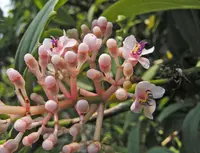
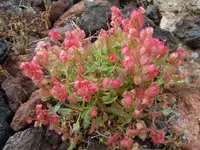
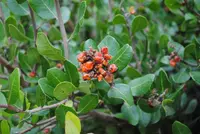
Lemonade berry, Rhus integrifolia, is an evergreen shrub or small tree native to coastal southern California and northern Baja California. It naturally forms dense, rounded mounds that fit well in dry, low-maintenance landscapes. Glossy, leathery leaves and clusters of small pinkish flowers are followed by sticky, tart berries that give the plant its common name. This species is adapted to wind, salt spray, and poor, rocky soils, which makes it a durable choice for tough sites. It prefers sun to light shade and dry to moderately moist, well-drained soil, so it is relatively straightforward to care for lemonade berry in suitable climates.

Main Plant Requirements

Care Difficulty

Easy Care

Light Preference

Full Sun

Water Requirements

Low Water

Temperature Preference

Warm Climate

Hardiness Zone

9–11

Soil Texture

Sandy, Loamy, Rocky

Soil pH

Slightly acidic (6.5–7.0), Slightly alkaline (7.0–7.5)

Soil Drainage

Well-drained

Fertilization

Minimal (feed rarely)

Get Personalized Care Plan

Scan your plant to receive care tips personalized for your specific plant

Available on iOS and Android

How to Care for the lemonade berry

This coastal shrub prefers bright, open conditions and is adapted to strong sun.

  • Provide full sun for 6–8 hours daily; morning and midday sun support dense growth and better flowering on lemonade berry.
  • Accepts light or partial shade, especially inland; aim for at least 4 hours of direct sun to prevent sparse, leggy branches.
  • In hot inland summers, protect from intense late-afternoon sun with a west-side tree, wall, or dappled shade to limit leaf scorch.

This drought-tolerant shrub prefers deep, infrequent watering once established.

  • Use fast-draining soil; water only when the top 5–8 cm feel dry and foliage looks slightly less turgid, especially on young plants.
  • In the first 1–2 years, water deeply until the root zone is moist, then allow soil to dry almost completely between soakings.
  • Overwatering Rhus integrifolia causes yellowing leaves, dieback, or root rot; underwatering shows as crisp leaf edges and early leaf drop.

This species is adapted to mild, coastal climates with moderate temperature swings.

  • Ideal growth occurs around 60–80°F (16–27°C), with stable foliage and steady shoot extension in these conditions.
  • Mature plants tolerate brief drops near 25°F (-4°C), but young shrubs and new growth can be damaged by hard or repeated frosts.
  • Handles dry heat up to about 95–100°F (35–38°C) if roots are established; mulch helps buffer root temperature and moisture in summer.

Humidity is not a significant factor for Rhus integrifolia, which is adapted to dry coastal environments.

Rhus integrifolia prefers lean, fast-draining soil that mimics its native coastal slopes.

  • Use sandy or sandy-loam soil with at least 40–60% mineral grit such as coarse sand or fine gravel.
  • Ensure very rapid drainage; raised beds or mounded planting help avoid water pooling around the crown.
  • Aim for slightly acidic to neutral pH, roughly 6.0–7.5, avoiding strongly alkaline or saline conditions.
  • In heavier soils, blend in coarse sand and small gravel to increase aeration and prevent root rot.

This species can be grown in large containers if drainage and stability are carefully managed.

  • Choose a wide, heavy pot to counterbalance the shrub’s spreading canopy and reduce tipping in strong wind.
  • Fill the container with a sharply draining mix, such as cactus mix amended with extra coarse sand or small gravel.
  • Position the container where runoff can escape freely so the drainage holes never sit in a saucer of standing water.

This drought-adapted shrub needs minimal feeding in typical garden soils, so focus on light support rather than heavy fertilization.

  • Apply a thin layer of compost around the drip line once in spring to support soil life and slow nutrient release.
  • If growth is weak, use a balanced slow-release fertilizer (around 10-10-10) at half label rate in late winter or early spring.
  • Avoid summer and winter feeding; excess nutrients reduce drought tolerance and can cause lanky growth in lemonade berry.
  • Water thoroughly after any fertilizer application to move nutrients into the root zone and prevent salt buildup.

Rhus integrifolia responds well to light structural pruning that keeps the shrub dense and compact.

  • Carry out main pruning in late winter or very early spring before new growth starts.
  • Remove dead, diseased, or storm-damaged branches first, then thin crowded interior stems for better air flow.
  • Shorten overly long shoots to maintain desired height and width, shaping the natural rounded form rather than forcing tight hedges.
  • Use clean, sharp bypass pruners or loppers and make cuts just above outward-facing buds or branch junctions.

This shrub is typically grown in the ground; focus on careful transplanting rather than frequent repotting.

  • Transplant young Rhus integrifolia plants in late fall or very early spring when temperatures are mild and soil is moist.
  • Look for roots circling the container or slow, stalled growth as signs a nursery plant is pot-bound and needs a larger planting area.
  • Handle the root ball gently, loosening only the outer circling roots, then set at the same depth in a wide planting hole with well-drained soil.
  • Water deeply after transplanting, then keep soil slightly moist (not saturated) for several weeks to reduce transplant shock.

Propagation of this species is moderate in difficulty and usually done from semi-hardwood cuttings or seed.

  • Take semi-hardwood cuttings in late summer, 7–10 cm long, and dip bases in rooting hormone to improve success.
  • Insert cuttings into a very well-drained mix (such as 50% perlite, 50% coarse sand or bark) and keep in bright, indirect light.
  • Maintain warm rooting temperatures around 70–75°F and steady, light moisture, using a humidity dome or mist if air is very dry.
  • For seed, use fresh, cleaned seed, scarify the coat lightly, and provide several weeks of cool, moist stratification before sowing.

In mild coastal or Mediterranean climates, Rhus integrifolia is evergreen and usually needs no special winter care.

  • Established plants tolerate light frost but can suffer damage in prolonged freezes below about 20–25°F, especially when young.
  • In colder sites, add a 5–8 cm layer of mulch around the root zone, keeping it a few cm away from the stems.
  • Container plants in marginal climates can be grown near a south-facing wall or moved to a bright, frost-free, unheated space for winter.

Care Tips

Coastal wind management

In exposed coastal sites, plant on the leeward side of a wall, boulder, or low fence so the shrub establishes faster and suffers less salt-burn on new growth.

Form as hedge

For a dense, wind-filtering hedge, tip-prune young stems lightly 1–2 times per year rather than making hard cuts, which encourages tight branching from the base.

Erosion control use

On slopes, stagger plants in a zigzag pattern and leave room for their mature spread so their roots interlock and stabilize soil without crowding each other.

Mulch ring strategy

Maintain a 5–8 cm deep ring of coarse, woody mulch under the canopy but keep it 5–8 cm away from the stem to reduce weeds and conserve moisture without risking stem rot.

Low-irrigation transition

After the first 1–2 establishment years, gradually extend the time between deep irrigations over several months to train roots deeper, which is a key step in caring for lemonade berry in dry climates.

Common Pests and Diseases

Scale insects

This pest attaches to stems and leaves, sucking sap and causing yellowing, reduced vigor, and sooty mold on honeydew deposits.

Solution

Prune out heavily infested twigs, then wipe accessible branches with a cloth dipped in diluted insecticidal soap or horticultural oil, ensuring thorough coverage of stems and leaf undersides; repeat every 7–14 days until new growth appears clean and monitor regularly as part of basic Rhus integrifolia care.

Leaf spot

This disease causes small brown to dark purple spots on leaves that can merge into larger lesions, sometimes leading to partial defoliation in damp or coastal conditions.

Solution

Remove and dispose of affected leaves, avoid overhead watering, and improve air movement around plants; in repeatedly wet coastal gardens, a copper-based fungicide can be applied at the start of the rainy season if past infections have been severe.

Root and crown canker

This disease leads to dieback of branches, poor growth, and dark, sunken or cracked tissue at the soil line, often after prolonged wet or poorly drained conditions.

Solution

Remove and discard severely affected plants, improve drainage by raising planting areas or amending heavy soil, avoid frequent shallow watering, and for remaining specimens water deeply but less often to keep the root zone from staying saturated.

Aphids

These insects cluster on tender new shoots and leaf undersides, sucking sap and causing curling or distorted leaves and sticky honeydew that may attract ants.

Solution

Spray shoots with a strong jet of water to dislodge colonies, then treat remaining clusters with insecticidal soap on cool, overcast days; limit ant activity with sticky barriers at the base of stems to help natural predators control populations.

Powdery mildew

This disease produces a white, powder-like coating on leaves, especially in coastal or canyon locations with mild, humid air and poor air circulation, leading to reduced photosynthesis and leaf distortion.

Solution

Prune dense interior branches to increase air flow, avoid overhead watering late in the day, and treat early infections with a horticultural oil or potassium bicarbonate spray applied according to label directions, repeating as new growth appears if conditions remain humid.

Interesting Facts

Coastal fog specialist

This evergreen shrub is native to the coastal bluffs and canyons of southern California and Baja California, where it thrives in dry, rocky soils and often relies on marine fog for supplemental moisture.

Natural salt tolerance

It shows notable tolerance to salty air and soils, which allows it to grow close to the ocean and makes it useful for coastal restoration and erosion control in exposed seaside habitats.

Wildlife food source

The sticky, tangy drupes are eaten by birds and small mammals, and the dense branching provides shelter and nesting sites, so the plant plays an important structural and food role in coastal sage scrub communities.

Botan icon

Did you know?

Indigenous peoples of coastal southern California traditionally used the tart outer coating of its fruits to make a lemonade-like drink, which is the origin of the common name lemonade berry.

FAQs about lemonade berry

The fruits are technically edible and have a pleasantly sour, resinous taste, traditionally used to flavor drinks. Only the outer coating is used; the seed itself is not eaten. Always avoid roadside or contaminated plants.

Grow Healthy Plants with Botan Care

Keep your plants happy and healthy with plant identification, disease detection, and easy care guidance.

Botan plant care app — identify plants on mobile

Explore More Plants