Holly-Leaved Banksia Care (Banksia ilicifolia)

Holly-Leaved Banksia

About Holly-Leaved Banksia

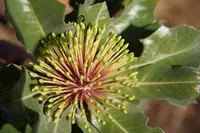
Holly-leaved banksia (Banksia ilicifolia) is an evergreen shrub or small tree from southwestern Australia, known for its spiky, holly-like leaves and showy cylindrical flower spikes. The flowers shift from pale yellow to deeper shades as they age, attracting birds and pollinating insects.

In its natural habitat, it grows in coastal woodlands and heath on sandy, well-drained soils. It prefers sunny, open positions and does not tolerate heavy, waterlogged ground.

Once established, it is relatively drought-tolerant but sensitive to root disturbance and poor drainage, which can make it slightly challenging in ordinary gardens. Understanding how to care for Holly-Leaved Banksia helps improve its survival and long-term performance in cultivation.

Main Plant Requirements

Care Difficulty

Moderate Care

Light Preference

Full Sun

Water Requirements

Low Water

Temperature Preference

Warm Climate

Hardiness Zone

9–11

Soil Texture

Sandy, Loamy, Rocky

Soil pH

Strongly acidic (4.5–5.5), Acidic (5.5–6.5)

Soil Drainage

Well-drained

Fertilization

Minimal (feed rarely)

Get Personalized Care Plan

Scan your plant to receive care tips personalized for your specific plant

Available on iOS and Android

How to Care for the Holly-Leaved Banksia

This species prefers bright, open conditions similar to its native coastal habitats.

  • Provide 6–8 hours of direct sun daily; morning and early afternoon sun are ideal for strong growth and flowering.
  • Tolerates light afternoon shade, especially in hotter regions, but dense shade reduces flowering and creates sparse, weak shoots in Holly-Leaved Banksia.
  • In summer heatwaves, young plants benefit from light midday shade or filtered light to reduce leaf scorch, while established shrubs cope well with full sun if soil does not dry out completely.

This drought-tolerant shrub prefers deep, infrequent watering once established.

  • Allow the top 5–8 cm of soil to dry between waterings; use a finger test rather than a fixed schedule, especially on sandy soils.
  • During the first 1–2 growing seasons, water thoroughly when new growth softens or lower leaves start to lose gloss, then reduce frequency as Banksia ilicifolia matures.
  • Ensure very sharp drainage; persistent wet soil, sour smell, yellowing leaves, or blackened roots indicate overwatering, while pronounced leaf curl and brittle new tips signal underwatering.

This coastal shrub prefers mild to warm conditions and does not tolerate hard frost.

  • Optimal growth occurs around 60–80°F (16–27°C), with best performance in regions with dry summers and mild, wet winters.
  • Mature plants can handle brief drops to about 28–30°F (-2 to -1°C), but repeated freezes damage young shoots and flower buds.
  • Tolerates heat up to 95–100°F (35–38°C) if soil is well drained and not waterlogged; mulching and avoiding reflected heat from walls help reduce stress in peak summer.

Humidity is rarely limiting for Banksia ilicifolia when air is kept dry to moderately dry.

  • Aim for 30–50% humidity, similar to most heated indoor or outdoor air in dry climates.
  • Plant tolerates dry air well but prolonged humidity above 60% can favor fungal leaf spots.
  • Humidity stress shows as blackening leaf tips or fungal spotting; improve air movement rather than misting.

Banksia ilicifolia needs very sharp-draining, low-nutrient soil that never stays waterlogged.

  • Use a sandy, gritty mix with low organic content, such as 50–60% coarse sand plus fine gravel and 40–50% low-phosphorus native potting mix.
  • Target slightly acidic pH around 5.5–6.5; avoid lime-based products that push pH high.
  • Add coarse sand, fine gravel, or pumice to increase drainage and aeration, especially in heavier mixes.
  • Avoid rich composts, manures, and high-phosphorus fertilizers, which damage the sensitive proteoid roots.

This species can be grown in containers for several years but needs careful management to keep roots healthy and stable.

  • Choose a deep, heavy pot to anchor the developing woody root system and prevent wind tipping.
  • Use a very free-draining native mix and raise the pot on feet so water clears from the base quickly after watering.
  • Position the container in a spot where hot sun reaches the pot sides to help keep the mix dry between waterings, mimicking sandy habitat conditions.

Banksia ilicifolia is adapted to low‑nutrient soils and needs very modest feeding in cultivation.
  • Use a low-phosphorus, slow-release native plant fertilizer or well-matured, low-nutrient compost sparingly around the drip line.
  • Feed once at the start of the growing season; avoid repeated applications that can cause root damage.
  • Dilute any liquid product to 25–50% strength and apply to moist soil, never dry roots.
  • Do not fertilize in winter; allow Holly-Leaved Banksia to rest with only normal watering.

Banksia ilicifolia benefits from light, selective pruning to maintain shape and plant health.

  • Carry out structural pruning in late winter to early spring before strong new growth begins.
  • Remove dead, diseased, crossing, or inward-growing branches with clean, sharp bypass pruners or loppers.
  • Shorten excessively long shoots to an outward-facing bud to keep a balanced, open canopy.
  • Avoid cutting back into old, leafless wood, as regrowth from these sections is often poor.

This species is usually grown in the ground, so care focuses on careful transplanting rather than frequent repotting.

  • Transplant young plants in late winter to early spring when soil is moist and temperatures are mild.
  • Choose a well-drained, sandy site and plant at the same depth, disturbing roots as little as possible.
  • Look for signs such as roots circling the pot or stalled growth before moving container-grown specimens.
  • Water deeply after transplanting, then keep soil slightly moist but not waterlogged to limit transplant shock.

Banksia ilicifolia propagation is possible from seed, but it is slow and more advanced than many garden shrubs.

  • Collect mature cones and extract seeds; many benefit from a brief, low-heat treatment to mimic fire cues if local guidelines allow.
  • Sow seeds in late winter to early spring in a sharp, free-draining mix kept at 60–70°F.
  • Provide bright light, good air movement, and very careful watering to avoid damping-off, a fungal seedling disease.
  • Transplant seedlings only once roots hold the mix, handling them gently to avoid damaging the taproot.

In mild coastal or Mediterranean climates, this banksia tolerates light frosts but needs protection in colder regions.

  • Consider it hardy only where winter lows stay above about 25°F; container plants need more shelter.
  • Apply a 5–8 cm mulch layer around the root zone, keeping material slightly away from the trunk.
  • Move potted specimens under cover or indoors to a bright, cool, frost-free position for winter.

Care Tips

Protea-friendly neighbors

Avoid planting near species that prefer rich, phosphorus-heavy soils (many vegetables and roses), as shared fertilization or runoff can damage the proteoid roots of this species and complicate caring for Holly-Leaved Banksia in mixed borders.

Wind-hardening young plants

For the first 1–2 years, gradually expose young plants to stronger wind by reducing windbreak protection over time so they develop sturdier stems and better anchorage before facing full coastal or open-site conditions.

Trunk and root flare care

Keep mulch and soil pulled back 5–10 cm from the trunk base so the root collar stays dry and well aerated, which reduces the risk of Phytophthora and other collar rots that this species is prone to in heavier soils.

Firewise deadwood removal

In fire-prone regions, remove accumulated dead twigs and old flower spikes annually and keep lower branches lightly thinned to reduce fuel load while preserving the plant’s natural form.

Targeted phosphorus monitoring

In container or landscape situations where phosphorus exposure is possible, test soil or potting mix periodically and keep P levels low, using only fertilizers clearly labeled as low-phosphorus to avoid long-term root toxicity.

Common Pests and Diseases

Phytophthora dieback

This disease causes progressive death of roots, leading to wilting, leaf yellowing, sparse canopy, and eventual branch or whole-plant dieback, especially in poorly drained or disturbed soils.

Solution

Remove and destroy severely affected plants, avoid planting in waterlogged or compacted sites, and improve drainage where possible; in high-risk areas, use only certified disease-free plants, keep soil and mulch away from the trunk, disinfect tools and footwear, and consider registered phosphite (phosphonate) trunk or soil applications according to local guidelines for Banksia ilicifolia care instructions.

Banksia boring moth

This pest is a wood-boring moth whose larvae tunnel into stems and branches, causing dieback of shoots, cracked or frass-filled entry holes, and structural weakness.

Solution

Prune out and destroy infested stems well below visible damage, sterilize pruning tools between cuts, and keep the plant vigorous with appropriate watering and no excess nitrogen to reduce susceptibility; avoid leaving pruned wood or dead branches nearby, as these can harbor larvae.

Scale insects

These insects attach to stems and leaf undersides, sucking sap and causing leaf yellowing, stunted growth, honeydew deposits, and sooty mold development on foliage and stems.

Solution

Physically remove light infestations by gently scraping or wiping with a cloth dipped in mild soapy water, encourage natural predators such as ladybird beetles in gardens, and for heavier infestations use a horticultural oil spray labeled for ornamental shrubs, applied thoroughly to all plant surfaces in cool, calm conditions.

Leaf spot

This disease produces small to medium brown or dark lesions on the leaves, sometimes with yellow halos, which can merge to cause larger dead patches and premature leaf drop under humid conditions.

Solution

Remove and discard heavily spotted or fallen leaves to reduce spores, water at the base rather than overhead, improve sunlight access and air movement around the plant, and in persistent cases consider a copper-based or other registered fungicide used according to label directions for ornamental natives.

Interesting Facts

Holly-like leaf armor

The leaves of this species have stiff, sharply toothed margins that closely resemble holly leaves, an adaptation that helps reduce grazing by herbivores in its native coastal shrublands and woodlands of southwestern Australia.

Unusual flower color shift

Its cylindrical flower spikes open a pale yellow to cream and gradually deepen to orange-red as they age, with the color change helping pollinators distinguish between fresh, nectar-rich flowers and older, depleted ones.

Groundwater-dependent specialist

In its natural habitat this species often grows on deep sandy soils above shallow groundwater and can be sensitive to changes in water table levels, which makes it an important indicator of groundwater health in parts of southwestern Australia.

Botan icon

Did you know?

This species is one of the few banksias that naturally forms dense, tree-like stands on coastal plains, where its tall, spreading crowns can create distinctive patches of woodland that support specialized birds, insects, and other native flora beneath its canopy.

FAQs about Holly-Leaved Banksia

Growth is generally moderate. Young plants may add 20–40 cm per year in suitable coastal climates, slowing as they mature. Poor drainage, heavy frost, or very low nutrients reduce growth rate significantly. Pruning mainly shapes, not speeds, growth.

Grow Healthy Plants with Botan Care

Keep your plants happy and healthy with plant identification, disease detection, and easy care guidance.

Botan plant care app — identify plants on mobile

Explore More Plants