Understory placement
Plant near evergreen shrubs or small trees that cast light shade in summer but allow more light in winter, which helps flowers form and scent disperse better along walkways and entrances.

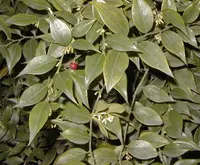
Sweet box, Sarcococca ruscifolia, is a compact, evergreen shrub valued for its glossy foliage and strong winter fragrance. It typically forms dense, low mounds that fit well in shaded garden corners or along paths.
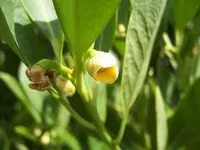
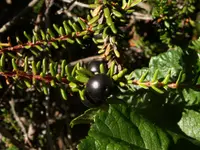
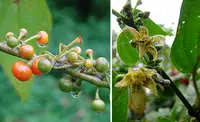
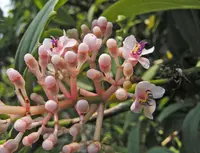
Small, creamy white flowers appear in winter, followed by red to black berries that add subtle interest. The plant is native to woodland areas of western China, which explains its preference for shade and humus-rich, moist but well-drained soil.
It is generally slow-growing, long-lived, and tolerant of neglect once established, which makes it suitable for gardeners looking to learn how to care for Sweet box without complex routines.

Care Difficulty
Easy Care

Light Preference
Partial Shade

Water Requirements
Moderate Water

Temperature Preference
Cold Hardy

Hardiness Zone
7–9

Soil Texture
Loamy, Clay, Organic-rich

Soil pH
Acidic (5.5–6.5), Slightly acidic (6.5–7.0)

Soil Drainage
Moist but well-drained

Fertilization
Minimal (feed rarely)
Scan your plant to receive care tips personalized for your specific plant
Available on iOS and Android
This evergreen shrub thrives in shaded gardens with only brief daily sun exposure.
This shrub prefers consistently moist but not saturated soil once established.
This species is a cool- to mild-climate shrub with good cold tolerance.
This shrub prefers moderately moist air but usually copes with typical home and outdoor conditions.
Sarcococca ruscifolia grows best in loose, moisture-retentive yet free-draining soil.
This species is well suited to container growing for shaded patios, entrances, or small gardens.
This shrub needs modest feeding to support steady evergreen growth and flowering.
Light pruning keeps Sarcococca ruscifolia dense and healthy without heavy intervention.
This shrub is more often planted in the ground than kept in containers, but it tolerates careful moving.
Sarcococca ruscifolia is commonly propagated from semi-ripe cuttings and by division of established clumps.
Mature plants are generally cold hardy in much of the US and need only modest winter attention.

Plant Health Check
Not sure what's wrong with your plant? Check your plant's health inside the app.
This species flowers in mid to late winter and relies heavily on strong scent rather than showy petals to attract scarce pollinators during cold weather, an adaptation typical of a few shade shrubs from East Asia.
Its glossy red berries are produced low on the shrub and are readily eaten by birds, which disperse the hard seeds through their droppings, helping the plant colonize shaded woodland edges.
In its native habitats of western China, this shrub naturally grows on forest floors and north-facing slopes, showing unusually high shade tolerance compared with many other evergreen ornamentals.

The species was first described scientifically in the late 19th century from material collected in China, and its introduction into Western horticulture helped establish the entire genus Sarcococca as a key group of winter-scented shrubs for shaded gardens.
Lack of flowers usually comes from too much shade, heavy pruning at the wrong time, or stress from drought or poor soil. Avoid cutting stems after flowering, keep soil evenly moist, and improve fertility with balanced compost.
Keep your plants happy and healthy with plant identification, disease detection, and easy care guidance.