Windbreak establishment
In the first 2–3 years, plant this shrub where nearby fences, buildings, or taller shrubs break strong winter and coastal winds, or use temporary shade cloth on the windward side to reduce leaf scorch and desiccation.

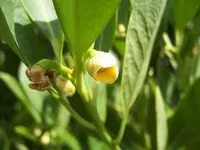
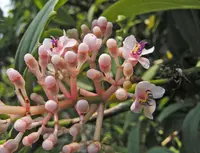
Yellow anisetree, Illicium parviflorum, is an evergreen shrub or small tree grown mainly for its dense foliage and subtle, yellow-green starry flowers. It forms a rounded, bushy shape with aromatic leaves that release a mild anise-like scent when crushed.
This species is native to the southeastern United States, where it grows in moist woodlands and along shaded stream banks. It is valued in landscapes as a tough, long-lived screening or foundation plant.
Yellow anisetree tolerates shade, humidity, and a range of soils, which makes it relatively forgiving for gardeners. Understanding how to care for yellow anisetree mainly involves providing consistent moisture and protection from harsh, drying sun and wind.

Care Difficulty
Easy Care

Light Preference
Partial Shade

Water Requirements
Keep Soil Moist

Temperature Preference
Cold Hardy

Hardiness Zone
6–9

Soil Texture
Loamy, Clay, Organic-rich

Soil pH
Acidic (5.5–6.5), Slightly acidic (6.5–7.0)

Soil Drainage
Moist but well-drained

Fertilization
Minimal (feed rarely)
Scan your plant to receive care tips personalized for your specific plant
Available on iOS and Android
Illicium parviflorum grows best in bright, indirect light with protection from harsh afternoon sun.
This shrub prefers consistently moist, not soggy, soil and dislikes long dry spells.
This species prefers mild, stable temperatures and benefits from protection against hard frost and extreme heat.
This shrub prefers moderate atmospheric moisture but adapts to a range of home and garden conditions.
Illicium parviflorum grows best in consistently moist, well-aerated, organically enriched ground.
This species can be grown in large containers if the pot is sized and stabilized for its woody, shrubby habit.
Illicium parviflorum is a low-maintenance shrub that benefits from modest, well-timed feeding in garden settings.
Illicium parviflorum responds well to light pruning that maintains a dense, healthy structure.
This species is usually grown in the ground, so focus on careful transplanting rather than frequent repotting.
Illicium parviflorum is most often propagated vegetatively to maintain desirable traits and growth habit.
This evergreen shrub is generally cold hardy in much of the southeastern US and needs only modest winter care.

Plant Health Check
Not sure what's wrong with your plant? Check your plant's health inside the app.
This evergreen shrub is naturally restricted to wet, acidic soils of central Florida swamps, bayheads, and stream edges, where it forms dense thickets that stabilize saturated banks.
Although its crushed leaves give off an anise-like scent, this species is not the culinary star anise and is not used as a food spice, which helps avoid confusion with edible Illicium species.
In cultivation it is valued as one of the few broadleaf evergreens that tolerates deep shade and waterlogged sites, so it is widely used for screening in dim, damp areas where many shrubs fail.

This species has been selectively bred into compact, finely textured landscape cultivars such as Illicium parviflorum 'Florida Sunshine', which is prized for its bright chartreuse foliage that contrasts with the typically dark, swamp-adapted leaves of the wild form.
Growth is moderately fast once established. In suitable conditions it commonly adds 20–30 cm per year, sometimes more in warm, sheltered sites. Young plants focus first on root development, then increase top growth rate after a few seasons.
Keep your plants happy and healthy with plant identification, disease detection, and easy care guidance.