Root disturbance control
Minimize root disturbance when planting or transplanting; keep the original root ball intact and handle it by the soil, not the stems, to reduce transplant shock in this protea-type species.

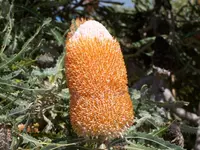
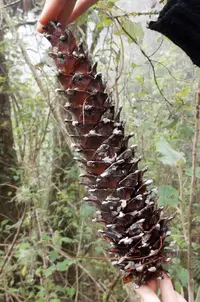
Acorn banksia, Banksia prionotes, is an evergreen shrub or small tree from southwestern Australia, part of the Proteaceae family. It is adapted to dry, nutrient-poor landscapes. Plants form a upright, often narrow habit with serrated grey-green leaves and large cylindrical flower spikes that resemble acorns as they develop. These showy inflorescences are rich in nectar and attract birds and pollinators. In cultivation, acorn banksia prefers very free-draining, sandy soil and dislikes root disturbance or heavy fertilizing. It suits mild, low-humidity climates and needs good light and air movement. Understanding how to care for acorn banksia starts with respecting its origin in dry, low-phosphorus coastal heath and woodland.

Care Difficulty
Hard Care

Light Preference
Full Sun

Water Requirements
Low Water

Temperature Preference
Warm Climate

Hardiness Zone
9–11

Soil Texture
Sandy, Loamy, Rocky

Soil pH
Strongly acidic (4.5–5.5), Acidic (5.5–6.5)

Soil Drainage
Well-drained

Fertilization
Minimal (feed rarely)
Scan your plant to receive care tips personalized for your specific plant
Available on iOS and Android
This species thrives in strong sun and suits open, exposed sites.
This plant is adapted to dry conditions and prefers infrequent, deep watering once established.
This species prefers mild to warm, dry climates with low humidity.
This species prefers dry, airy conditions and usually does not need extra humidity indoors or outdoors.
Banksia prionotes needs very sharp-draining, low-nutrient soil to prevent root damage.
This species can be grown in containers, but only with careful attention to root conditions and stability.
This nutrient-efficient Australian native needs only light feeding in containers or very poor soils.
Pruning of Banksia prionotes is mainly used to maintain structure and remove problem wood rather than to control size aggressively.
This species is usually grown in the ground; transplanting should be infrequent and done with care to protect sensitive roots.
Banksia prionotes is most reliably propagated from seed, though germination and early growth demand specific conditions.
This banksia is not fully hardy in cold climates and needs protection wherever winters drop much below mild coastal conditions.

Plant Health Check
Not sure what's wrong with your plant? Check your plant's health inside the app.
This species naturally occurs on deep, yellow siliceous sands often overlaying limestone along the coastal plain of southwestern Western Australia, showing strong adaptation to low-nutrient, alkaline substrates.
The large orange flower spikes produce abundant nectar and pollen that are a major food source for honeyeaters and other nectar-feeding birds, especially during late summer and autumn when few other native plants are in bloom.
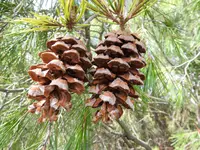
After flowering, the spikes develop into hard, woody cones that can retain seeds for many years, releasing them mainly after exposure to the heat and drying conditions associated with bushfire.

Banksia prionotes forms a specialized root system with dense clusters of short lateral roots, called proteoid or cluster roots, which greatly increase nutrient absorption from very poor soils by releasing organic acids that mobilize otherwise unavailable phosphorus and other minerals.
Lack of flowers usually comes from a plant that is too young, has been pruned hard at the wrong time, or receives excess fertilizer. It also needs full sun and good drainage to set strong flower spikes.
Keep your plants happy and healthy with plant identification, disease detection, and easy care guidance.