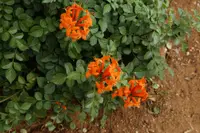
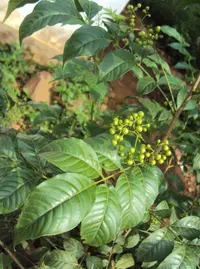
Managed spreading habit
Pinch back or lightly shear stem tips several times during the warm season to keep the shrub dense, prevent it from becoming woody and open, and direct growth away from paths or other plants.

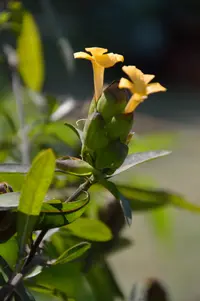
Hophead Philippine violet, Barleria lupulina, is a tropical shrub grown for its showy bracted flower spikes and dense, glossy foliage. It typically forms a compact, bushy mound in warm climates.
The plant is native to tropical Asia and thrives in humid, frost-free regions, where it can flower for long periods. Its colorful cone-like bracts make it useful as an ornamental hedge or accent plant.
Barleria lupulina is generally vigorous and fast-growing when given warmth, good light, and evenly moist, well-drained soil. It can become leggy without pruning, but responds well to trimming, which makes it relatively simple to care for hophead Philippine violet.

Care Difficulty
Moderate Care

Light Preference
Partial Sun

Water Requirements
Regular Water

Temperature Preference
Tropical / Frost Sensitive

Hardiness Zone
10–11

Soil Texture
Sandy, Loamy, Organic-rich

Soil pH
Acidic (5.5–6.5), Slightly acidic (6.5–7.0)

Soil Drainage
Moist but well-drained

Fertilization
Light (every 4–6 weeks)
Scan your plant to receive care tips personalized for your specific plant
Available on iOS and Android
Barleria lupulina grows best in bright, warm conditions with some protection from harsh midday sun.
Barleria lupulina prefers evenly moist, well-drained soil and reacts quickly to both drought and waterlogging.
This species thrives in warm, frost-free climates and slows or declines when exposed to cold.
This shrub prefers moderately humid air but copes with typical indoor levels if watering is consistent.
This species grows best in loose, draining soil that still holds some moisture between waterings.
This species is suitable for container growing when the pot is chosen to match its fast, shrubby growth habit.
Barleria lupulina responds well to moderate feeding during its active growing season in warm months.
Pruning helps keep Barleria lupulina compact, branching well, and flowering reliably.
Barleria lupulina adapts well to transplanting and only needs container repotting when clearly root-bound.
Barleria lupulina is commonly propagated from softwood or semi-ripe stem cuttings and sometimes by seed.
In mild climates Barleria lupulina needs only light winter care, but it is sensitive to hard frost.

Plant Health Check
Not sure what's wrong with your plant? Check your plant's health inside the app.
This species is known for its tightly stacked, cone-shaped bracts that are yellow to orange, with small tubular flowers emerging between them, giving rise to the common name hophead because the inflorescences resemble hops.
In its native range of tropical Asia, this plant typically grows as a low to medium shrub along forest edges and in disturbed understory sites, where it benefits from bright but filtered light and warm, humid conditions.
In several tropical and subtropical regions outside its native range, this ornamental species has escaped gardens and naturalized along roadsides and in waste areas, showing a strong ability to colonize disturbed habitats.
Poor flowering is usually linked to insufficient light, heavy pruning at the wrong time, or nutrient imbalance. Avoid high-nitrogen fertilizers, keep pruning light after flowering, and provide a warm growing season to support bud formation.
Keep your plants happy and healthy with plant identification, disease detection, and easy care guidance.