Barringtonia neocaledonica Care

Barringtonia neocaledonica

About Barringtonia neocaledonica

Barringtonia neocaledonica is a small coastal tree or large shrub native to New Caledonia, usually found near lagoons and sandy shorelines. It belongs to a group of tropical trees often associated with mangrove-like habitats, though it prefers slightly higher, better-drained ground.

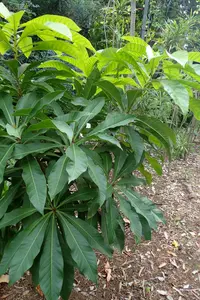
The plant typically has a short trunk, dense branching, and thick, glossy leaves arranged near the shoot tips, giving it a compact, ornamental look. Flowers and fruits are less showy than some related species but still add interest in coastal or subtropical gardens.

In cultivation, it prefers warm conditions, consistent moisture, and free-draining, slightly sandy soils. Gardeners who understand how to care for Barringtonia neocaledonica usually find it moderately challenging outside true tropical climates.

Main Plant Requirements

Care Difficulty

Hard Care

Light Preference

Full Sun

Water Requirements

Regular Water

Temperature Preference

Tropical / Frost Sensitive

Hardiness Zone

11–12

Soil Texture

Sandy, Loamy, Organic-rich

Soil pH

Slightly acidic (6.5–7.0), Neutral (7.0)

Soil Drainage

Waterlogged tolerant

Fertilization

Minimal (feed rarely)

Get Personalized Care Plan

Scan your plant to receive care tips personalized for your specific plant

Available on iOS and Android

How to Care for the Barringtonia neocaledonica

This coastal tropical tree prefers bright, warm conditions with some protection from harsh midday sun.

  • Provide 4–6 hours of direct morning sun with light or dappled shade in the afternoon to mimic its native shoreline exposure.
  • In hot inland sites, give filtered light or partial shade (especially 11 a.m.–3 p.m.) to prevent leaf scorch and excessive moisture loss.
  • In higher latitudes or cloudy regions, choose the sunniest, south-facing spot available so Barringtonia neocaledonica does not grow thin, weak shoots from low light.

This species prefers consistently moist, but not stagnant, soil and reacts quickly to extremes.

  • Check soil before watering; in the ground, water when the top 3–5 cm feels barely moist, aiming for deep soaking rather than frequent shallow watering.
  • Reduce frequency in cooler months while still preventing complete drying; slight surface dryness is acceptable, but cracking soil or limp foliage suggests underwatering.
  • Watch for yellowing leaves, soft new growth, or a sour smell as signs of overwatering, and ensure soil drains freely even though the tree tolerates brief waterlogging in coastal sites.

This tropical species grows best in warm, frost-free climates with mild seasonal variation.

  • Aim for an active growth range of 70–86°F (21–30°C), where shoot and root development are most stable and flowering potential remains high.
  • Protect from temperatures below 45°F (7°C); foliage and young bark are damaged by light frost, and sustained exposure near 40°F (4°C) can cause dieback.
  • The tree tolerates short hot spells up to about 95°F (35°C) if soil moisture is maintained, but mulching and partial afternoon shade reduce heat stress in inland summers.

This coastal tree prefers moderately humid air but adapts if extremes are avoided.

  • Aim for 50–70% humidity, as very dry heated rooms can slow growth and crisp leaf tips.
  • Dry air stress appears as browning along leaf margins and increased leaf drop on Barringtonia neocaledonica.
  • Increase humidity with a nearby open-water tray, grouped plants, or a room humidifier rather than frequent misting.

This species grows best in moist, well-aerated, slightly acidic to neutral soil with reliable drainage.

  • Use a loamy mix with 40–50% organic matter such as compost plus 20–30% sand for structure and stability.
  • Add perlite or pumice (15–25%) to improve drainage and oxygen around the roots while keeping the mix evenly moist.
  • Target a pH of 6.0–7.0; avoid strongly alkaline substrates that can limit nutrient availability and cause chlorosis.
  • Do not use heavy clay or compacted mixes that stay waterlogged, as this encourages root rot despite the plant’s moisture preference.

This species can be grown in containers, especially when young, if the pot is chosen for moisture control and stability.

  • Choose a deep, wide container that allows a spreading root system, which helps anchor the developing tree and supports faster early growth.
  • Select a heavy, stable pot material such as ceramic or concrete to prevent tipping as the canopy becomes denser and more wind-sensitive.
  • Ensure large, unobstructed drainage holes so excess water exits quickly, preventing prolonged saturation at the base of the root zone.

Barringtonia neocaledonica responds to light, steady nutrition rather than heavy feeding.

  • Use a balanced, slow‑release fertilizer (e.g., 10‑10‑10) or well‑rotted compost mixed into the topsoil at the start of spring.
  • Feed every 6–8 weeks during the warm growing season for container or intensively grown plants.
  • Dilute liquid feeds to 1/2 strength to avoid root burn, especially in pots.
  • Reduce or stop fertilizing in fall and winter when growth slows.

Pruning helps manage Barringtonia neocaledonica size and structure while maintaining healthy growth.

  • Carry out structural pruning in late winter or early spring before vigorous new growth starts.
  • Remove dead, diseased, rubbing, or storm‑damaged branches first using clean, sharp bypass pruners or a pruning saw.
  • Thin crowded interior branches to improve light penetration and air movement through the canopy.
  • Limit heavy heading cuts; shape gradually over several seasons to reduce stress and preserve natural form.

This species is usually grown in the ground, so focus on careful transplanting rather than frequent repotting.

  • Transplant young trees in late winter or early spring when temperatures are mild and growth is just starting.
  • Look for tight root spirals, roots emerging from drainage holes, or stunted growth in containers as signs it needs a larger pot or planting site.
  • Move up only 1 pot size or into a hole 2–3x wider than the root ball, using well‑drained soil with similar texture to the original.
  • Water deeply before and after planting, keep the root ball intact, and shade temporarily to limit transplant shock.

Propagation of Barringtonia neocaledonica is practical but slower than many common ornamentals.

  • Sow fresh seeds in warm conditions (75–80°F) in late spring, using a moist, free‑draining mix and gentle bottom heat if available.
  • Pre‑soak seeds for 12–24 hours to improve water uptake, then cover lightly and keep humidity high.
  • Take semi‑ripe stem cuttings in early summer, use a rooting hormone, and place in bright, indirect light.
  • Maintain steady warmth, high humidity, and minimal disturbance until roots are well formed.

This tropical species is sensitive to cold and needs protection in regions with cool winters.

  • Avoid exposure below about 40°F; sustained lower temperatures can damage foliage and young wood.
  • Mulch the root zone with 5–8 cm of organic material in fall to buffer soil temperature and moisture.
  • Move container plants indoors or into a heated greenhouse before the first light frost is forecast.
  • In indoor or sheltered sites, provide bright light, slightly drier soil, and good air circulation through winter.

Care Tips

Salt-wind acclimation

If planting near the coast, harden young plants by first growing them in a more sheltered spot for 3–6 months, then gradually exposing them to stronger sea breezes so new growth develops thicker cuticles and tolerates salt better.

Windbreak establishment

In exposed sites, install a temporary shade cloth screen or use a row of fast-growing shrubs on the windward side for the first 2–3 years to reduce branch breakage and leaf scorch while the tree anchors and thickens its trunk.

Root-zone protection

Keep the root area free of turf and heavy foot traffic by maintaining a 60–120 cm organic mulch ring, which stabilizes soil moisture and reduces compaction that can weaken anchorage in storms.

Storm-readiness pruning

In cyclone- or hurricane-prone regions, schedule structural pruning at the end of the dry season to remove tight branch crotches and reduce overly long, heavy laterals that are prone to snapping in high winds.

Flower and fruit hygiene

During peak blooming and fruiting, promptly remove spent flowers and fallen fruits from paved areas to prevent slippery surfaces, and consider thinning developing fruits on young trees so more energy goes into canopy and root development when growing Barringtonia neocaledonica.

Common Pests and Diseases

Scale insects

This pest feeds on stems and leaf midribs, causing yellowing, slowed growth, and sticky honeydew that can lead to sooty mold. Infestations are more common on stressed or container-grown trees.

Solution

Prune and discard heavily infested twigs, then wipe remaining scales with a cotton pad dipped in diluted isopropyl alcohol or insecticidal soap. Improve light and nutrition, and repeat treatments every 7–10 days until no new scales appear, which supports long-term Barringtonia neocaledonica care instructions in cultivation.

Mealybugs

These insects form white cottony clusters in leaf axils and on young shoots, weakening the plant and causing distorted new growth. Honeydew excretion can attract ants and encourage sooty mold.

Solution

Physically remove clusters with a cotton swab dipped in alcohol, then wash foliage thoroughly with lukewarm water and insecticidal soap. Keep the canopy thinned by light pruning to improve air movement and inspect regularly, especially on container or indoor specimens.

Leaf spot

This disease causes brown to black spots on leaves that may merge into larger blotches, especially in warm, humid conditions. Symptoms include premature leaf drop on young or potted trees.

Solution

Remove and discard affected leaves and any fallen debris around the base to reduce pathogen spread. Avoid overhead watering, improve spacing and airflow, and if the problem persists in valuable plants, apply a copper-based fungicide according to label directions during warm, wet periods.

Anthracnose

This disease produces dark, sunken lesions along leaf veins and on young shoots, which can lead to dieback of tender growth. Symptoms include irregular brown patches that may follow the midrib or leaf edges.

Solution

Prune out and discard infected shoot tips, sterilizing tools between cuts, and clear away fallen leaves. Reduce leaf wetness by watering at soil level, and in humid climates consider a preventive fungicide program during the wet season if the plant has a history of recurrent anthracnose.

Interesting Facts

New Caledonia specialist

This species is endemic to New Caledonia, meaning it occurs naturally only there, and it is adapted to the island’s specific coastal and lowland habitats.

Distinctive brush flowers

It produces elongated, brush-like flower spikes with numerous prominent stamens, which are typical for Barringtonia species but have a distinct arrangement and structure that help distinguish it from closely related species in the region.

Woody, buoyant fruits

The tree forms large, woody fruits that are buoyant and adapted to water dispersal, allowing seeds to travel along waterways and coastal zones in its native range.

FAQs about Barringtonia neocaledonica

Growth is moderate. Young plants usually add about 20–40 cm per year in warm, frost-free climates with good moisture and nutrition. In cooler or drier sites, growth slows noticeably and plants remain smaller and more compact.

Grow Healthy Plants with Botan Care

Keep your plants happy and healthy with plant identification, disease detection, and easy care guidance.

Botan plant care app — identify plants on mobile

Explore More Plants