lemonyellow rosemallow Care (Hibiscus calyphyllus)

Also known as: Large Yellow Wild Stockrose, Pondoland Hibiscus, Large Yellow Wild Hibiscus
lemonyellow rosemallow

About lemonyellow rosemallow

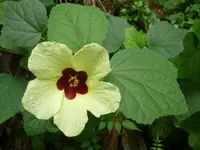
Lemonyellow rosemallow, Hibiscus calyphyllus, is a shrubby hibiscus grown for its large, soft yellow flowers with a dark center. It usually forms a compact, bushy plant with broad, textured leaves that give it a lush appearance.

This species is native to parts of eastern and southern Africa, where it grows in warm, sunny habitats with consistent moisture. It is considered moderately easy to grow if its need for bright light and regular watering is met.

Gardeners who learn how to care for lemonyellow rosemallow often value it as a long-blooming accent in borders, containers, or subtropical gardens, especially in frost-free climates.

Main Plant Requirements

Care Difficulty

Moderate Care

Light Preference

Full Sun

Water Requirements

Regular Water

Temperature Preference

Tropical / Frost Sensitive

Hardiness Zone

9–11

Soil Texture

Sandy, Loamy, Organic-rich

Soil pH

Acidic (5.5–6.5), Slightly acidic (6.5–7.0)

Soil Drainage

Moist but well-drained

Fertilization

Moderate (every 2–4 weeks)

Get Personalized Care Plan

Scan your plant to receive care tips personalized for your specific plant

Available on iOS and Android

How to Care for the lemonyellow rosemallow

Hibiscus calyphyllus needs bright outdoor light to flower well and keep compact growth.

  • Provide 4–6 hours of direct morning sun with light afternoon shade; strong late-afternoon sun in hot summers can scorch leaves.
  • Tolerates light partial shade, but flowering of lemonyellow rosemallow declines if it receives under 3–4 hours of direct sun per day.
  • In cooler seasons, allow more direct sun, while in peak summer consider filtered light through a thin shade cloth to reduce leaf stress.

Hibiscus calyphyllus prefers evenly moist, not soggy, soil for steady growth and flowering.

  • Water when the top 2–3 cm of soil feels dry, applying enough to moisten the root zone while letting excess drain away.
  • Increase watering frequency in hot, windy weather when leaves droop slightly by late day, but reduce in cool or rainy periods.
  • Yellowing, soft leaves and a sour soil smell indicate overwatering, while crisp leaf edges and buds dropping early signal underwatering or drought stress.

This shrub thrives in warm, frost-free conditions and reacts quickly to temperature extremes.

  • Aim for 70–85°F (21–29°C) during active growth; brief peaks to 90°F (32°C) are tolerated if soil moisture is maintained.
  • Growth slows below 60°F (16°C), and the plant is damaged near 40°F (4°C); it is not frost hardy and should be protected from freezing.
  • In regions with hot summers, provide afternoon shade and mulch the root zone to buffer soil temperatures and reduce heat stress.

This species prefers moderately humid air but adapts if extremes are avoided.

  • Aim for 40–60% humidity to support steady growth and flowering in lemonyellow rosemallow.
  • It tolerates brief drier indoor air but may show crisp leaf edges, curling, and bud drop when humidity stays low.
  • Group plants, place trays with water and pebbles nearby, or run a small humidifier rather than misting leaves directly.

This hibiscus prefers deep, moisture-retentive but well-drained soil with ample organic matter.

  • Use a loamy mix of roughly 50% peat-free compost, 30% coarse sand, and 20% perlite or fine bark to balance moisture and aeration.
  • Aim for slightly acidic to neutral pH, around 6.0–7.0, which supports nutrient availability for Hibiscus calyphyllus.
  • In heavy native clay, elevate the planting area and blend in coarse sand and compost to improve drainage and root oxygenation.
  • Avoid waterlogged, compacted, or very alkaline soil, which promotes root rot, leaf yellowing, and poor flowering.

This species suits container growing when the pot supports its fast root growth and moisture needs.

  • Choose a wide, heavy container to counteract wind and the plant’s bushy top growth so it does not tip easily.
  • Select a pot material with moderate moisture retention, such as thick-walled terracotta, to prevent sudden swings between wet and dry.
  • Fill only the bottom with a uniform, well-draining mix and avoid gravel layers, which can trap water around the root zone.

Hibiscus calyphyllus responds well to moderate feeding during its active growing season for strong growth and flowering.

  • Apply a balanced liquid fertilizer (for example 10-10-10) at half-strength every 2–4 weeks in spring and summer on moist soil.
  • Use slow-release granules or a thin layer of compost at the start of the season for steady nutrients when growing lemonyellow rosemallow.
  • Reduce or stop feeding in fall and winter when growth slows, especially in cooler conditions or low light.
  • Avoid high-nitrogen lawn products near the root zone, which can cause weak, leafy growth with fewer flowers.

Pruning supports a compact shape and better flowering in Hibiscus calyphyllus.

  • Carry out main pruning in late winter or very early spring before strong new growth begins.
  • Remove dead, diseased, crossing, or storm-damaged stems with clean, sharp bypass pruners or loppers.
  • Shorten overly long, leggy shoots to an outward-facing bud to encourage bushier habit and more blooms.
  • Lightly thin crowded interior branches to improve air flow and reduce disease risk.

Transplanting or repotting is useful when growth slows or roots fill the container or planting hole.

  • Check for roots circling the pot, pushing through drainage holes, or persistent wilting, which indicate the need for a larger container.
  • Plan outdoor transplanting of Hibiscus calyphyllus for spring after frost risk has passed, typically every 2–3 years if rootbound.
  • Lift the plant carefully, gently loosen or tease circling roots, and trim only damaged sections to limit stress.
  • Replant at the same soil level in a slightly larger pot or improved garden soil, then water thoroughly and shade from harsh sun for several days.

New Hibiscus calyphyllus plants are most often raised from softwood cuttings or seeds.

  • Take softwood cuttings in late spring or early summer, 8–10 cm long, with 2–3 leaf nodes.
  • Dip the cut end in rooting hormone, place in a moist, free-draining mix, and keep at 70–75°F with high humidity and bright, indirect light.
  • Sow fresh seeds in spring in warm, sterile seed mix, lightly covered, and maintain even moisture until germination.
  • Ventilate propagating trays or covers daily to prevent fungal issues while roots or seedlings develop.

This species is frost-sensitive and needs protection in colder climates.

  • In regions below about 25–30°F, treat plants as tender perennials or annuals unless given shelter.
  • Mulch the root zone with 5–8 cm of organic material in late fall to insulate soil and reduce freeze–thaw stress.
  • Move container-grown plants indoors or into a bright, frost-free greenhouse before the first hard frost.
  • Water sparingly in winter, keeping soil barely moist, and avoid heavy pruning until late winter or early spring.

Care Tips

Pinch To Bush

Pinch out the soft shoot tips when plants are 15–20 cm tall to encourage branching and a denser, floriferous shrub rather than a lanky single stem.

Rotate For Even Bloom

Rotate container plants a quarter turn every 1–2 weeks so buds and branches develop evenly and the plant does not lean or flower only on the sunniest side.

Seasonal Hard Cutback

In mild climates, cut stems back by about one-third at the end of winter to remove weak wood and stimulate a flush of vigorous new growth and larger flowers in spring.

Mulch Root Zone

Apply a 5–8 cm layer of organic mulch around, but not touching, the stems to stabilize root temperature, conserve moisture, and reduce weed competition that can stress the plant.

Early Pest Scouting

Inspect new growth and flower buds weekly for aphids, spider mites, and whiteflies, and hose off or treat light infestations promptly before they distort leaves or reduce blooming when growing lemonyellow rosemallow.

Common Pests and Diseases

Hibiscus aphids

This pest feeds on new growth and flower buds, causing curling, distortion, and sticky honeydew that can lead to sooty mold on leaves and stems.

Solution

Rinse colonies off soft shoots and buds with a firm stream of water, then treat remaining insects with insecticidal soap or a light horticultural oil, making sure to coat leaf undersides and young stems. Encourage or introduce natural predators such as lady beetles outdoors and avoid high nitrogen fertilization, which encourages tender, aphid-prone growth when managing Hibiscus calyphyllus care.

Spider mites

These insects are actually tiny arachnids that thrive in hot, dry conditions, causing fine stippling, bronzing, and webbing on the undersides of leaves.

Solution

Increase humidity around the plant and hose down foliage regularly, focusing on leaf undersides to dislodge mites. For persistent infestations, use repeated applications of insecticidal soap or neem oil, and improve air movement around plants to reduce favorable dry, stagnant conditions.

Hibiscus leaf spot

This disease causes small water-soaked or brown spots on leaves that may enlarge, merge, and lead to yellowing and premature leaf drop, especially in warm, humid weather.

Solution

Remove and discard affected leaves and plant debris to reduce the source of infection, and avoid overhead watering that keeps foliage wet. Improve spacing and airflow, and if spotting spreads, apply a labeled copper or chlorothalonil fungicide according to directions, treating both upper and lower leaf surfaces.

Botrytis blight

This disease affects flowers and tender shoots, leading to soft, brown, collapsing tissue and a characteristic gray, fuzzy mold on buds and petals in cool, damp conditions.

Solution

Promptly remove and discard all affected flowers and stems, and keep spent blooms from accumulating on the soil surface. Improve air circulation, reduce crowding, avoid wetting flowers when watering, and in severe cases use a labeled fungicide during periods of prolonged cool, humid weather.

Interesting Facts

Sun-tracking blossoms

The large yellow flowers open early in the day and tend to orient toward strong light, then usually wither by evening, a daily cycle typical of some East African hibiscus species adapted to intense sun exposure.

Hairy leaf surface

Its broad, bright green leaves are covered with fine hairs that help reduce water loss and provide slight protection from herbivores in its native habitats of eastern and southern Africa.

Seasonal shrub habit

In frost-free climates it often behaves as a short-lived, semi-woody shrub with a very long flowering season, responding quickly to warm temperatures and regular moisture with repeated flushes of blooms.

FAQs about lemonyellow rosemallow

This species is very attractive to bees, butterflies, and other pollinating insects because of its large, open, yellow flowers and abundant pollen. Planting several together can noticeably increase pollinator activity in a garden setting.

Grow Healthy Plants with Botan Care

Keep your plants happy and healthy with plant identification, disease detection, and easy care guidance.

Botan plant care app — identify plants on mobile

Explore More Plants