Stake arching stems
Install a slim stake or small hoop support early in the season and loosely tie the tall, brittle stems with soft ties to keep the plant upright and reduce breakage from its own leaf weight.

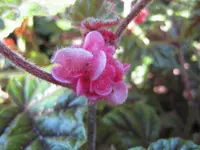
Metal-leaf begonia (Begonia incarnata) is a rhizomatous begonia grown mainly for its striking foliage rather than its flowers. It forms a loose clump of arching stems with large, asymmetrical leaves that show a metallic sheen, often silvery or bronze over green.
This species comes from tropical regions of Brazil, where it grows in shaded, humid forest habitats. Its preference for stable warmth, high humidity, and protection from strong sun means it can be somewhat demanding indoors.
Those conditions shape how to care for metal-leaf begonia, especially in drier homes. It generally prefers bright, indirect light, evenly moist but well-drained soil, and good air circulation without cold drafts.

Care Difficulty
Moderate Care

Light Preference
Bright Indirect Light

Water Requirements
Keep Soil Moist

Temperature Preference
Tropical / Frost Sensitive

Hardiness Zone
10–11

Soil Texture
Loamy, Peaty, Organic-rich

Soil pH
Acidic (5.5–6.5), Slightly acidic (6.5–7.0)

Soil Drainage
Moist but well-drained

Fertilization
Light (every 4–6 weeks)
Scan your plant to receive care tips personalized for your specific plant
Available on iOS and Android
This species prefers bright, gentle light that protects its metallic foliage from scorching.
Moist but not saturated soil supports healthy roots and foliage in this species.
Stable, mild temperatures help this begonia maintain steady growth and attractive foliage.
This species prefers moderate to high humidity for stable foliage and growth.
Begonia incarnata benefits from a loose, airy, organic-rich mix that drains quickly yet holds some moisture.
This species is well suited to container culture for precise control of moisture and substrate.
Begonia incarnata responds well to modest, consistent feeding during its active growing season.
Begonia incarnata benefits from light, periodic pruning to maintain a compact, leafy shape.
Container-grown Begonia incarnata prefers being slightly root-bound but still needs periodic repotting to stay vigorous.
This species is commonly propagated from stem cuttings, which root reliably under warm, humid conditions.
Begonia incarnata is frost-sensitive and needs specific winter care in most temperate regions.

Plant Health Check
Not sure what's wrong with your plant? Check your plant's health inside the app.
The leaves have a natural metallic sheen caused by specialized surface cells that reflect light, giving the plant its common name metal-leaf begonia and helping it tolerate bright but indirect light on the forest understory edge.
This species is native to Brazil, where it grows as a shrub-like begonia in warm, humid forest habitats with filtered light, which explains its preference for stable indoor conditions and avoidance of direct, harsh sun.
Unlike many compact begonias, this species can develop tall, bamboo-like canes and form an upright, sparsely branched shrub, especially when grown in large containers with good light.

This species is one of the classic parent plants used in breeding cane-type begonias with metallic foliage, so many modern decorative hybrids trace part of their ancestry back to Begonia incarnata.
Brown, crispy edges usually come from low humidity, excess fertilizer salts, or irregular watering. Flush the pot with plain water, trim damaged parts, slightly raise humidity, and resume moderate, even moisture without letting the pot stay soggy.
Keep your plants happy and healthy with plant identification, disease detection, and easy care guidance.