Early structural training
Stake young plants with a sturdy central stake and a few side ties during the first 2–3 years to encourage a straight, wind-resistant trunk and balanced main scaffold branches.

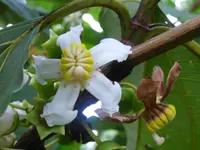
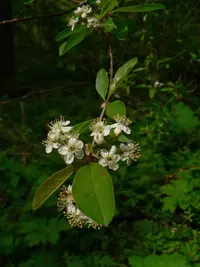
Bellucia pentamera is a fast-growing tropical tree or large shrub from humid lowland forests in northern South America and parts of Central America. It is mainly found along forest edges, riverbanks, and disturbed sites. The plant typically develops an upright habit with a loose, spreading crown, bearing broad green leaves and showy clusters of white to pinkish flowers followed by small, berry-like fruits. It grows quickly in warm, consistently moist conditions, which can make it vigorous but harder to manage in small spaces. In cultivation, it prefers bright light, high humidity, and fertile, well-drained soil, and these needs shape how to care for Bellucia pentamera.

Care Difficulty
Moderate Care

Light Preference
Partial Shade

Water Requirements
Regular Water

Temperature Preference
Tropical / Frost Sensitive

Hardiness Zone
Unknown

Soil Texture
Loamy, Silty, Organic-rich

Soil pH
Acidic (5.5–6.5)

Soil Drainage
Moist but well-drained

Fertilization
Minimal (feed rarely)
Scan your plant to receive care tips personalized for your specific plant
Available on iOS and Android
This tropical tree prefers bright, indirect light with some direct morning sun in warm climates.
This species prefers consistently moist, but not waterlogged, soil in warm, humid conditions.
This lowland tropical tree thrives in warm, stable conditions without frost exposure.
This species prefers consistently humid air and reacts poorly to dry indoor conditions.
Bellucia pentamera requires moist, airy, organic-rich soil that drains freely but does not dry out quickly.
This species can be grown in containers when young or in controlled settings, but demands careful attention to stability and moisture control.
In cultivation, Bellucia pentamera benefits from light, steady nutrition rather than heavy feeding.
Pruning Bellucia pentamera is mainly done to manage size and remove problem wood rather than for heavy shaping.
This species is usually grown in the ground, so focus on careful transplanting of young Bellucia pentamera trees.
Propagation of Bellucia pentamera is possible but usually handled by nurseries rather than casual growers.
Bellucia pentamera is a tropical tree with low frost tolerance and needs protection in climates with cool winters.

Plant Health Check
Not sure what's wrong with your plant? Check your plant's health inside the app.
In its native Amazonian forests, this species often hosts ants in hollow stems and leaf bases, and those ants help protect the plant from herbivores by aggressively patrolling and deterring leaf‑eating insects.
The species name pentamera refers to its characteristic five‑veined leaves and five‑part flower structure, a typical feature in its family Melastomataceae, where the main veins run strongly and almost parallel from the leaf base.
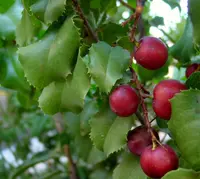
Its fleshy purple fruits are an important food source for frugivorous birds, which disperse the seeds across disturbed and secondary forests, helping the species rapidly colonize open or regenerating areas.
This species is moderately fast-growing in warm, frost-free climates, often adding 30–60 cm of height per year once established. Growth slows in poor soil, cool temperatures, limited water, or when container-bound.
Keep your plants happy and healthy with plant identification, disease detection, and easy care guidance.