Early framework training
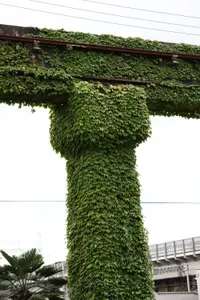
Install sturdy horizontal wires or a trellis at 30–60 cm intervals and loosely tie new shoots as they extend, so the vine develops a well-spaced framework instead of tangling on itself.

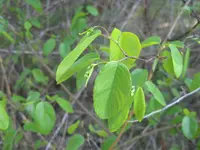
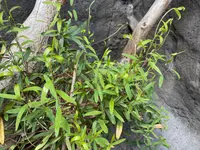
Rattan vine, Berchemia scandens, is a woody, twining vine native to the southeastern United States, often found in moist woodlands, riverbanks, and thickets. It climbs by winding around nearby shrubs and trees, forming long, flexible stems with small, simple leaves.
The plant is valued mainly for its tough, bendable canes, which have been used traditionally for basketry and crafts. It tends to be fairly resilient once established but needs support to climb and enough space to develop its natural scrambling habit.
In cultivation, it prefers sun to light shade, moderately moist, well-drained soil, and consistent conditions. These traits make it moderately easy to care for rattan vine in suitable climates and outdoor settings.

Care Difficulty
Moderate Care

Light Preference
Partial Sun

Water Requirements
Moderate Water

Temperature Preference
Warm Climate

Hardiness Zone
5–9

Soil Texture
Sandy, Loamy, Clay

Soil pH
Acidic (5.5–6.5), Slightly acidic (6.5–7.0)

Soil Drainage
Moist but well-drained

Fertilization
Minimal (feed rarely)
Scan your plant to receive care tips personalized for your specific plant
Available on iOS and Android
Berchemia scandens grows best with consistent, moderate sun exposure.
Berchemia scandens prefers evenly moist but not saturated soil.
This species is moderately hardy and adapts to a range of outdoor temperatures when established.
This species tolerates a broad humidity range but grows best with moderate ambient moisture.
This vine prefers loose, well‑drained, slightly acidic to neutral soil that does not stay waterlogged.
This species can adapt well to container culture when the pot supports its twining and deep‑rooting habit.
Berchemia scandens grows well in average soil and benefits from light feeding in containers or poor ground conditions.
Pruning Berchemia scandens helps manage size and maintain a healthy, open framework.
Berchemia scandens is usually grown in the ground, so focus on careful transplanting rather than frequent repotting.
Propagation of Berchemia scandens is moderate in difficulty but feasible with patience and proper conditions.
Berchemia scandens is generally cold hardy in much of its native range and needs minimal winter care once established.

Plant Health Check
Not sure what's wrong with your plant? Check your plant's health inside the app.
This species is naturally found in moist bottomlands, riverbanks, and swamp margins across the southeastern and south-central United States, where it scrambles over shrubs and small trees rather than forming its own self-supporting trunk.
The long, slender stems are both strong and pliable, which historically made them useful to Indigenous peoples and early settlers for making baskets, cords, and other woven items, contributing to the common name rattan vine.
Its small, purplish drupes are eaten by various birds and small mammals, providing a seasonal food source in late summer to fall while the plant itself offers cover within thickets and along woodland edges.

Genetic and morphological studies place this North American species within a primarily Old World genus, making it an interesting biogeographical outlier among woody vines related to species native to Asia and Africa.
This species spreads slowly to moderately by twining stems, not by rampant runners. In most managed gardens it is not considered aggressive, but it can cover nearby shrubs or structures if left completely unpruned for many years.
Keep your plants happy and healthy with plant identification, disease detection, and easy care guidance.