Encourage Winter Color
Leave older leaves on the plant going into winter, since the cold turns them deep red and protects the crown from freeze-thaw cycles; remove only completely dead foliage in early spring.

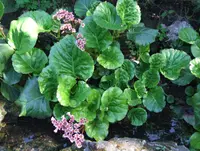
Siberian-tea, Bergenia crassifolia, is a hardy evergreen perennial grown mainly for its thick, glossy leaves and early spring flowers. It forms low clumps that slowly spread to create a dense groundcover.
The plant produces clusters of pink to magenta bell-shaped blooms on short stems above the foliage. Leaves often turn reddish or bronze in cold weather, adding seasonal color.
Bergenia crassifolia is native to rocky slopes and forest edges in Siberia and Central Asia, which explains its strong tolerance of cold and poor soils. It is generally easy to care for Siberian-tea in temperate climates when given partial shade, moderate moisture, and reasonably well-drained soil.

Care Difficulty
Easy Care

Light Preference
Partial Shade

Water Requirements
Moderate Water

Temperature Preference
Cold Hardy

Hardiness Zone
3–8

Soil Texture
Loamy, Clay, Organic-rich

Soil pH
Slightly acidic (6.5–7.0), Neutral (7.0)

Soil Drainage
Moist but well-drained

Fertilization
Minimal (feed rarely)
Scan your plant to receive care tips personalized for your specific plant
Available on iOS and Android
Bergenia crassifolia grows best in bright conditions with some protection from strong afternoon sun.
Water needs are moderate and depend on soil drainage and seasonal weather.
This species is a cold-hardy perennial that also tolerates moderate summer heat when established.
This species manages well in typical home and outdoor humidity and rarely needs special humidity control.
This species grows best in loose, moist, well-drained soil with moderate organic matter.
This species is suitable for container growing outdoors on patios, balconies, or shaded entrances.
This hardy perennial needs modest feeding, as many clump-forming perennials perform well in average soil.
Pruning for this plant focuses on tidiness and maintaining healthy foliage and flowers.
This species is usually grown in the ground and is moved mainly to refresh overcrowded clumps or adjust spacing.
Propagation is commonly done by division, with seeds used less often for this species.
This plant is notably cold hardy and usually needs minimal winter attention in the ground.

Plant Health Check
Not sure what's wrong with your plant? Check your plant's health inside the app.
This species keeps its thick, leathery leaves through winter and can survive temperatures below −30°C, an adaptation linked to its native Siberian and Central Asian mountain habitats.
In cold and high-light conditions the leaves often turn deep red or bronze due to increased anthocyanin pigments, which help protect leaf cells from freezing and light damage.
Its bell-shaped pink to purple flowers open very early in spring, providing one of the first reliable nectar and pollen sources for emerging bees in cold climates.

Historical records from Siberia describe people brewing a tea-like drink from the thick, overwintered leaves of this species, a long-standing local tradition that inspired common names such as Siberian tea and Mongolian tea.
This species is semi-evergreen to evergreen in many temperate climates. Foliage often persists through winter, but leaves can redden, bronze, or partly die back in severe cold, then be replaced by fresh growth in spring.
Keep your plants happy and healthy with plant identification, disease detection, and easy care guidance.