Purple African Thistle Care (Berkheya purpurea)

Also known as: Purple Berkheya
Purple African Thistle

About Purple African Thistle

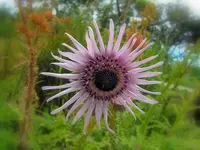
Purple African thistle, Berkheya purpurea, is a clump-forming perennial from South Africa valued for its striking purple daisy-like flowers and spiny, silver-green foliage. It forms sturdy, upright stems that create an architectural, thistle-like presence in sunny borders or gravel-style plantings.

In its native habitat, it grows in open, rocky grasslands with good drainage and strong light. The plant is generally tough and drought-tolerant once established, though it dislikes heavy, waterlogged soils.

Gardeners often find it moderately easy to grow if given full sun, lean soil, and protection from prolonged winter wet, which is key to successful care for Purple African Thistle.

Main Plant Requirements

Care Difficulty

Moderate Care

Light Preference

Full Sun

Water Requirements

Moderate Water

Temperature Preference

Cold Hardy

Hardiness Zone

6–9

Soil Texture

Sandy, Loamy, Rocky

Soil pH

Slightly acidic (6.5–7.0), Slightly alkaline (7.0–7.5)

Soil Drainage

Well-drained

Fertilization

Minimal (feed rarely)

Get Personalized Care Plan

Scan your plant to receive care tips personalized for your specific plant

Available on iOS and Android

How to Care for the Purple African Thistle

This sun-loving perennial thrives in open, bright positions with only light shade at most.

  • Provide 6–8 hours of direct sun daily; morning and early afternoon sun give best flowering for Purple African Thistle.
  • Tolerates light or dappled shade for 2–4 hours, but dense shade reduces blooms and encourages leggy, weak growth.
  • In very hot summers, protect from intense late-afternoon sun with light shade to prevent leaf scorch, especially on dry, exposed sites.

This drought-tolerant perennial prefers infrequent, deep watering rather than frequent light applications.

  • Allow the top 3–5 cm of soil to dry before watering; in well-drained garden beds this often means watering only during extended dry spells.
  • Use sharply drained soil or raised beds so water does not pool around roots; persistent soggy soil leads to yellowing leaves and root rot.
  • In the first growing season, water when foliage wilts slightly or soil is dry at finger depth, then reduce frequency as Berkheya purpurea establishes.

This hardy perennial manages a broad temperature range when established, especially in dry, well-drained soil.

  • Optimal growing temperatures are 65–80°F (18–27°C), supporting strong vegetative growth and flower production in the main season.
  • Mature plants tolerate brief drops to about 10–15°F (-12 to -9°C) with good drainage; young plants are less cold-hardy and benefit from mulch in winter.
  • Handles summer heat up to about 90–95°F (32–35°C) if soil is not waterlogged; extended heat with high humidity can increase disease risk.

This species is adapted to dry, sunny climates and does not have demanding humidity requirements.

This species prefers lean, well-drained mineral soils that do not stay wet.

  • Use a sandy or gritty loam with low to moderate organic matter to mimic exposed, rocky ground.
  • Ensure sharp drainage by blending roughly 50–70% coarse sand or grit with 30–50% loam-based compost.
  • Aim for slightly acidic to neutral pH, around 6.0–7.2, which supports nutrient availability without excess lush growth.
  • Avoid heavy clay, peat-heavy, or water-retentive mixes that hold moisture around the crown and encourage root rot in Berkheya purpurea.

This species can be grown in containers if the pot is set up to stay free-draining and stable in wind.

  • Choose a deep, heavy container to anchor the tall, spiny stems and prevent tipping in exposed, windy positions.
  • Fill the pot with a very gritty mix so water runs through within seconds, reducing crown and root rot risk.
  • Raise the container slightly on feet or bricks so drainage holes stay clear and runoff leaves the pot quickly after rain or watering.

This drought-tolerant perennial needs only modest feeding to flower well in average garden soil.

  • Apply a light dressing of compost or well-rotted manure around the clump in early spring to support new growth.
  • Use a balanced slow-release fertilizer (around 10-10-10) once in spring if soil is poor, following label rates at the lower end.
  • Avoid high-nitrogen products that push lush foliage over flowers and skip feeding during winter dormancy.

Pruning helps Berkheya purpurea maintain a tidy shape and extend its flowering display.

  • Deadhead spent flower stems in summer using clean hand pruners to encourage continued blooming.
  • Remove dead, damaged, or diseased leaves and stems whenever seen to reduce pest and disease issues.
  • In late fall or very early spring, cut back old flower stalks and ragged foliage to just above the basal rosette.
  • Avoid cutting into the crown during wet or freezing weather to limit rot risk.

This deep-rooted perennial is better suited to in-ground planting than long-term container culture.

  • Plan transplanting for early spring or early fall, when temperatures are mild and soil moisture is stable.
  • Move established clumps only when growth slows, flowering declines, or the plant is crowded by neighbors.
  • Dig wide and relatively deep to capture the long taproot, then replant at the same depth in well-drained soil.
  • Water thoroughly after transplanting, then keep soil lightly moist for 1–2 weeks to reduce root stress.

Berkheya purpurea is most often propagated from seed, with division used for established clumps.

  • Sow fresh seeds in late winter to early spring in a free-draining mix, barely covering them with substrate.
  • Provide 60–70°F temperatures, light, and even moisture; germination may take several weeks.
  • Transplant seedlings carefully to avoid disturbing the developing taproot, spacing them in sunny, well-drained beds.
  • Divide mature clumps in early spring only if necessary, keeping divisions large to support recovery.

Mature plants are fairly cold hardy, so winter care is simple in most temperate gardens.

  • Tolerates light to moderate frost, but very wet, frozen soils can damage the crown and roots.
  • After the first hard frost, cut back dead stems and remove diseased foliage to limit overwintering problems.
  • Apply a 5–8 cm layer of mulch around, not over, the crown to buffer soil temperature and moisture.

Care Tips

Staking Tall Stems

Install slender stakes early in the season and loosely tie the flowering stems with soft garden ties to prevent wind rock and stem breakage, especially in exposed sites.

Heat-Reflective Mulch

Apply a light-colored mineral mulch such as grit or small gravel around the crown to reflect heat, suppress weeds, and keep the collar dry, which reduces crown rot risk.

Controlled Self-Seeding

If you want more plants, allow some flower heads to dry on the plant, then shake the ripe seed into a tray or directly into a prepared sunny patch, but deadhead the rest to avoid overcrowding.

Winter Crown Protection

In colder regions, place a loose collar of coarse gravel or sharp sand around the crown in late fall to keep water from sitting at the base and to protect buds from freeze-thaw damage.

Pest Monitoring Routine

During the main growth flush, check the undersides of leaves weekly for aphids and other sap-sucking insects, and if colonies appear, wash them off with a firm water spray before they distort new growth when growing Purple African Thistle.

Common Pests and Diseases

Powdery mildew

This disease appears in humid, stagnant air as a white, dusty coating on Berkheya purpurea foliage, often starting on older leaves. Symptoms include distorted growth and reduced flowering if the infection progresses.

Solution

Remove the worst-affected leaves and improve airflow by spacing plants and thinning dense growth. Water at the base, keep foliage dry, and if needed apply a sulfur or potassium bicarbonate fungicide labeled for ornamental perennials, following label directions closely as part of general Berkheya purpurea care instructions.

Aphids

These insects cluster on new shoots, flower stalks, and the undersides of leaves, sucking sap and excreting sticky honeydew that can lead to sooty mold. This pest can cause distorted growth and weaken young plants.

Solution

Spray plants with a firm stream of water to dislodge colonies, then use insecticidal soap or a neem oil spray on the undersides of leaves and stems, repeating every 5–7 days until numbers drop. Encourage natural predators like lady beetles by avoiding broad-spectrum insecticides nearby.

Leaf spot

This disease causes small brown to purplish spots on leaves that may merge into larger blotches, especially in prolonged wet weather or overhead irrigation. Symptoms include premature leaf yellowing and drop, which can reduce vigor over time.

Solution

Remove and discard affected leaves and any fallen debris around the plant to reduce the source of infection. Avoid wetting foliage, water early in the day, and in severe or recurring cases use a labeled ornamental foliar fungicide while also improving spacing and airflow.

Slugs and snails

These pests chew irregular holes in leaves and young shoots, particularly on fresh basal growth in spring or in damp, shaded conditions. This pest can disfigure foliage but usually does not kill established plants.

Solution

Hand-pick slugs and snails in the evening or early morning and reduce hiding spots such as dense mulch and debris near the crown. Use iron phosphate slug bait around, not on, the plants and maintain drier soil surfaces between waterings to make the area less attractive.

Interesting Facts

Silver felt leaves

The leaves are densely covered with fine silvery hairs, which reduce water loss and reflect intense sunlight, an adaptation to its exposed, rocky habitats in South Africa.

Spiny yet ornamental

Although it has sharp leaf margins and a thistle-like appearance, it is grown as an ornamental perennial for its long-lasting purple flower heads that attract bees and other pollinators.

Mountain grassland native

This species is naturally found in high-altitude grasslands of the Drakensberg region, where it tolerates strong winds, high UV exposure, and periodic frosts.

Botan icon

Did you know?

The species has become notable in cold-climate gardens because, unlike many South African ornamentals, established plants can tolerate substantial winter frost while still flowering reliably in the following season.

FAQs about Purple African Thistle

Yes. The large, daisy-like purple flower heads are rich in nectar and pollen, so they attract many bees, hoverflies, and sometimes butterflies. Leaving spent blooms a little longer can still support pollinators before deadheading.

Grow Healthy Plants with Botan Care

Keep your plants happy and healthy with plant identification, disease detection, and easy care guidance.

Botan plant care app — identify plants on mobile

Explore More Plants