Early staking
Install slender stakes or a low support ring when plants are 10–15 cm tall so stems grow upright and are less likely to snap in wind or heavy rain.

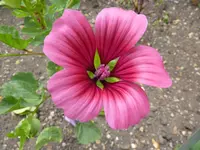
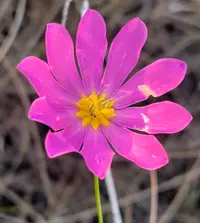
Mallow-wort (Malope trifida) is an annual flowering plant in the mallow family, grown mainly for its showy, funnel-shaped blooms. Plants form upright, branching stems with soft green leaves and abundant flowers in shades of pink, rose, or white.
It originates from the western Mediterranean region but is widely grown as a garden ornamental in temperate climates. The plant grows quickly from seed and blooms over a long season in suitable conditions.
Mallow-wort is generally easy to grow if given full sun, moderately fertile, well-drained soil, and regular moisture without waterlogging. For gardeners learning how to care for Mallow-wort, its fast growth and forgiving nature make it a good introduction to annual border flowers.

Care Difficulty
Easy Care

Light Preference
Full Sun

Water Requirements
Moderate Water

Temperature Preference
Warm Climate

Hardiness Zone
6–10

Soil Texture
Sandy, Loamy, Organic-rich

Soil pH
Acidic (5.5–6.5), Slightly acidic (6.5–7.0)

Soil Drainage
Well-drained

Fertilization
Light (every 4–6 weeks)
Scan your plant to receive care tips personalized for your specific plant
Available on iOS and Android
Malope trifida grows best in bright outdoor conditions with plenty of direct sun each day.
Malope trifida prefers steadily moist, well-drained soil without staying soggy.
This annual thrives in mild, frost-free conditions and struggles in prolonged cold or extreme heat.
Humidity is rarely critical for Malope trifida, which adapts well to typical outdoor air conditions in temperate climates.
Malope trifida grows best in loose, well-drained soil that holds some moisture but never stays waterlogged.
This species is suitable for container growing when the pot is prepared to support its fast, bushy growth habit.
Malope trifida benefits from light feeding to support fast annual growth and abundant flowering.
Pruning Malope trifida helps maintain a tidy shape and encourages more blooms.
This annual is usually grown in beds or borders, so transplanting young Malope trifida seedlings is more relevant than repotting mature plants.
Propagation of Malope trifida is most reliable from seed and suits typical home growers well.
This ornamental is usually treated as a frost-tender annual, so long-term winter care is minimal.

Plant Health Check
Not sure what's wrong with your plant? Check your plant's health inside the app.
Malope trifida is native to the western Mediterranean region, especially Spain and Portugal, where it grows as a short-lived annual in sunny, dry habitats with well-drained soils.
The species name trifida refers to its characteristic three-parted calyx, the green outer floral structure that splits deeply into three lobes around the base of the showy petals.
Its large funnel-shaped flowers, usually in shades of pink, magenta, or white, are formed by petals that fuse at the base and then flare outward, creating a broad landing platform that is attractive to bees and other pollinators.

In 19th-century European gardens, this species became popular as a quick-blooming annual for summer flower beds, and many historical seed catalogues listed several color forms, which helped establish Malope trifida as a traditional cottage-garden ornamental.
Lack of flowers usually comes from insufficient light, overly rich nitrogen fertilizer, or stress from drought or root disturbance. Focus on balanced fertilizer, steady moisture, and deadheading spent blooms to support repeat flowering through the season.
Keep your plants happy and healthy with plant identification, disease detection, and easy care guidance.