Encourage Deep Roots
During the first growing season, water less often but more deeply so the soil is moistened 15–20 cm down, which encourages the strong taproot that improves drought tolerance long term.

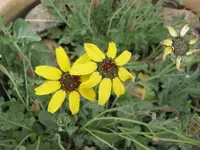
Lyreleaf greeneyes (Berlandiera lyrata) is a hardy perennial wildflower native to dry grasslands and open areas of the south-central United States and northern Mexico. It forms a low clump of gray-green, lobed leaves with taller, branching stems bearing yellow, daisy-like flowers.
The flowers often have a light chocolate-like scent, which makes this species distinctive in native and pollinator gardens. It is adapted to heat, sun, and poor, well-drained soils, so it suits low-maintenance and xeric plantings.
Once established, it tolerates drought and needs little extra care. Gardeners who want to care for lyreleaf greeneyes mainly need to provide plenty of sun and avoid waterlogged soil.

Care Difficulty
Easy Care

Light Preference
Full Sun

Water Requirements
Low Water

Temperature Preference
Cold Hardy

Hardiness Zone
4–9

Soil Texture
Sandy, Loamy, Rocky

Soil pH
Slightly acidic (6.5–7.0), Neutral (7.0)

Soil Drainage
Well-drained

Fertilization
Minimal (feed rarely)
Scan your plant to receive care tips personalized for your specific plant
Available on iOS and Android
This sun-loving prairie perennial needs strong light to flower and stay compact.
This drought-tolerant species prefers infrequent, deep watering rather than frequent light applications.
This hardy wildflower tolerates a wide temperature range but grows best in warm, dry conditions.
This drought-adapted species has low humidity needs and grows best in dry air.
This species prefers lean, fast-draining soil that mimics its native rocky habitats.
This prairie perennial can be grown in containers if the pot is set up to drain quickly and stay relatively dry.
This drought-adapted native needs only light feeding, especially in poor soils or containers.
Pruning Berlandiera lyrata is mainly done to keep plants tidy and flowering well.
This deep-rooted species prefers staying in one place, so transplant only when clearly necessary.
Berlandiera lyrata is most often propagated from seed, which matches its natural life cycle.
This species is generally cold hardy in its suitable zones and needs only minimal winter care in the ground.

Plant Health Check
Not sure what's wrong with your plant? Check your plant's health inside the app.
The yellow, daisy-like flower heads release a distinct roasted chocolate or cocoa aroma, especially in the early morning, due to volatile organic compounds in the floral oils that attract night and early-morning pollinators.
Flower heads typically begin to open at night and are fully expanded by dawn, matching the activity patterns of certain moths and early-flying bees in its native arid and semi-arid habitats.
This species develops a strong, deep taproot that allows it to access moisture well below the soil surface, giving it high drought tolerance in its native ranges from the southern United States into northern Mexico.

Berlandiera lyrata is a native component of North American shortgrass prairie and desert grassland communities, and its presence can indicate relatively undisturbed, well-drained sites that retain elements of the original native flora.
This species is highly attractive to native bees, small wasps, and butterflies. Its nectar- and pollen-rich flowers provide a reliable food source over a long season, making it valuable in wildlife gardens and pollinator-supporting landscapes.
Keep your plants happy and healthy with plant identification, disease detection, and easy care guidance.