Wind-resistant staking
Install 2–3 sturdy stakes just outside the root zone and tie the main stems loosely with soft, wide ties to prevent wind rock that can damage the shallow root system and cause dieback.

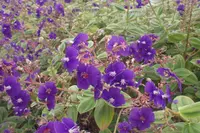
Glory bush, Pleroma urvilleanum, is a flowering evergreen shrub valued for its large purple blooms and lush green foliage. It is typically grown as an ornamental in mild climates or protected spaces. Native to Brazil, it has a rounded, bushy habit and can become quite dense and vigorous when conditions are favorable. The plant is considered moderately easy if its basic needs are met. It responds best to bright light, regular moisture, and well-drained soil. Understanding how to care for Glory bush helps maintain strong growth and consistent flowering.

Care Difficulty
Moderate Care

Light Preference
Full Sun

Water Requirements
Regular Water

Temperature Preference
Tropical / Frost Sensitive

Hardiness Zone
10–11

Soil Texture
Sandy, Loamy, Organic-rich

Soil pH
Acidic (5.5–6.5), Slightly acidic (6.5–7.0)

Soil Drainage
Moist but well-drained

Fertilization
Light (every 4–6 weeks)
Scan your plant to receive care tips personalized for your specific plant
Available on iOS and Android
This shrub prefers bright, soft light with protection from harsh midday sun for best flowering.
This plant prefers steadily moist but not waterlogged soil, with brief drying at the surface between deep waterings.
This shrub grows best in mild, frost‑free climates with moderate warmth most of the year.
This shrub benefits from moderate humidity but usually adapts to typical household air.
This species prefers a loose, slightly acidic, well-drained mix that still retains some moisture.
This shrub is suitable for container growing when given a stable, well-drained setup.
This shrub benefits from moderate feeding to maintain dense growth and abundant flowering.
Thoughtful pruning keeps Pleroma urvilleanum compact, flowering well, and free of damaged wood.
This shrub is usually grown in the ground but can be transplanted or moved in containers with care.
New plants are most commonly produced from semi-ripe cuttings rather than seed.
This shrub is frost-sensitive and needs protection in regions with freezing winters.

Plant Health Check
Not sure what's wrong with your plant? Check your plant's health inside the app.
This shrub produces large, velvety purple flowers with contrasting darker veins and bright yellow stamens, a color combination that is unusually intense even within the Melastomataceae family.
It is native to coastal areas of southeastern Brazil, where it grows as a shrub in warm, humid, frost-free habitats with well-drained but consistently moist soils.
The plant has noticeably 4-angled, almost square stems and leaves with prominent parallel veins, which are typical structural features of many melastome shrubs.

In mild subtropical climates, this species can flower almost continuously for much of the year, making it a valued ornamental in coastal gardens of Brazil, Australia, and warm parts of the US.
Lack of flowers usually comes from insufficient light, heavy pruning at the wrong time, or excess nitrogen fertilizer. Mature wood carries most buds, so avoid hard pruning in late winter and use a balanced, moderate feeding regime.
Keep your plants happy and healthy with plant identification, disease detection, and easy care guidance.