monarch birch Care (Betula maximowicziana)

Also known as: Maximowicz's Birch
monarch birch

About monarch birch

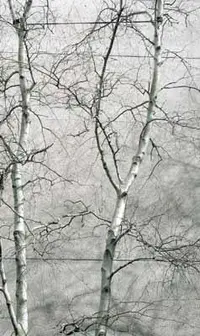
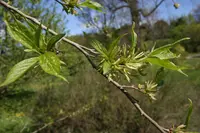
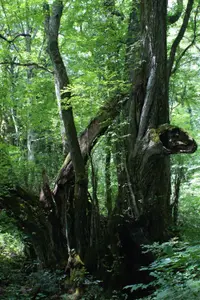
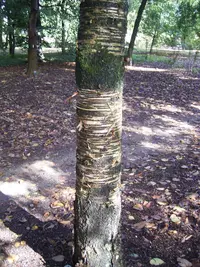
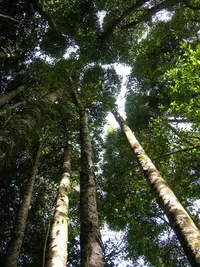
Monarch birch, Betula maximowicziana, is a medium to large deciduous tree valued for its clean bark and broad, coarsely toothed leaves. It forms a strong central trunk with an upright, rounded crown and a generally tidy structure.

This species is native to northern Japan, where it grows in cool, mountainous forests. It prefers consistently moist, well‑drained soil and full sun to light shade.

Monarch birch is relatively hardy but needs space, adequate moisture, and cool conditions to thrive, so site selection is important when planning how to care for monarch birch.

Main Plant Requirements

Care Difficulty

Moderate Care

Light Preference

Full Sun

Water Requirements

Regular Water

Temperature Preference

Cold Hardy

Hardiness Zone

4–7

Soil Texture

Loamy, Sandy, Organic-rich

Soil pH

Strongly acidic (4.5–5.5), Acidic (5.5–6.5)

Soil Drainage

Moist but well-drained

Fertilization

Minimal (feed rarely)

Get Personalized Care Plan

Scan your plant to receive care tips personalized for your specific plant

Available on iOS and Android

How to Care for the monarch birch

This species prefers bright, cool conditions similar to its native northern forests.

  • Provide 6–8 hours of sun daily, ideally full morning sun with light afternoon shade in hotter regions to protect bark and foliage.
  • Tolerates light to partial shade (around 3–4 hours direct sun), but growth becomes more open and fall color may be reduced.
  • Young monarch birch trees benefit from some protection from intense midsummer afternoon sun to limit leaf scorch and excessive soil drying.

This birch favors consistently moist but not waterlogged soil, especially while young.

  • Check the top 3–5 cm of soil; water deeply when this layer feels slightly dry, then allow excess to drain away fully.
  • In spring and early summer, monitor closely during leaf expansion and dry, windy periods, as Betula maximowicziana is sensitive to drying out at the root zone.
  • Watch for stress signs: yellowing leaves and dieback can indicate chronic drought, while limp foliage, darkened roots, or soggy soil point to overwatering and poor drainage.

This hardy birch thrives in cool to cold climates with distinct seasons.

  • Optimal growing temperatures are about 55–75°F (13–24°C) during the active season, with cooler nights promoting sturdy growth.
  • Fully dormant trees tolerate winter lows around -20 to -30°F (-29 to -34°C), provided roots are insulated by mulch and soil.
  • Mature trees handle summer highs near 85°F (29°C) if soil stays moist; prolonged heat above 90°F (32°C) increases stress and leaf scorch risk, especially in dry winds.

Humidity plays a minor role for Betula maximowicziana, which is adapted to outdoor temperate conditions.

Betula maximowicziana prefers consistently moist, deep, well‑structured mineral soil with ample organic matter.

  • Use a loamy soil with moderate clay, sand, and silt, enriched with 20–30% compost or leaf mold for structure and nutrient retention.
  • Ensure drainage is steady but not rapid; avoid sites where water stands after rain or dries to hard, cracked ground.
  • Aim for slightly acidic to neutral pH, roughly 5.5–7.0, avoiding strongly alkaline, chalky soils that can limit nutrient uptake.
  • Improve aeration and drainage in heavy clay by incorporating coarse sand or fine bark, but do not overwork the soil into a loose, unstable mix.

This species is generally unsuited to long‑term container growing and performs best planted in the ground.

This birch grows well in reasonably fertile soil but benefits from light feeding in poor or very sandy sites.

  • Use a balanced slow-release fertilizer (around 10-10-10) or thin layer of compost in early spring as growth starts.
  • Apply once per year for established monarch birch; container or young trees may need 2 light feeds per growing season.
  • Use at 50–75% of label strength to avoid excessive, weak shoot growth and increased pest issues.
  • Stop feeding by late summer and do not fertilize during winter dormancy.

Pruning Betula maximowicziana is mainly structural and corrective rather than heavy shaping.

  • Carry out pruning in late summer to early autumn to reduce bleeding sap and stress.
  • Remove dead, diseased, crossing, or storm-damaged branches using clean, sharp bypass pruners or a small pruning saw.
  • Thin crowded interior branches lightly to improve air flow and maintain a single strong leader where possible.
  • Avoid large cuts on mature trunks; make small, angled cuts just outside the branch collar.

This birch is usually grown in the ground; focus on careful transplanting of young trees rather than long-term container culture.

  • Plan transplanting for early spring or early autumn when temperatures are mild and soil is moist but not waterlogged.
  • Move when roots begin circling the container or growth is noticeably slow despite good care.
  • Dig a wide planting hole, keep as much of the root ball intact as possible, and plant at the same soil depth.
  • Water deeply after planting, mulch 5–8 cm around (not touching) the trunk, and keep soil evenly moist to limit transplant shock.

Propagation of Betula maximowicziana is usually done by seed and is moderately specialized for home growers.

  • Collect ripe seed in late summer to autumn and sow fresh or after cool, dry storage.
  • Provide cold stratification at about 35–40°F for 6–8 weeks to break dormancy and improve germination.
  • Sow on the surface of a fine, free-draining mix, press in lightly, and keep evenly moist with bright, indirect light.
  • Softwood cuttings are possible under high humidity and bottom heat, but success rates are often low for non-specialists.

This species is cold hardy in much of the northern US and usually needs minimal winter intervention once established.

  • Young trees benefit from 5–8 cm of organic mulch over the root zone to buffer freeze–thaw cycles.
  • Avoid piling mulch against the trunk to reduce rot and rodent damage.
  • Container-grown trees in cold regions should be moved into an unheated garage or sheltered spot to prevent root freeze.

Care Tips

Wind-firm training

In the first 3–5 years, selectively reduce or shorten competing upright shoots and retain one dominant central leader so the young tree develops a strong, wind-resistant structure.

Root zone protection

Maintain an undisturbed, mulched root zone at least as wide as the canopy drip line and avoid vehicle or heavy foot traffic there to prevent soil compaction and root decline.

Borer and canker monitoring

Inspect trunks and main branches 2–3 times per year for small exit holes, oozing sap, or dead patches of bark, and prune out affected wood back to healthy tissue during dry weather to limit spread.

Snow and ice management

In regions with heavy snow or ice, gently knock accumulation off young or flexible branches with a padded pole to reduce the risk of bending and breakage.

Underplanting strategy

Use shade-tolerant groundcovers instead of lawn directly under the canopy, which reduces turf competition, protects surface roots, and simplifies caring for monarch birch in established landscapes.

Common Pests and Diseases

Bronze birch borer

This pest is a flatheaded beetle whose larvae tunnel under the bark, disrupting water flow and causing canopy thinning, branch dieback, and eventual death if not controlled.

Solution

Prune and destroy infested branches, keep the tree well-watered and unstressed, and avoid trunk injury; in high-risk areas, licensed arborists may apply systemic insecticides in early spring as part of broader Betula maximowicziana care to prevent new infestations.

Birch leafminer

These insects are small sawfly larvae that feed between the upper and lower leaf surfaces, creating pale, blotchy mines and causing premature leaf drop in heavy infestations.

Solution

Rake and destroy fallen leaves, prune out heavily affected twigs, and use targeted systemic or contact insect treatments timed to adult emergence in spring; maintaining tree vigor through proper watering reduces long-term damage.

Aphids

These insects cluster on young shoots and leaf undersides, sucking sap and causing distorted new growth, sticky honeydew, and sometimes sooty mold on leaves and nearby surfaces.

Solution

Spray colonies off with a strong stream of water, encourage natural predators such as lady beetles, and use insecticidal soap or horticultural oil on heavily infested shoots, ensuring thorough coverage of leaf undersides.

Leaf spot diseases

This disease group, often caused by various fungi, leads to small brown or black spots on leaves that may merge into larger blotches and cause early leaf drop in wet seasons.

Solution

Remove and dispose of fallen leaves, improve air flow around the canopy by thoughtful pruning, and avoid overhead watering; in landscapes with recurrent severe issues, a preventive fungicide spray at bud break may help reduce infection pressure.

Canker diseases

These diseases are caused by fungi that infect bark and cambium, forming sunken or cracked areas on branches or trunk, which can girdle stems and lead to dieback above the affected area.

Solution

Prune out infected branches several inches below visible cankers during dry weather, disinfect pruning tools between cuts, and reduce tree stress through correct watering and mulching so the tree can better compartmentalize new infections.

Interesting Facts

Distinctively large leaves

This birch develops unusually large, broadly ovate leaves for the genus, which can create a denser canopy and slightly deeper shade than many other birch species.

Narrow native range

The species is native mainly to the mountains of northern Honshu and Hokkaido in Japan, where it grows in cool-temperate forests on well-drained, often volcanic soils.

Cold-climate adaptation

It is adapted to long, cold winters and relatively cool summers, forming part of mixed broadleaf–conifer forests where it tolerates heavy snowfall and freeze–thaw cycles.

Botan icon

Did you know?

In its native Japanese range, monarch birch is an important early-successional tree, quickly colonizing disturbed mountain slopes after events like landslides or logging and stabilizing the soil while longer-lived forest species gradually establish beneath its canopy.

FAQs about monarch birch

This species is considered moderately fast-growing once established, typically adding 30–60 cm of height per year. Growth is quicker in deep, moist, well-drained soil and cooler climates, and slows in compacted, dry, or hot urban sites.

Grow Healthy Plants with Botan Care

Keep your plants happy and healthy with plant identification, disease detection, and easy care guidance.

Botan plant care app — identify plants on mobile

Explore More Plants