Sheltered site selection
Plant in a position protected from strong, drying winds so flower buds and young leaves are not desiccated or browned just as they emerge in late winter.

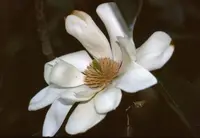
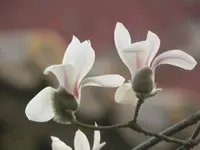
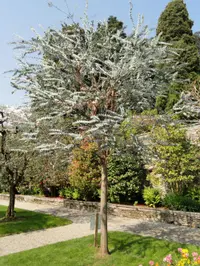
Sweet michelia, Magnolia doltsopa, is an evergreen tree known for its strongly fragrant, creamy white flowers and neat, upright habit. It is often grown as a feature tree or large screen in mild climates.
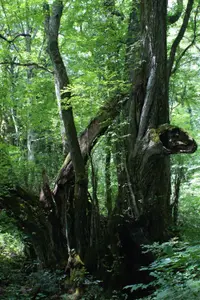
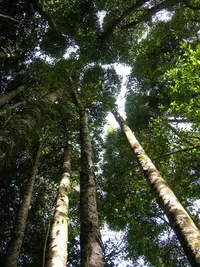
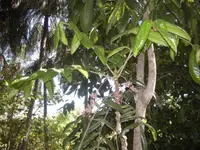
In its native range in the eastern Himalayas and surrounding regions, it develops into a tall tree with dense foliage and smooth, gray bark. The narrow, glossy leaves and winter to early spring blooms give it strong ornamental value.
Magnolia doltsopa prefers mild, frost-free conditions, evenly moist but well-drained soil, and sheltered, bright positions. These needs, plus its eventual size, mean it suits gardeners who already understand how to care for Sweet Michelia.

Care Difficulty
Moderate Care

Light Preference
Full Sun

Water Requirements
Regular Water

Temperature Preference
Warm Climate

Hardiness Zone
9–11

Soil Texture
Loamy, Organic-rich

Soil pH
Acidic (5.5–6.5), Slightly acidic (6.5–7.0)

Soil Drainage
Moist but well-drained

Fertilization
Minimal (feed rarely)
Scan your plant to receive care tips personalized for your specific plant
Available on iOS and Android
Magnolia doltsopa grows best with steady, bright outdoor light and some protection from harsh extremes.
Magnolia doltsopa prefers evenly moist, well-drained soil rather than alternating between wet and very dry conditions.
This species thrives in mild, frost-sheltered climates with moderate seasonal variation.
Magnolia doltsopa prefers moderately moist air but usually adapts to typical home humidity if watered correctly.
Magnolia doltsopa grows best in deep, moist, well‑drained soil with a loose, organic structure.
This species can be grown in large containers for several years if given enough root space and stability.
Magnolia doltsopa benefits from light, steady feeding rather than heavy applications.
Magnolia doltsopa needs only light, careful pruning to maintain structure and health.
This species is usually grown in the ground, so focus on careful transplanting of young trees.
Magnolia doltsopa is usually propagated by semi-hardwood cuttings or seed, though both methods are moderately slow.
Magnolia doltsopa prefers mild climates and benefits from some winter protection in colder areas.

Plant Health Check
Not sure what's wrong with your plant? Check your plant's health inside the app.
This species is native to montane forests of the eastern Himalayas and northeastern India, where it grows at comparatively cool, misty altitudes, which helps explain its tolerance of cooler climates compared with many evergreen magnolias.
The flowers release a strong, sweet scent dominated by volatile aromatic compounds such as linalool and related terpenoids, which attract nocturnal and crepuscular pollinators in its native range.
Unlike many temperate magnolias that are deciduous, this species keeps its thick, glossy leaves year-round, an adaptation to its mild, high-elevation climate with relatively stable seasonal conditions.

In its native Himalayan habitat, this species can form part of mixed evergreen broadleaf forest canopies, where mature individuals may exceed 20 m in height and act as important structural trees that provide shelter and foraging sites for birds and epiphytic plants.
Sparse or absent flowering usually comes from a plant that is still immature, has been pruned too hard at the wrong time, or experienced root disturbance, nutrient imbalance, or stress from cold snaps, transplanting, or drought.
Keep your plants happy and healthy with plant identification, disease detection, and easy care guidance.